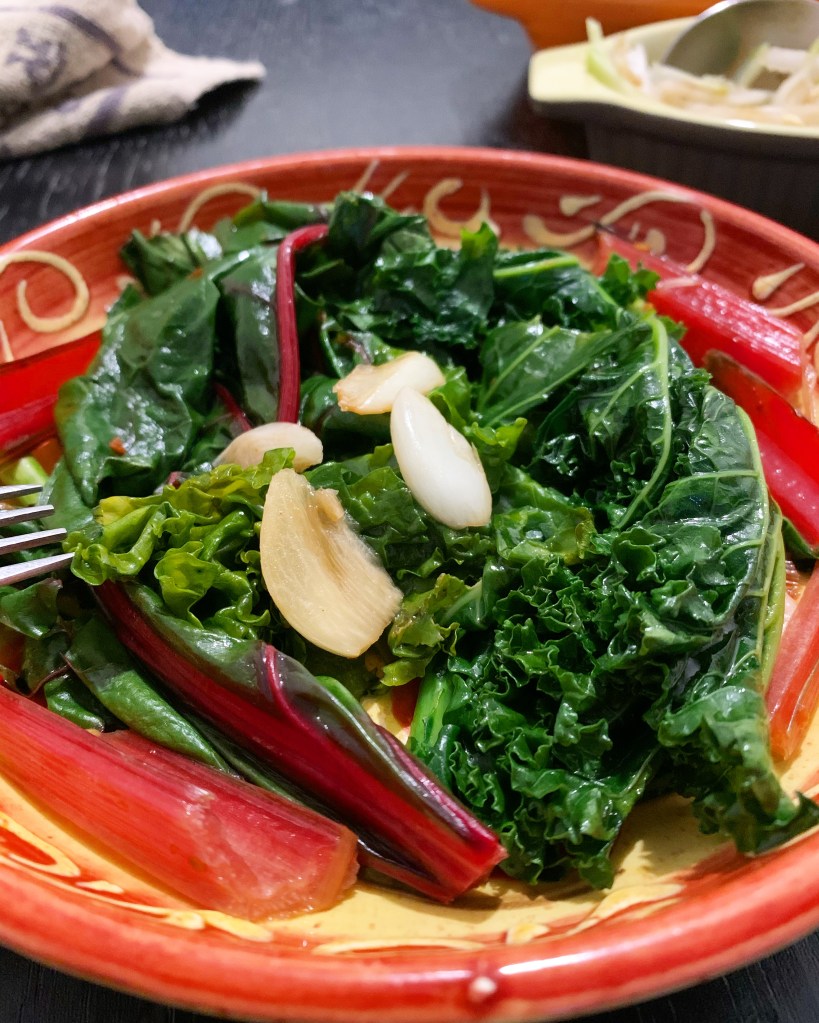
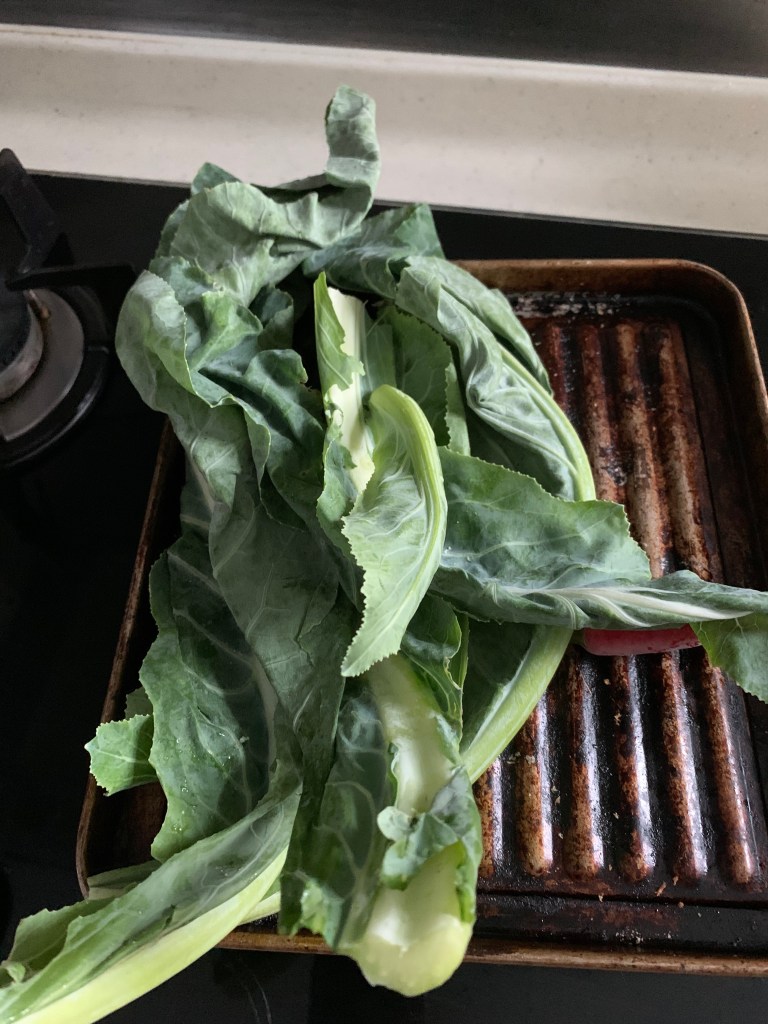
This is a great way to soften and elevate dark, leafy greens, which tend to be tough and bitter. The key is to cook the stalks and the leave separately – the stalks need a little more care and love. Serve as a side to accompany any meal.
Serves 2
Time: 🕰 Effort: 💪
Ingredients:
4 stalks of kale 2 stalks of beetroot leaves 2 garlic cloves Olive oil Pinch of dried chili flakes Lemon
Method:
1. Separate the vegetables into stalks and leaves 2. Roughly chop up the stalks 3. Tear greens into small bunches 4. Slice garlic 5. Infuse garlic in oil on lowest heat until garlic softens 6. Remove garlic 7. Add stalks to pan and sautée on medium heat until it starts to colour 8. Add leaves and chili flakes 9. Season, mix, taste 10. Add 3 spoonfuls of hot water, waiting in between each addition until liquid evaporates 11. Add squeeze of lemon juice 12. Garnish with garlic slices
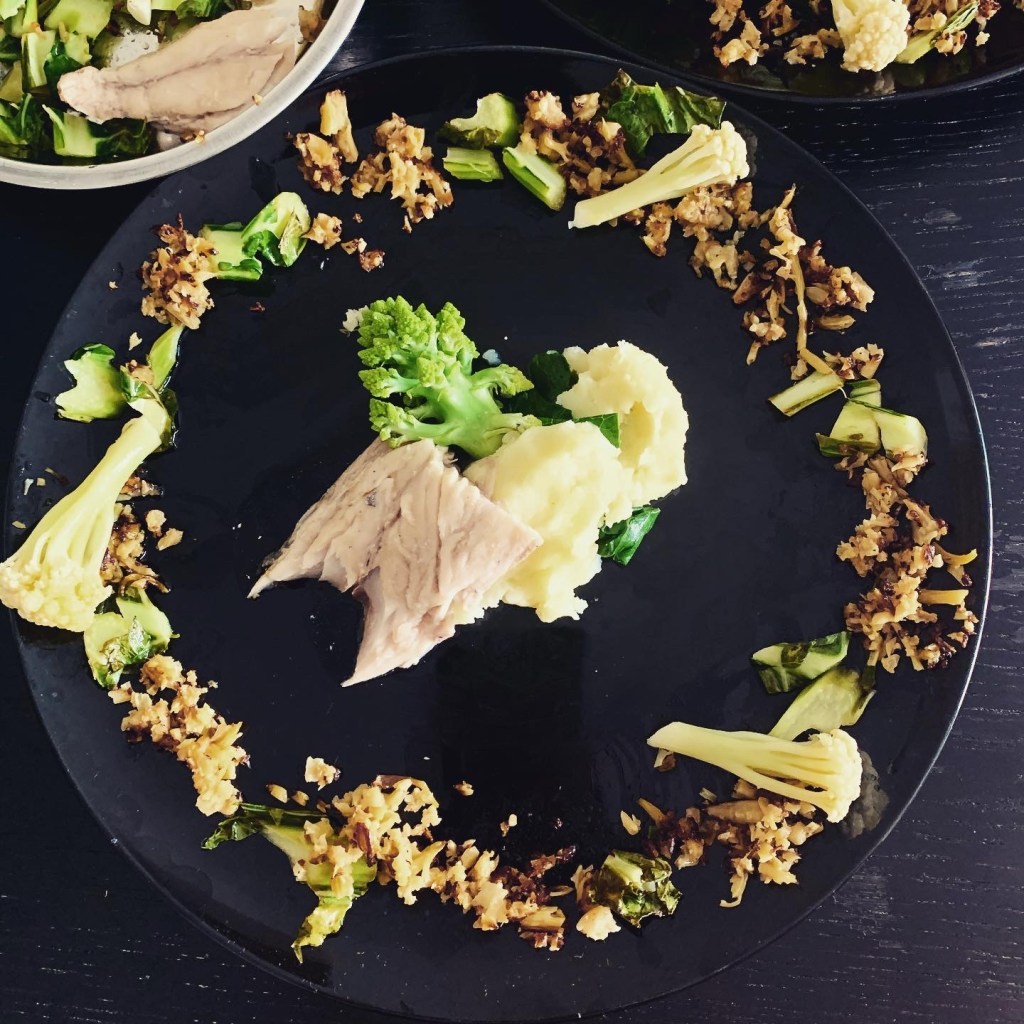
Cauliflower is the most versatile vegetable you can buy: it consists of outer leaves, outer leaves stalks, inner stem, large florets, small florets, all of which can be treated as standalone ingredients. This is complemented by mackerel, a fish we can still, thankfully, eat without guilt. This whole dish costs less than HKD20 to make, and most components can be made ahead of time.
Serves 2
Time: 🕰🕰🕰 Effort: 💪💪
Ingredients:
1 mackerel fillet 1/2 head cauliflower, with outer leaves (!) 100ml cream 20g unsalted butter 1 garlic clove 1/2 potato 1 star anise Rice vinegar Lemon juice Water Sugar Salt 2 florets romanesco (optional)
Method:
For the pickled mackerel
1. Boil water, vinegar, lemon juice, sugar, salt until well mixed 2. Taste to adjust to desired sweetness and acidity 3. Cool down to room temperature 4. Soak mackerel fillet in pickling liquid for around 3 hours
For the outer leaf stems
1. Separate leaves from stalks 2. Cut stalks diagonally into small pieces 3. Toast in olive oil and salt for 5 minutes, flipping from time to time 4. Add a splash of white wine to deglaze
For the cauliflower couscous
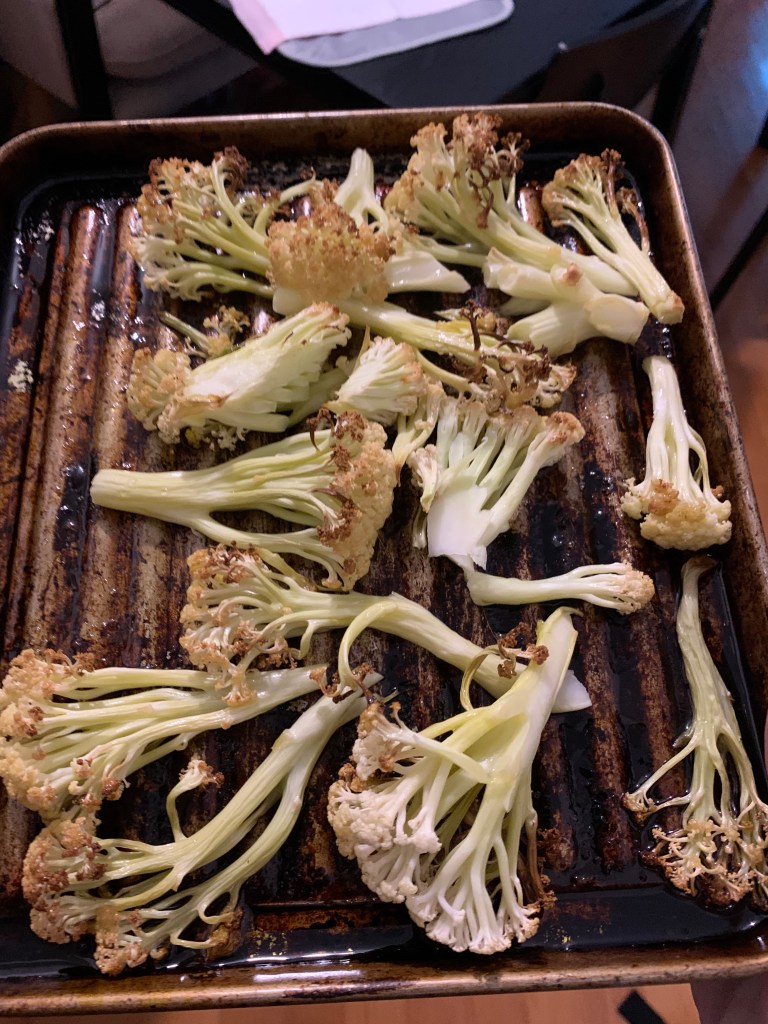
1. Roast cauliflower florets and inner stem in oven with salt, olive oil, and whole garlic clove, skin on; about 20 minutes at 200’C 2. Remove garlic 3. Boil the roasted florets and stem in milk and butter for 10 minutes until soft 4. Blend until the cauliflower pieces turn into couscous like texture 5. Strain and reserve liquid as a soup base 6. Toast cauliflower couscous in a dry pan without flipping, until bottom is
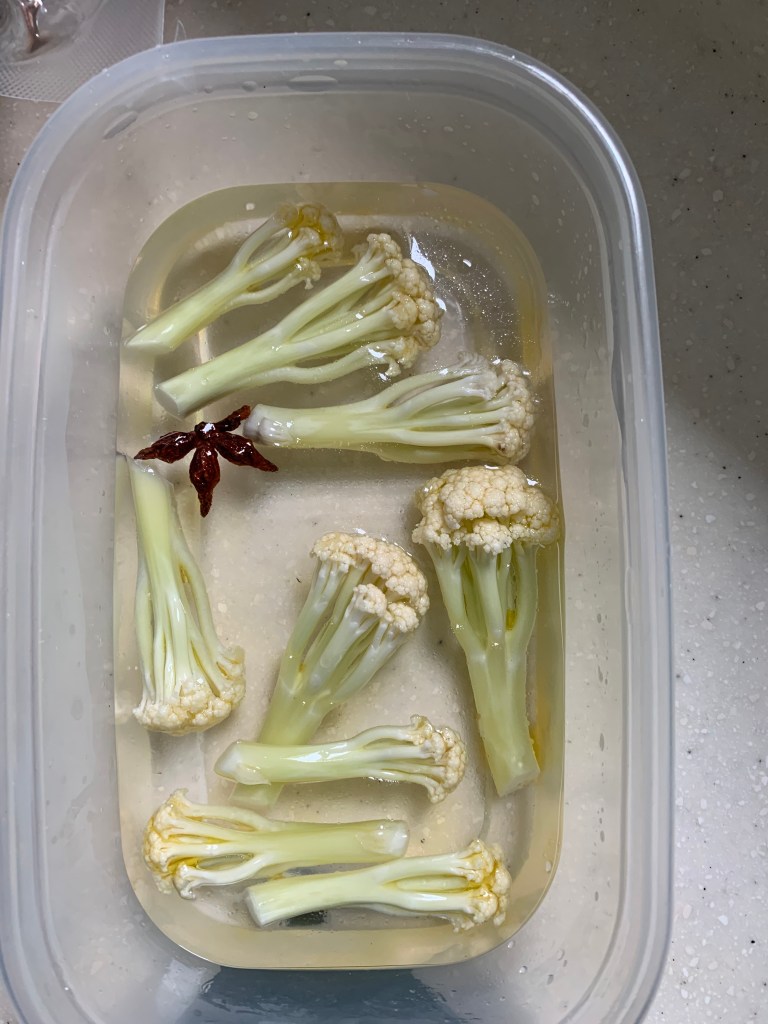
For the pickled mini-florets
1. Boil water, olive oil, sugar, lemon juice together, with a dash of salt 2. Cool down to room temperature 3. Add star anise 4. Add small cauliflower florets and pickle in fridge at least overnight
For the mashed potatoes
1. Boil and mash potato 2. Add small knob of butter and shreds of outer cauliflower leaves 3. Mix
Assemble the dish
1. Place potato mash and fish in the centre 2. Arrange everything else in a ring 3. Garnish with a floret of steamed romanesco (optional)
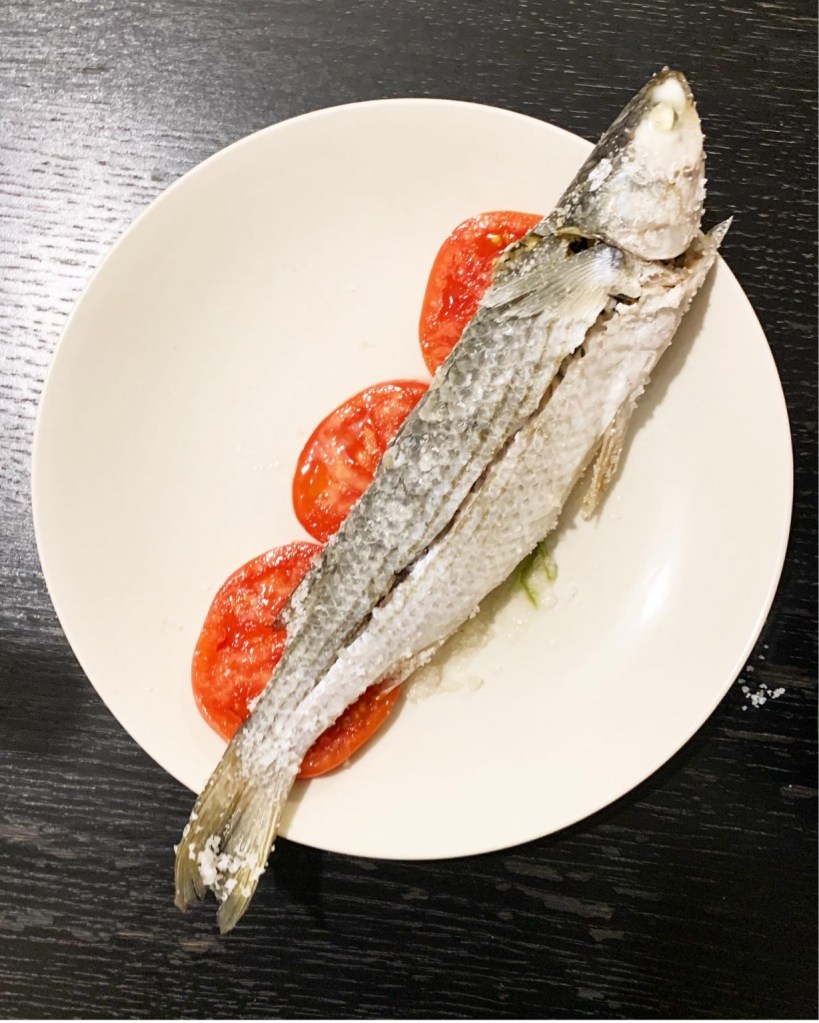
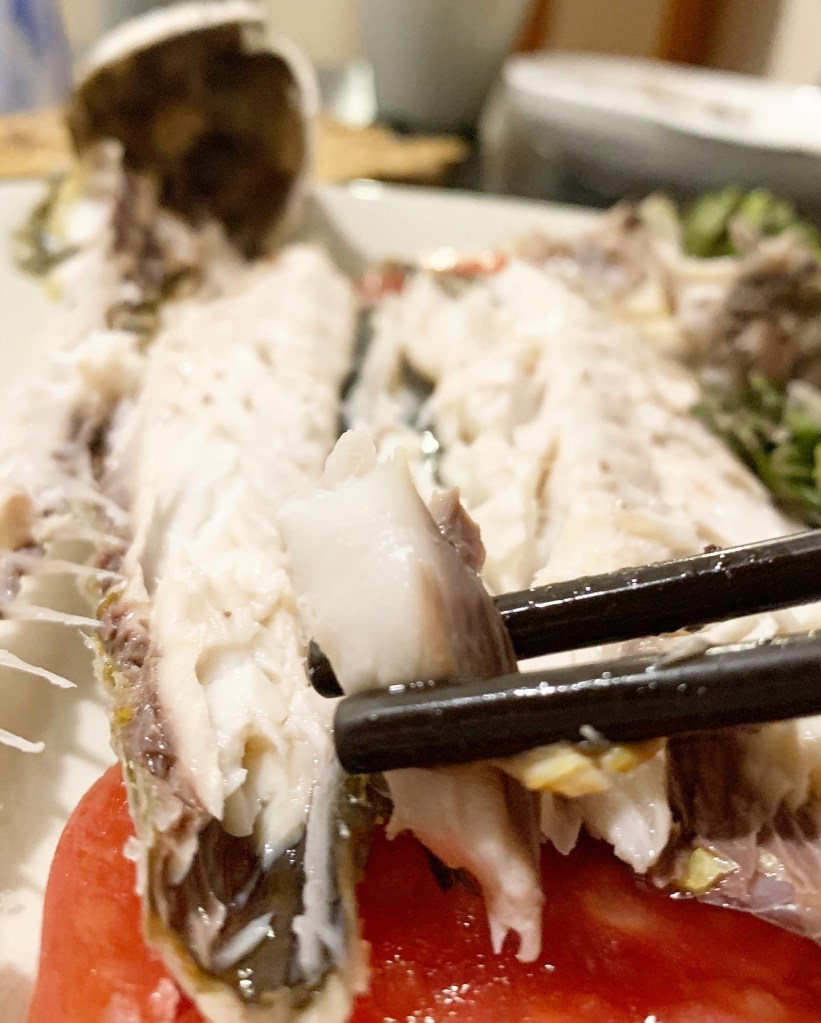
Some people add 2 beaten egg whites to the salt mixture, but this does nothing to the taste. If you’re making a quick dish, there’s no need to add this. If, however, you’re entertaining guests and are planning to bring the salt crust to the table to crack open, then do add the egg whites. A super simple dish that brings out the best of the magic ingredient: coriander!
Serves 2
Time: 🕰🕰 Effort: 💪
Ingredients:
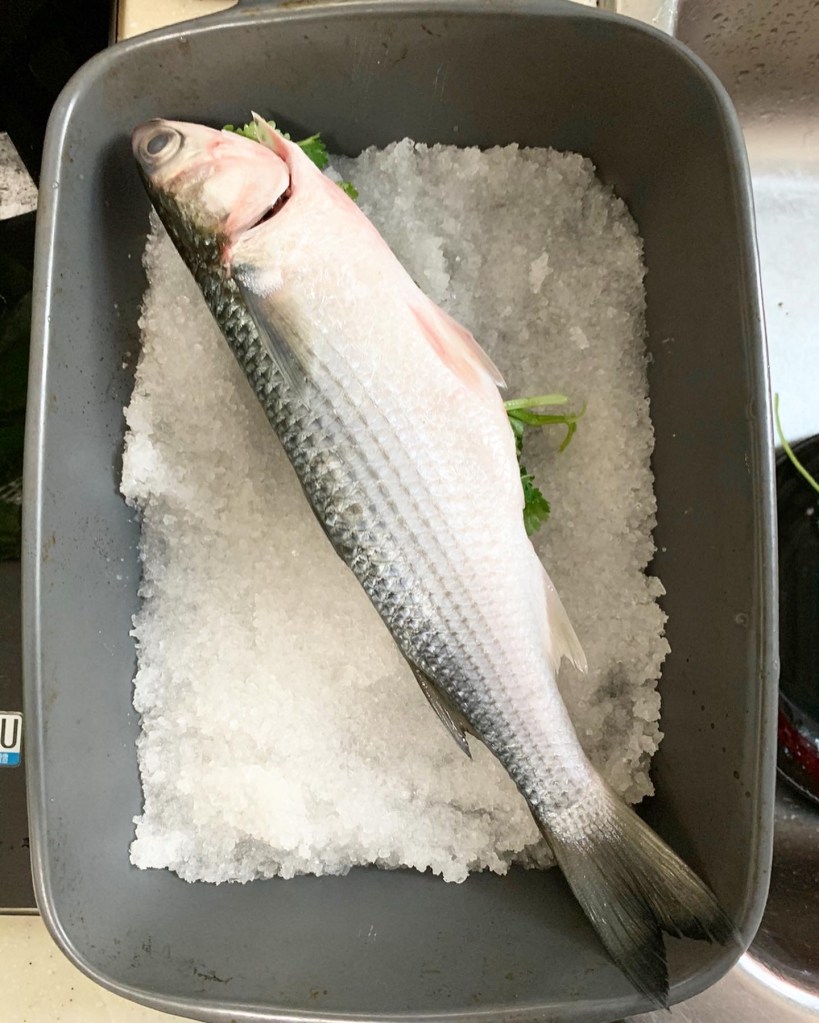
1 grey mullet (烏頭. Tell fishmonger to leave scales on!) 2 packs coarse salt from market 1 bunch coriander
Method:
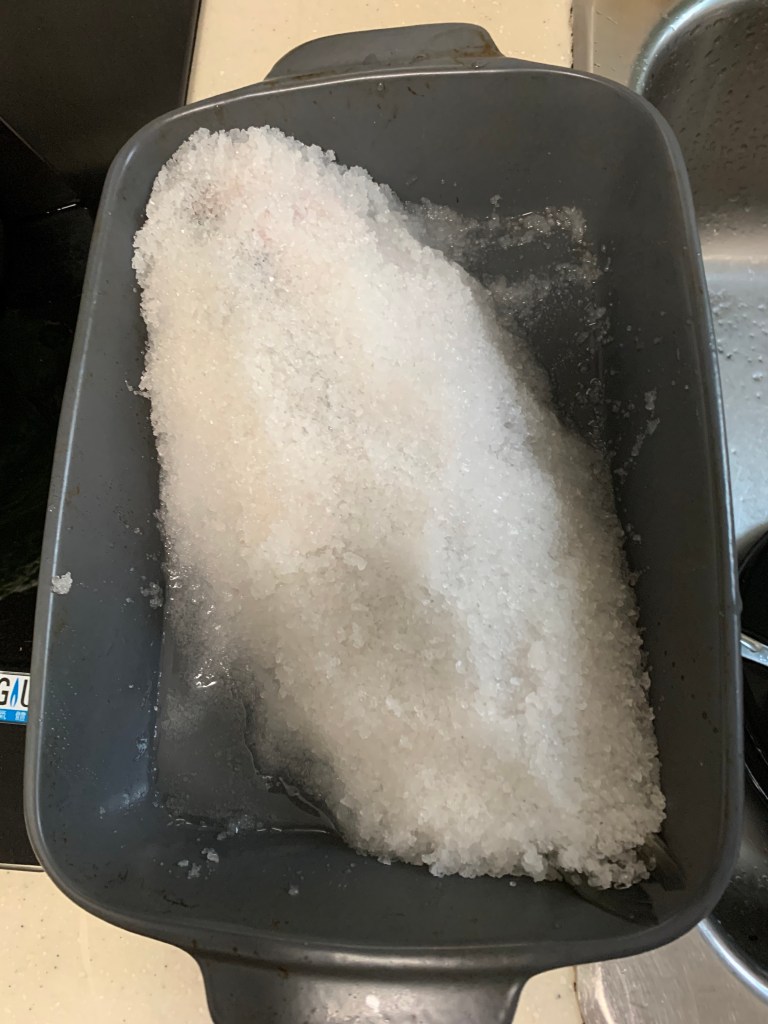
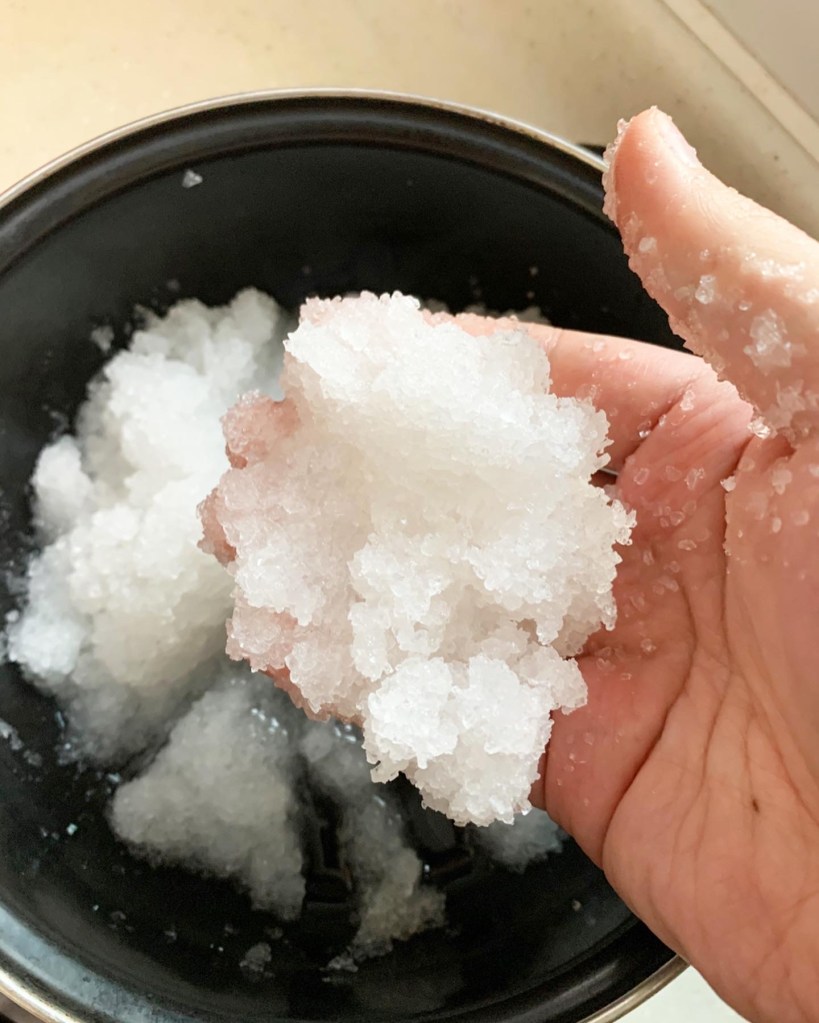
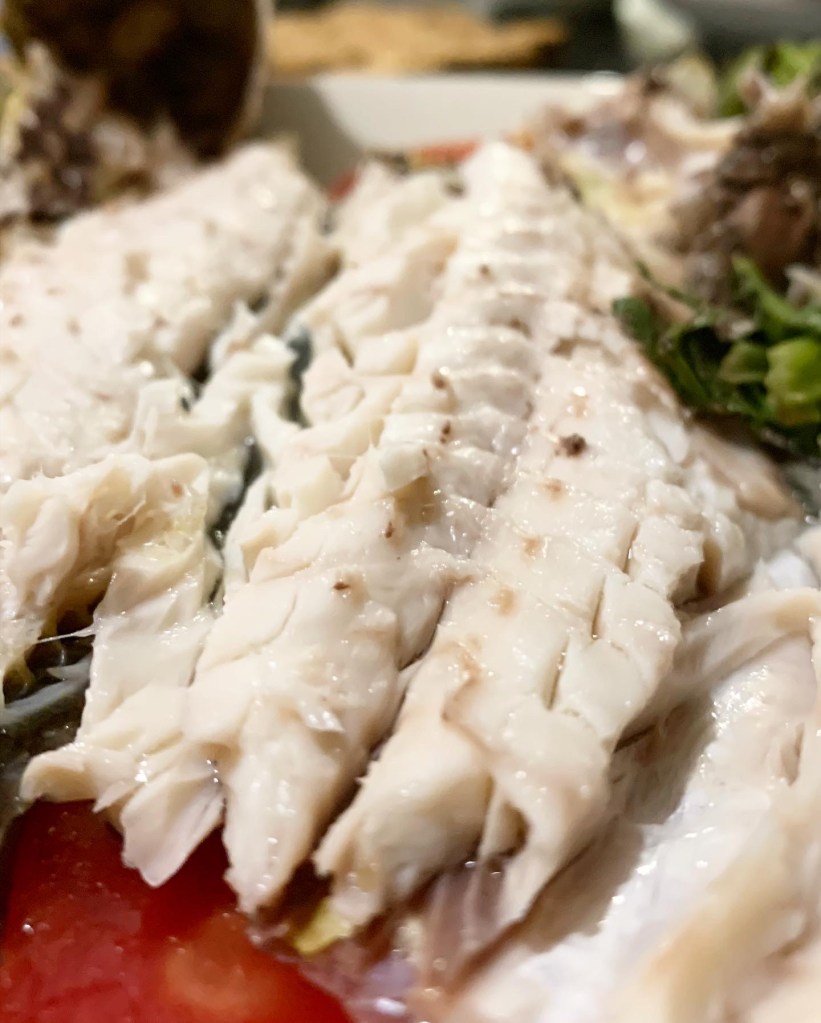
1. Preheat oven to 200’C 2. Wash fish and pat dry 3. Stuff coriander into fish; set side 4. Mix the coarse salt with water bit by bit until it resembles “snow” 5. Line baking tray with half the salt 6. Place fish on top 7. Cover with rest of salt 8. Pack tightly to form a seal 9. Bake in oven for 2.5 times the amount of time you would if steaming – for a typical fish, that’s 20-25 minutes 10. Crack open salt crust 11. Transfer fish to serving dish 12. Peel skin back to reveal the succulent flesh 13. Garnish and serve hot or cold
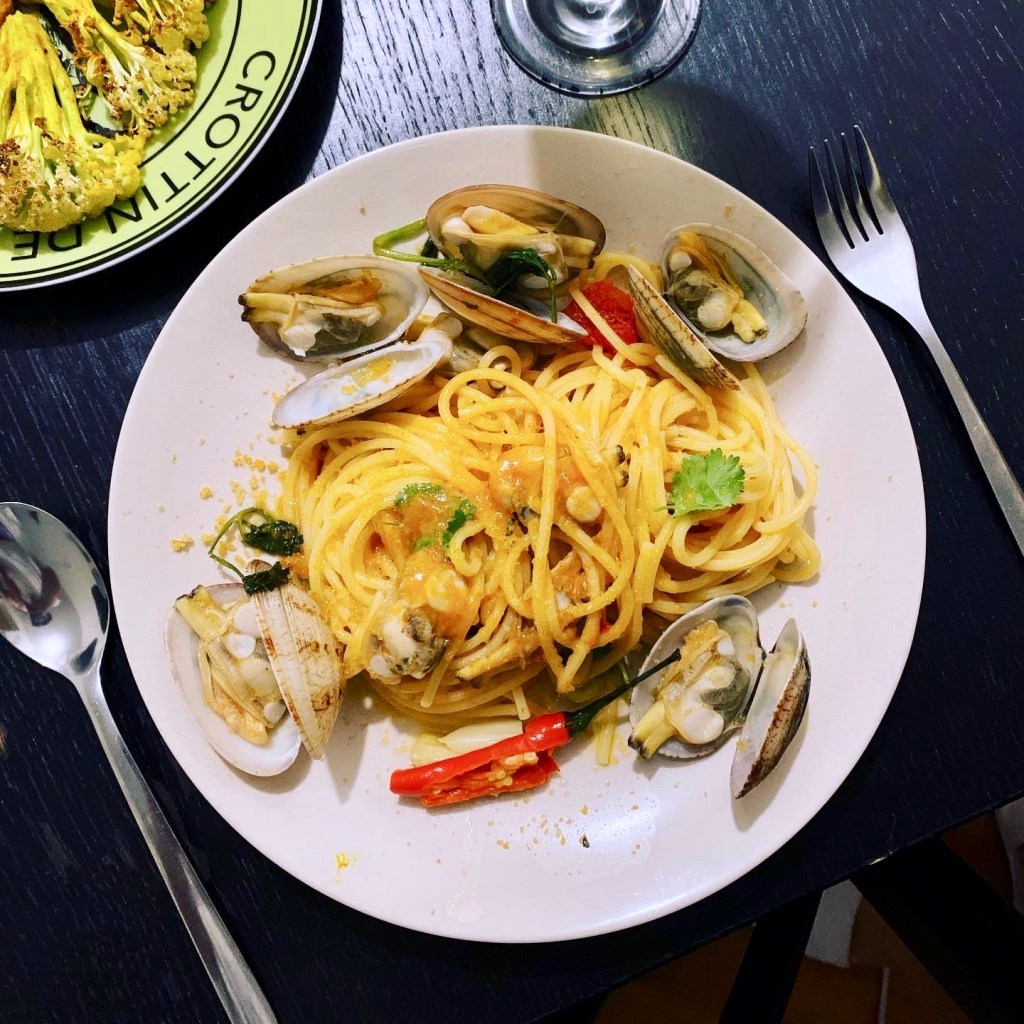
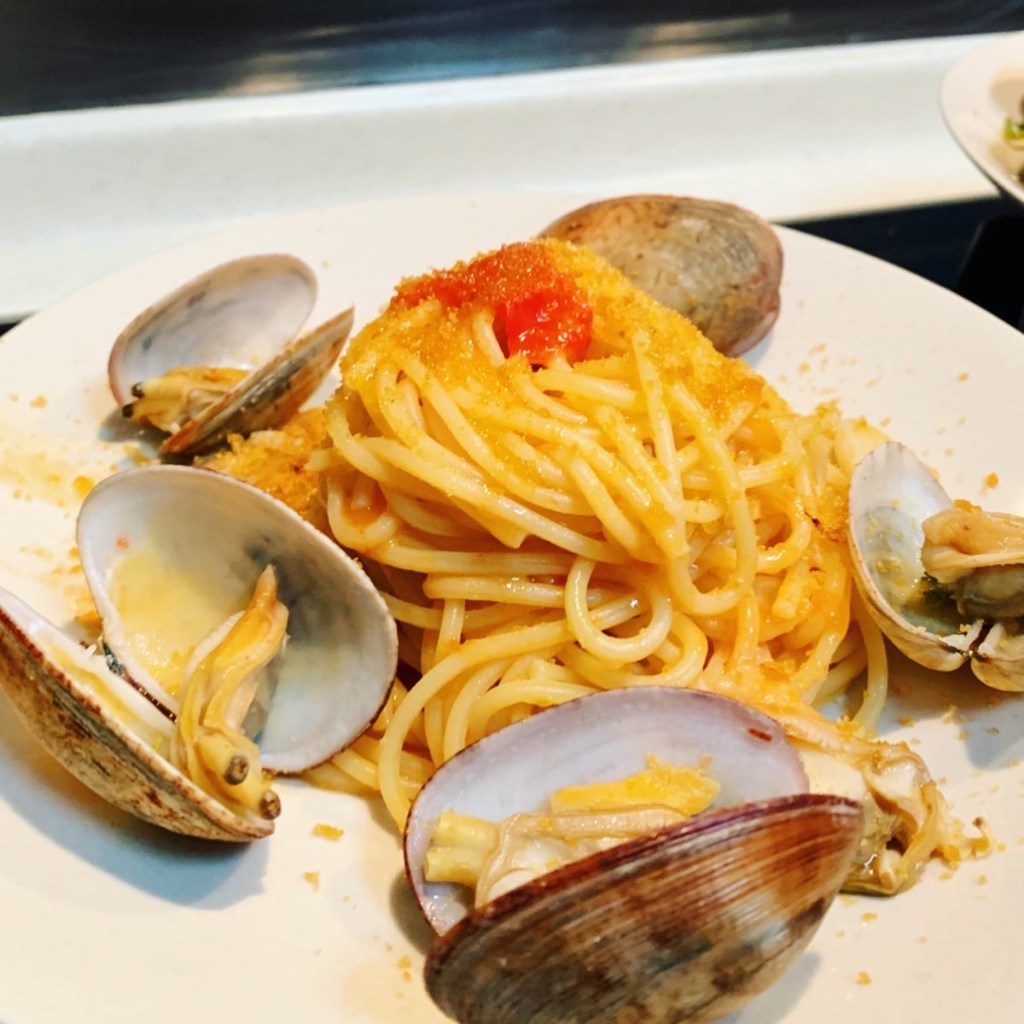
Dried fish roe (烏魚子,or 魚春乾) is the star of any seafood market in Hong Kong. Add them to Cantonese stir-fry, or barbecue. Here, it works as a direct substitute of dried mullet roe (bottarga) used in Italy. It costs around HKD95 for a year’s worth of supply. Take out a piece at a time and freeze the rest.
Serves 2
Time: 🕰🕰 Effort: 💪💪
Ingredients:
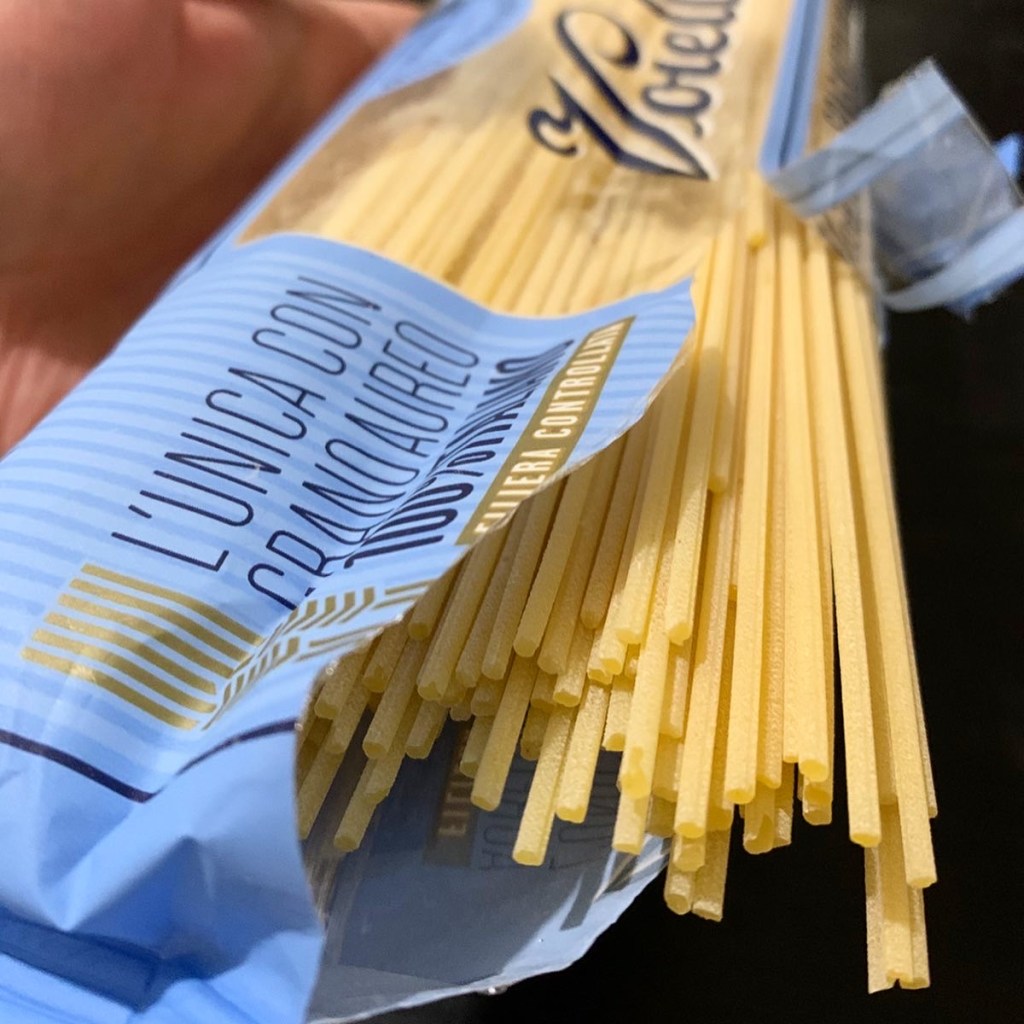
250g high-quality spaghetti 1 catty (around 600g) fresh clams 1/3 piece dried yellow croaker roe (黃花魚春乾, see note) 2 garlic cloves Fish stock Prawn stock Dry white wine 1 chili 1/2 tomato 1 teaspoon tomato concentrate Olive oil Coriander
Method:
1. Wash and soak clams in cold tap water for 1 hour 2. In a medium pot, infuse one garlic clove, chili, tomato (diced) and some coriander stalks in olive oil on low heat 3. Meanwhile, bring a separate pot of water to the boil 4. Add salt to water until it has the saltiness of a light soup 5. Add pasta to the water and maintain the boil 6. In a large frying pan, add remaining garlic clove, olive oil, a ladle of fish stock, a ladle of prawn stock, and 2 ladles of pasta water (see laksa post on broths) 7. Bring liquids to an active boil until volume reduces by half 8. The chili infusion should be ready by now 9. Remove clams from water and add them to the infusion 10. Add half a glass of white wine and turn up the heat to high 11. Shake and cook clams for about 4 minutes, until clams have fully opened; discard unopened clams 12. The spaghetti should be almost done by now but still a little hard in the centre 13. Transfer spaghetti to the stock 14. Add tomato concentrate for colour, and actively stir on reasonably high heat until liquids thicken to a very creamy sauce; remove from flame 14. Deshell half the clams and mix into the pasta 15. Add a ladle of the clam cooking juice for a hint of acidity 16. Add the softened tomato pieces from the clam juice for extra texture and colour 17. Plate the pasta 18. Decorate plate with the remaining clams, shell-on 19. Generously grate bottarga over pasta 20. Spoon over any remaining pasta sauce 21. Finish with a drizzle of olive oil 22. Garnish and serve
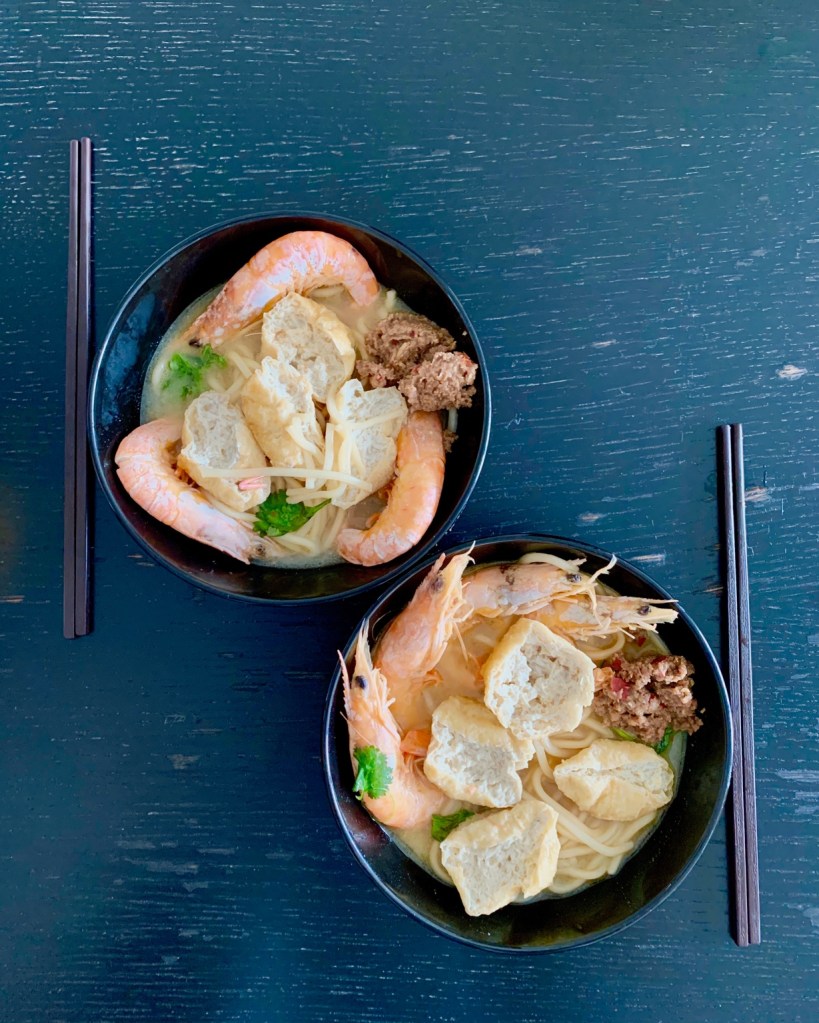
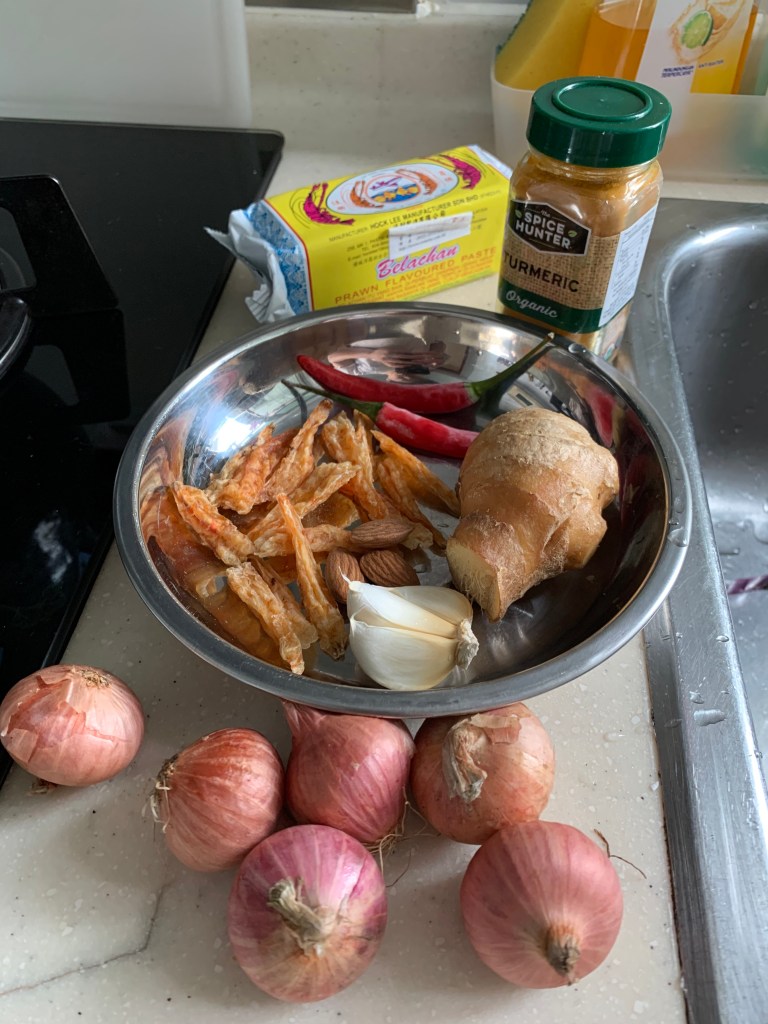
Thick slice belacan from CitySuper (HKD13 only) Small chunk ginger 3 garlic cloves 6 shallots 6 chilis 4 almonds or peanuts 3 teaspoon oil Small handful dried shrimp
Method:
To make prawn stock (can prepare ahead of time):
1. Gather unused prawn shells and heads from previous dishes (such as Italian seafood stew) 2. Stir-fry in oil until fragrant 3. Add water and simmer for around 30 minutes
To make chicken stock (can prepare ahead of time):
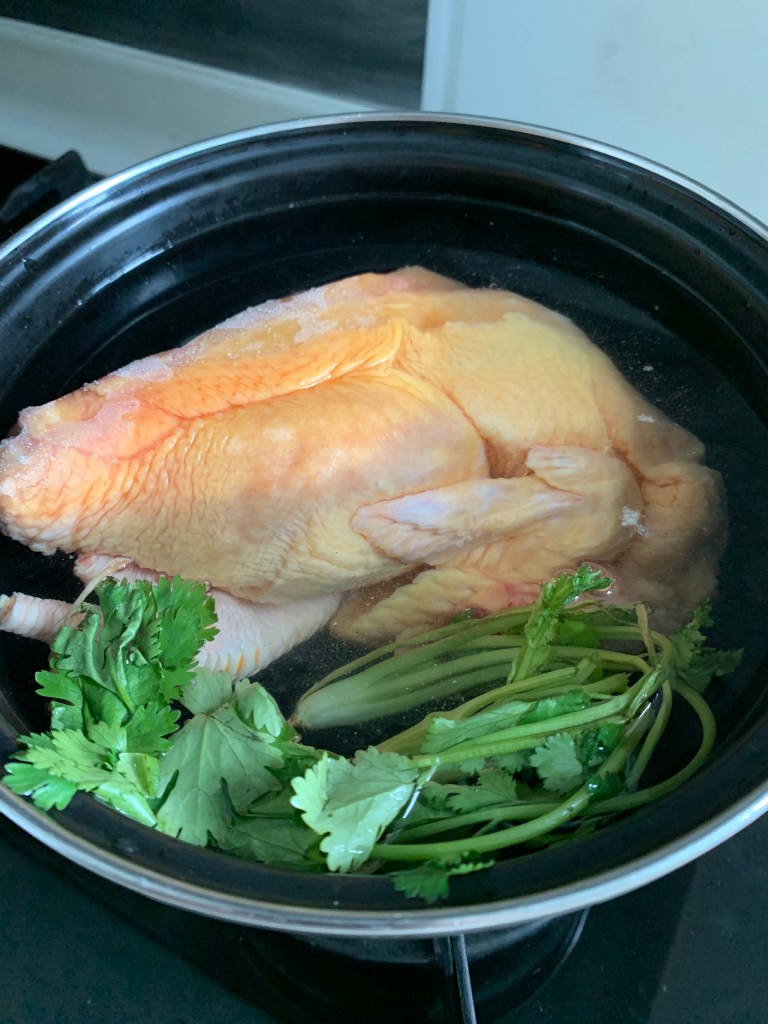
1. Gather unused chicken bones or any other low-value chicken cut 2. Cover with cold water 3. Add coriander stalks 4. Bring to boil and simmer for 30 minutes, removing any impurities on the surface with a spoon
To make laksa paste (can prepare ahead of time):
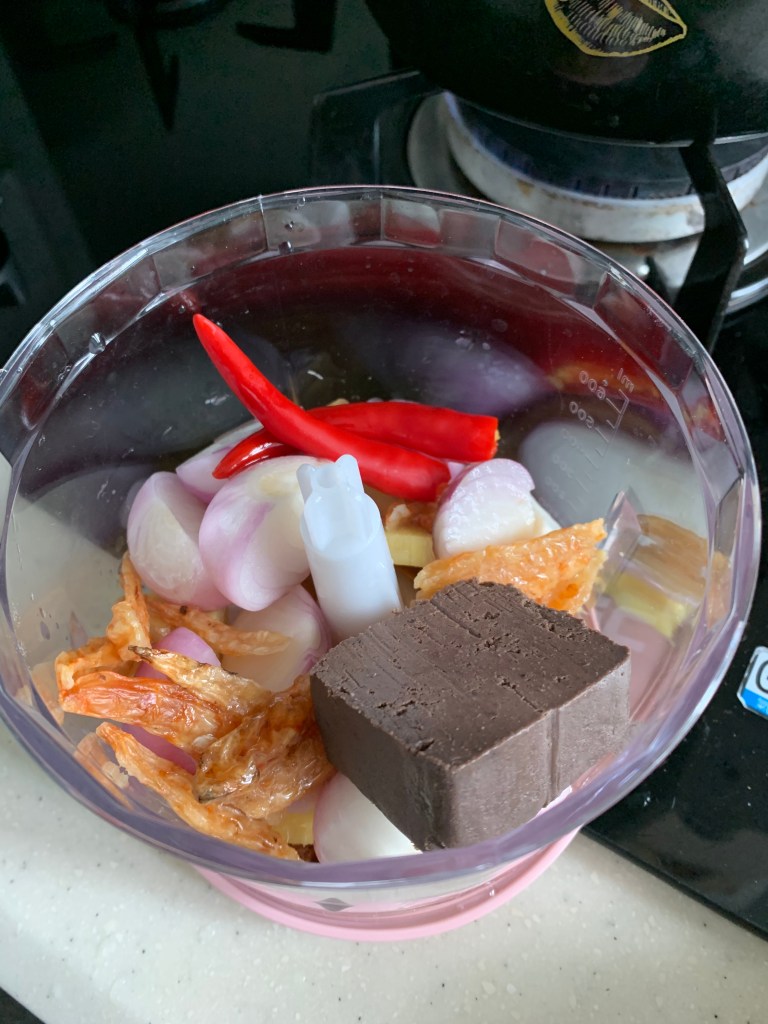
1. Peel shallots; leave garlic and ginger unpeeled 2. Remove chili tops 3. Blend all ingredients until smooth 4. Toast in frying pan until fragrant
To assemble the dish:
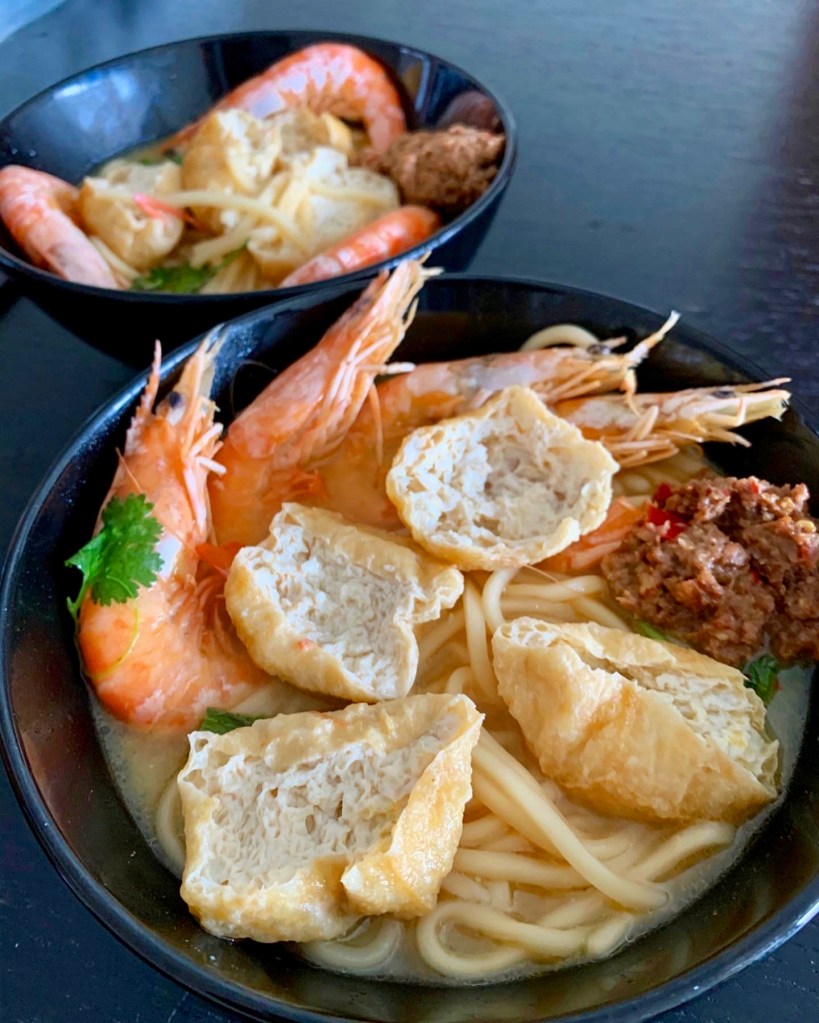
1. Prepare a pot of hot laksa broth by combining coconut milk and equal amounts of prawn and chicken broth, and bring to a slow boil 2. Add a spoon of laksa paste to each serving bowl 3. Top up with a tablespoon of tumeric into each bowl 4. Add a ladle of laksa broth into each bowl and mix with the paste to form the soup base 5. In the laksa broth, blanch prawns until cooked 6. Add fried tofu to the laksa broth and cook for another 30 seconds 7. Remove tofu and prawns from broth; set aside 8. Cook noodles in broth until warmed through, around 1 minute 9. Transfer noodles into serving bowls 10. Arrange prawns and tofu on top 11. Ladle hot soup over everything 12. Add a spoonful of laksa paste into each bowl 12. Garnish with coriander leaves 13. Serve immediately
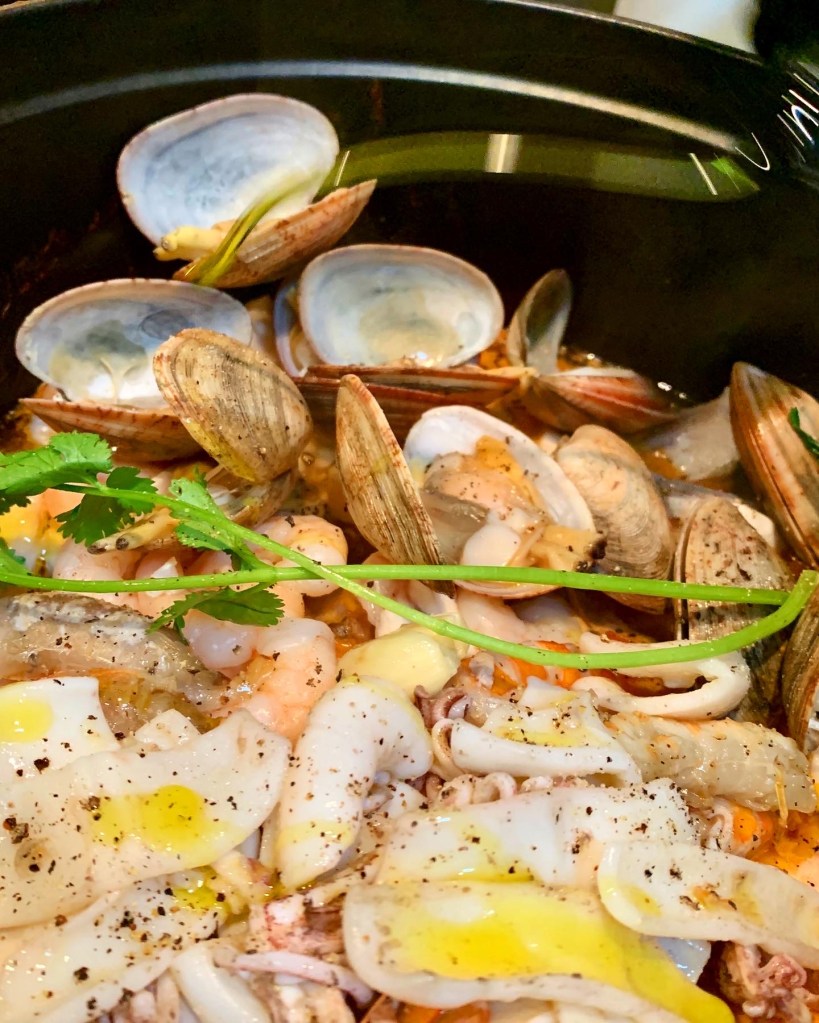
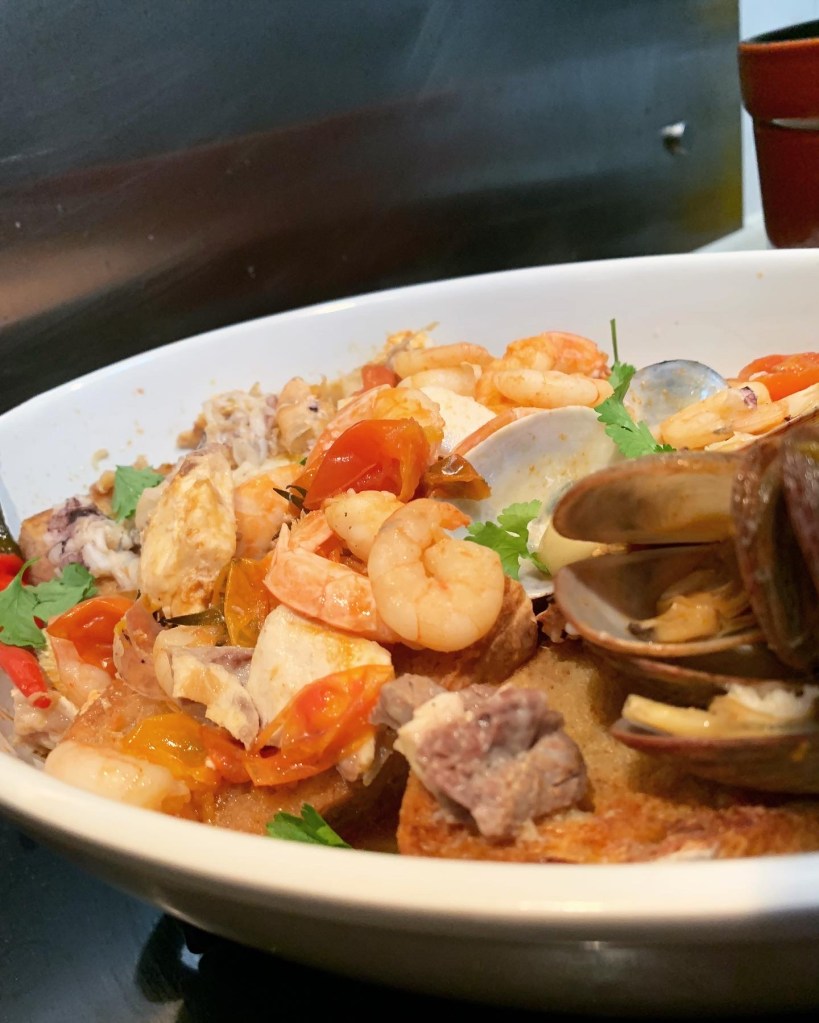
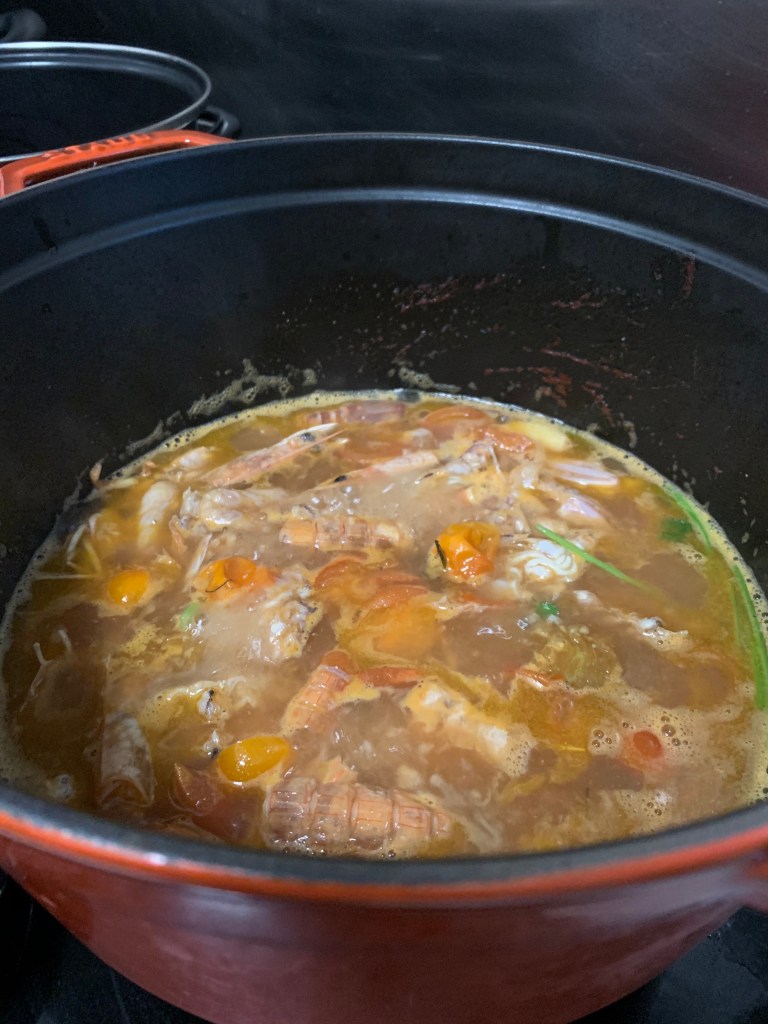
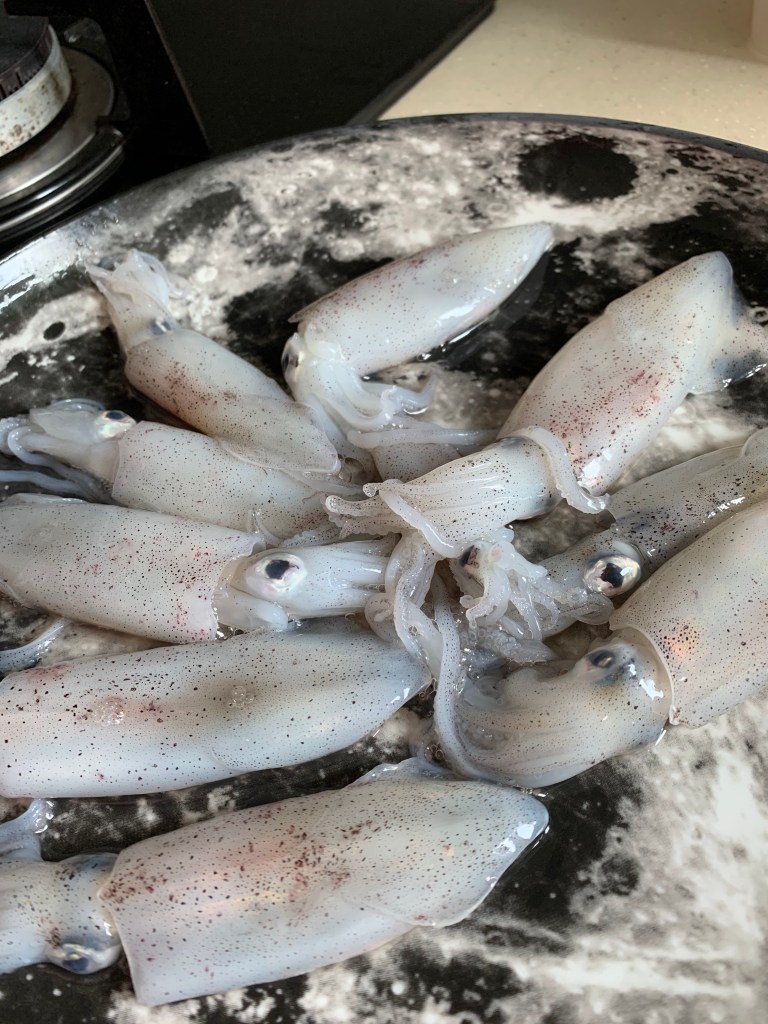
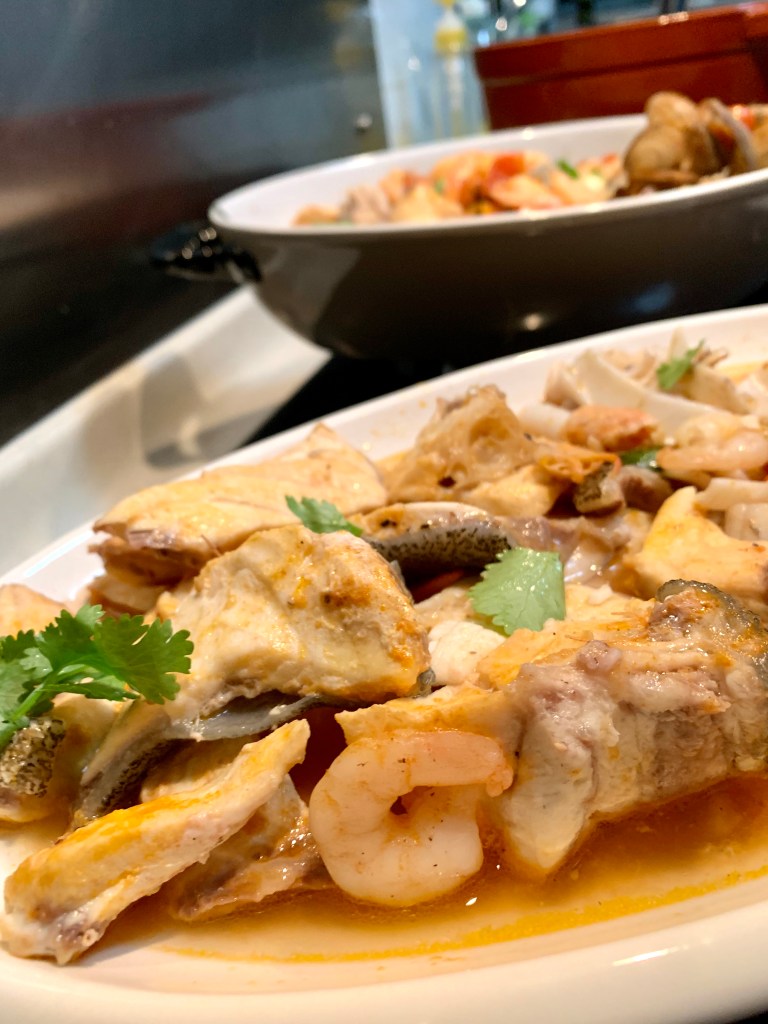
1kg firm white fish 500g fish for stock 500g crustaceans 500g bivalves 300g cephalopods 2 cloves garlic 1/4 onion 2 chilis 12 cherry tomatoes (2 per person) Vodka Olive oil Dry Italian white wine Parsley or coriander Toasted bread
Method:
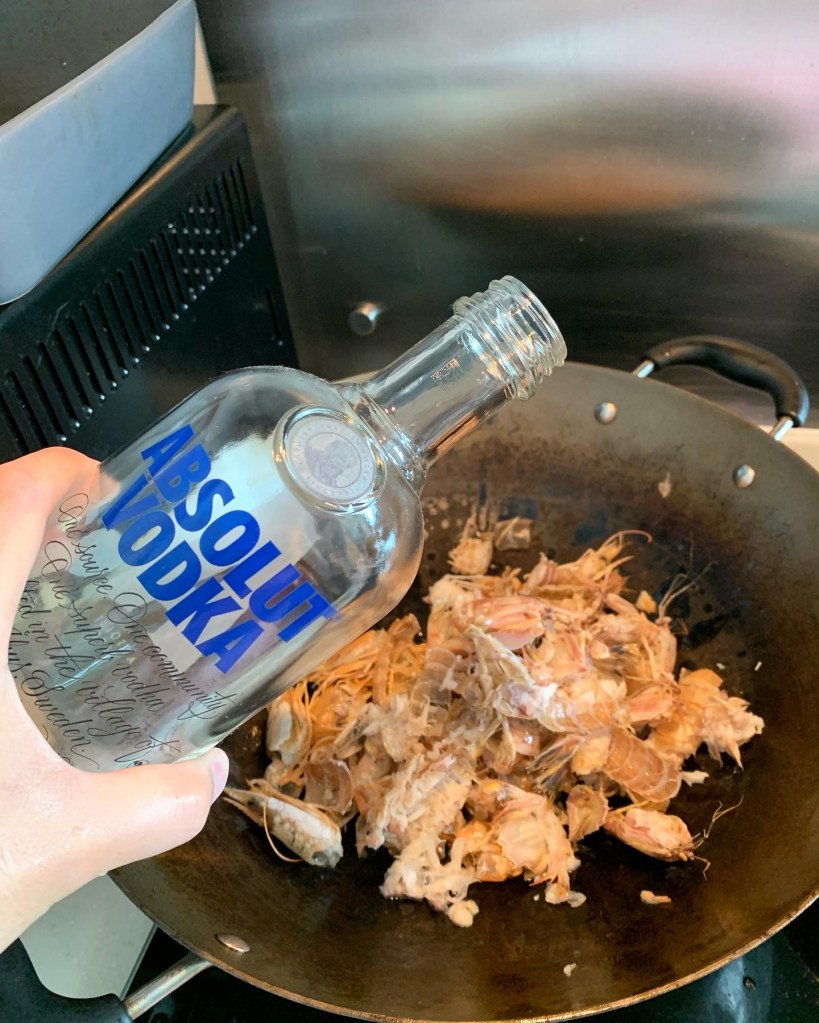
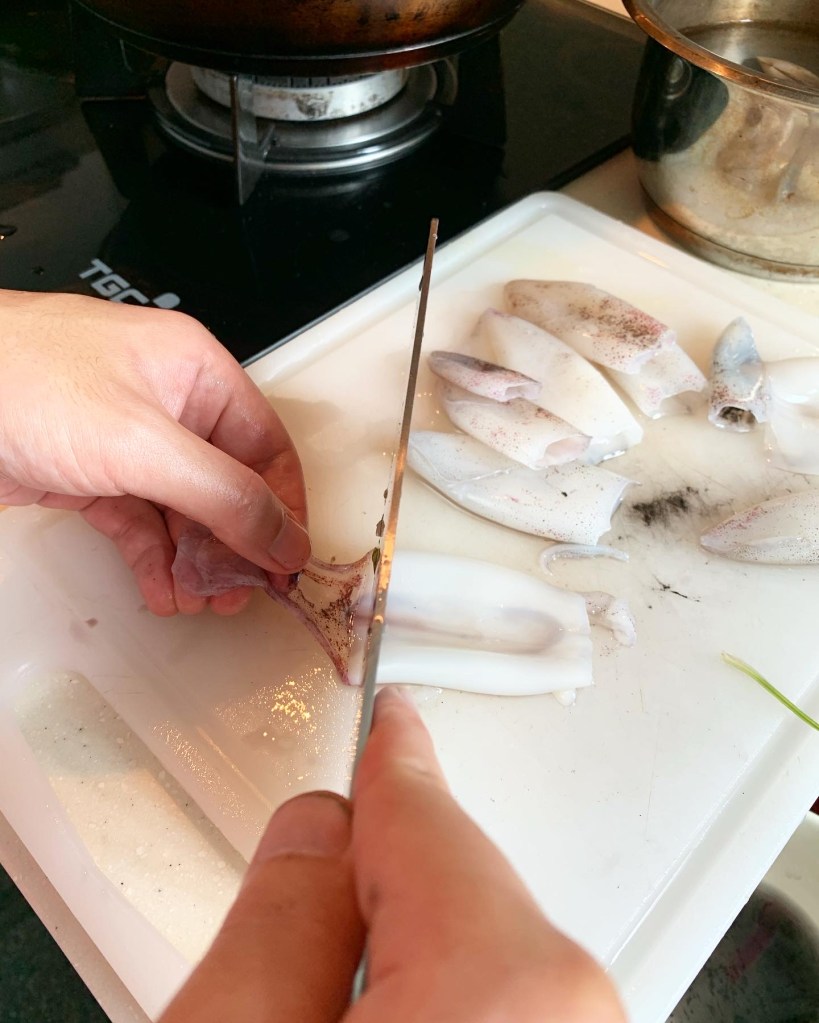
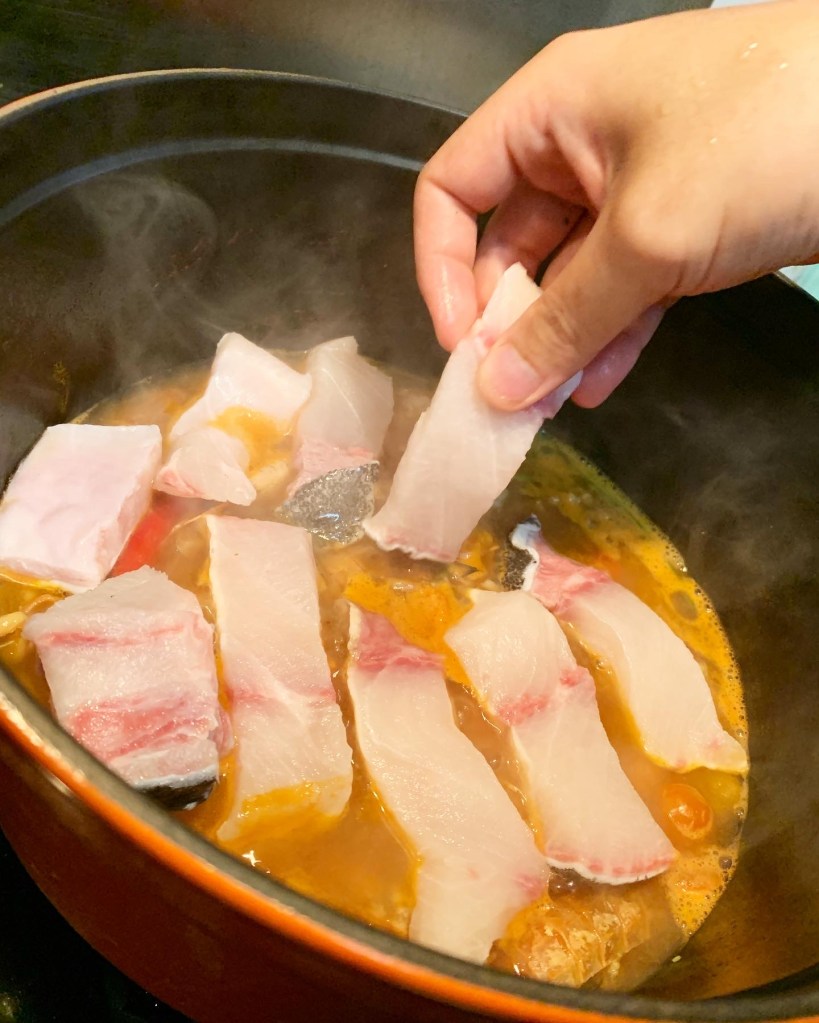
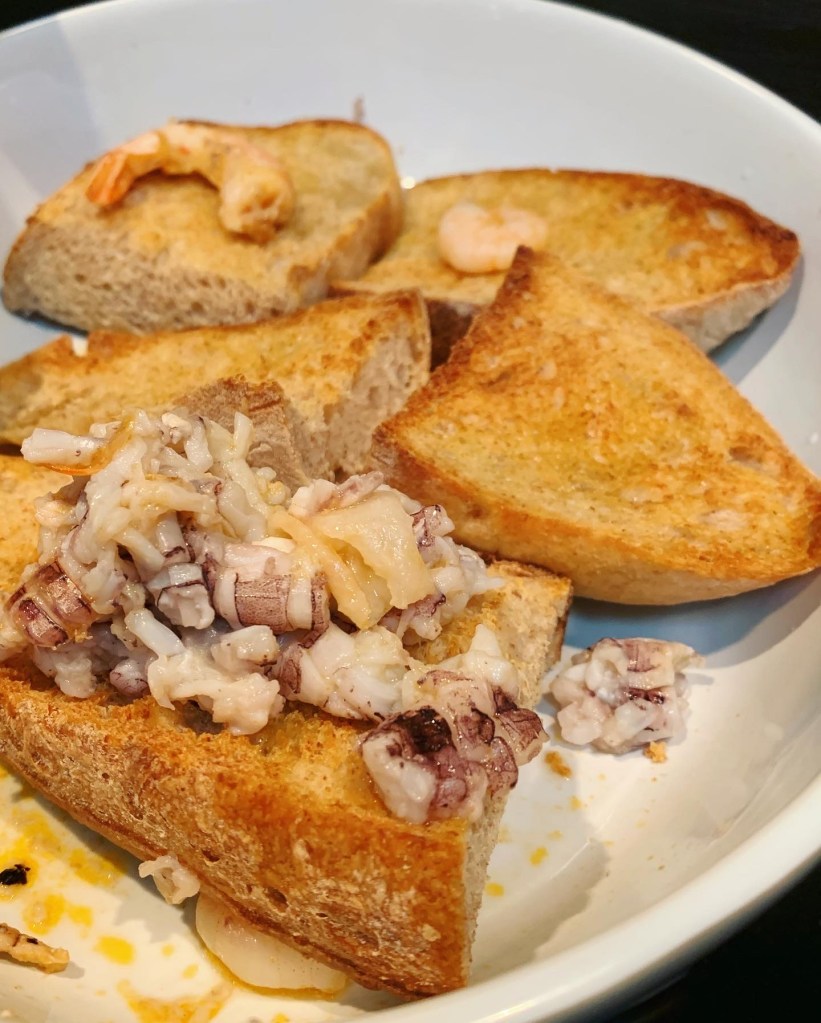
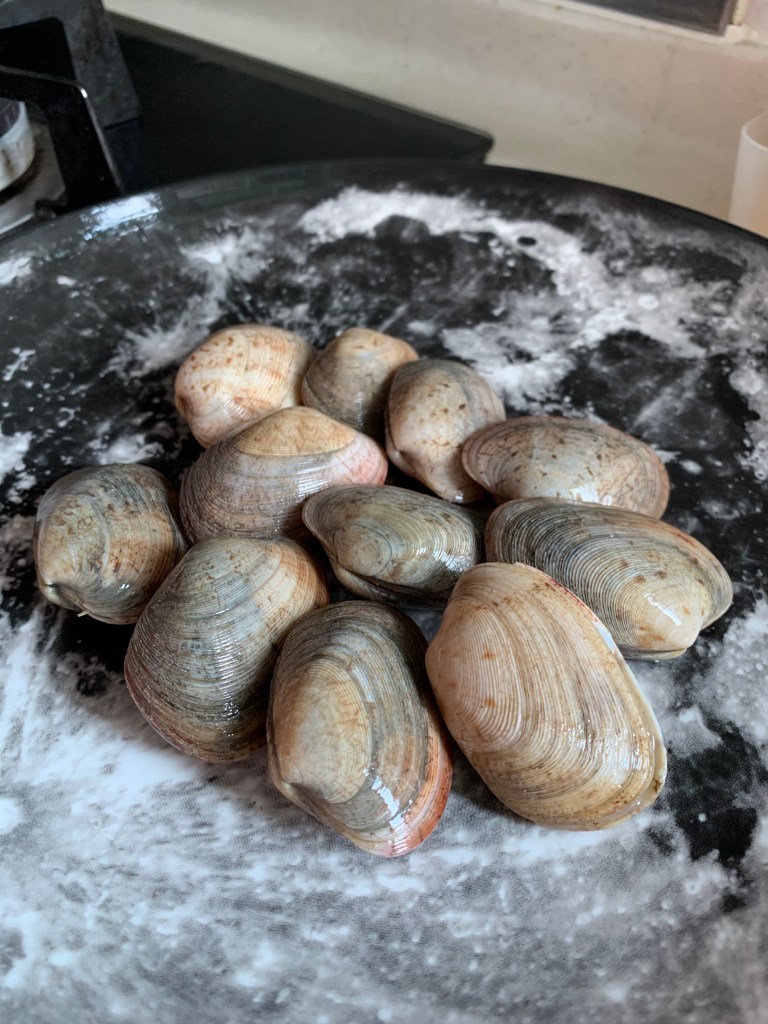
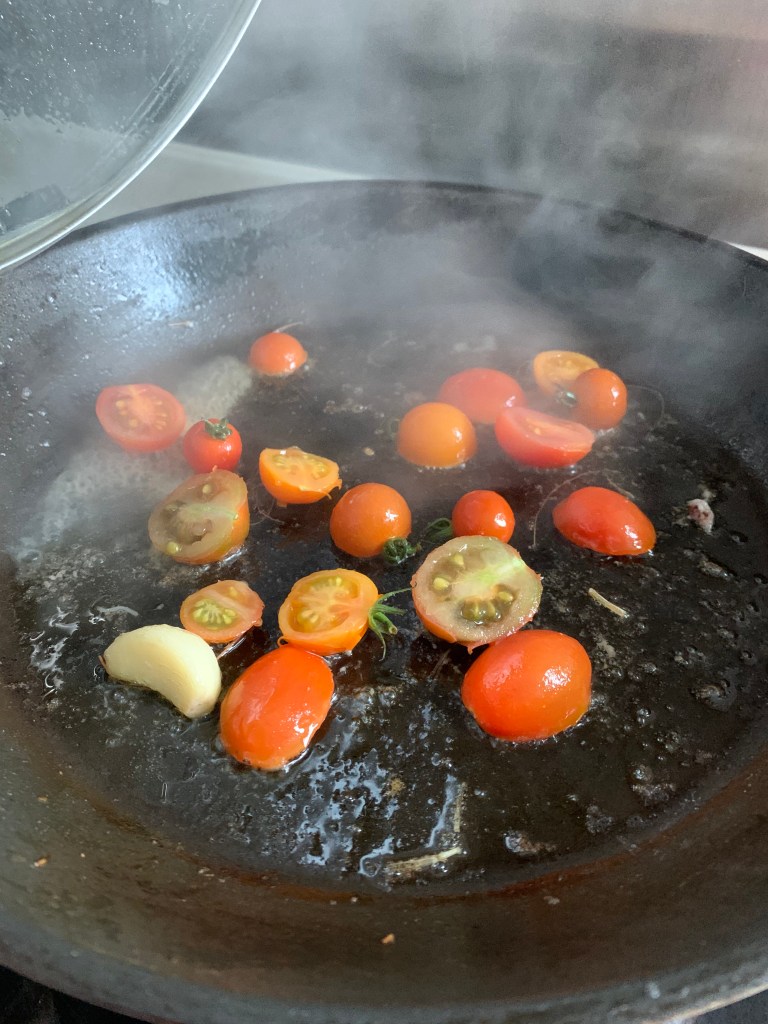
1. Go to the local seafood market to see what’s good 2. You’ll need seafood In four categories: fish, bivalves, crustaceans, and cephalopods 3. For the fish, either look for firm, white fish fillets such as cobia, cod, monkfish; or small-to-medium fish to fillet at home, such as mackerel or snapper. Check local sustainable seafood guide 4. If buying filets, then you’ll also need additional fish for stock; otherwise, just use the heads and bones 5. Debone the cuttlefish/squid; use only the tube and the tentacles; reserve the beak, roe, and ink sac for other occasions 6. Wash shells and soak in cold tap water 7. Wash and boil shrimps for 2 minutes, then soak in ice-cold water to terminate the cooking 8. Remove heads and unshell the shrimps 9. Make the fish stock by combining water, onion, parsley stems, and either the fish carcasses or small fish; simmer and strain. Here, we used skate (魔鬼魚) 10. Make the shrimp stock by first sautéeing the shrimp heads and shells in garlic and oil, flambée with vodka, then cover with water and simmer 11. Dump shells into pot with some oil, white wine, and parsley, and cook on high heat; remove as soon as they open 12. Add olive oil, chili, and garlic to a large casserole or pan; heat on medium heat 13. Once fragrant, add white wine to deglaze 14. Add cherry tomatoes 15. Add a mug of prawn stock and a mug of fish stock 16. Simmer until concentrated and reduced by half; season 17. Add fish meat; season, cover and cook for 5 minutes 18. Add squid, season, cover and cook for another 5 minutes 19. Add shrimps and shells, cover and cook for another 5 minutes 20. Layer serving dishes with toasted bread 21. Arrange your seafood on top of the bread 22. Pour cooking juices over the seafood 23. Drizzle with olive oil; garnish with parsley



 Nat & E Homecooking