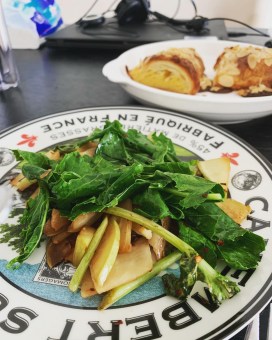
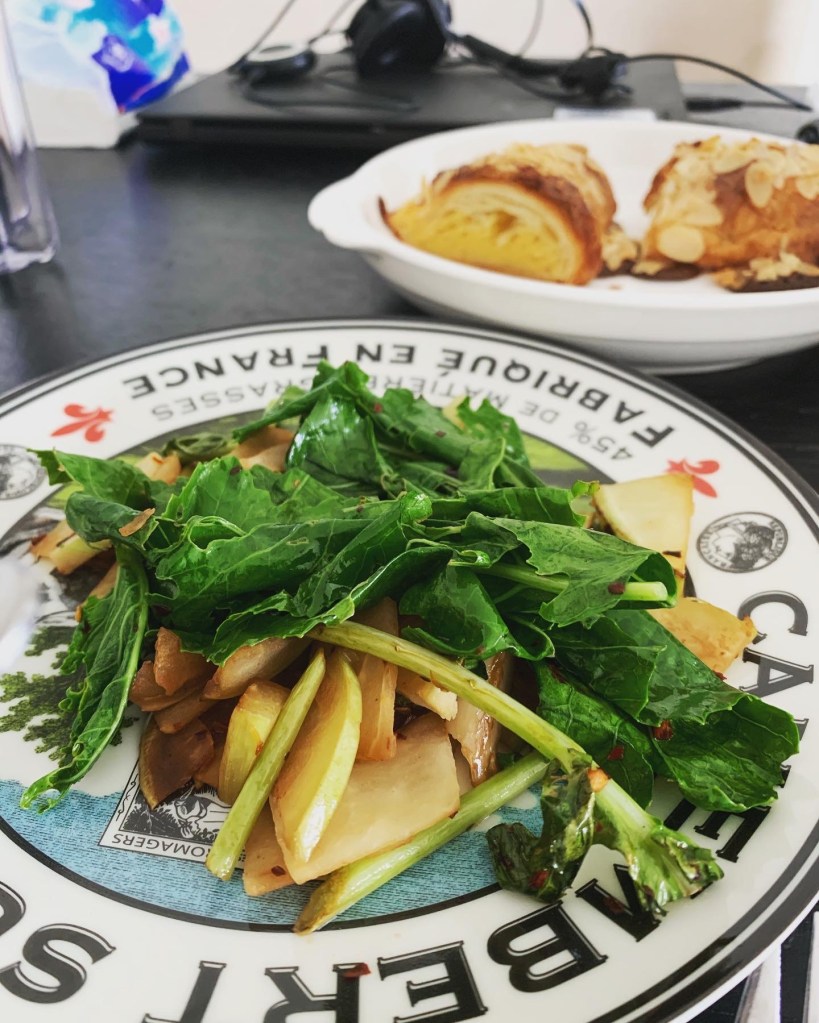
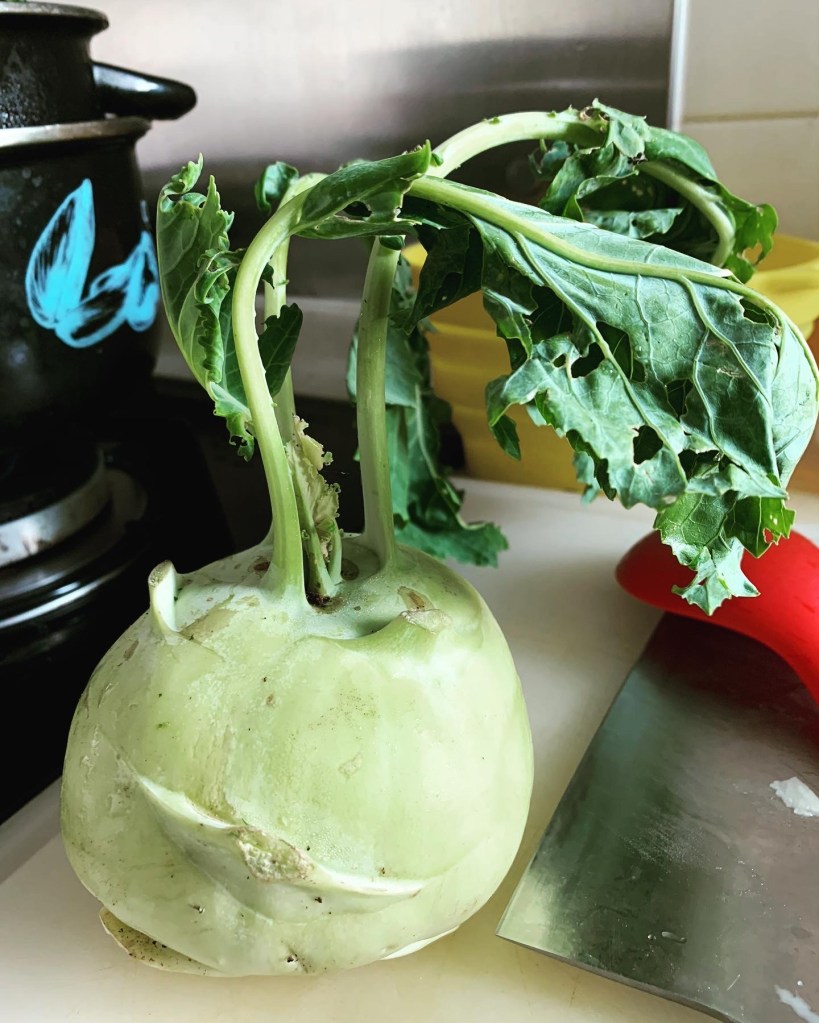
1 Kohlrabi 1 garlic clove 10 tablespoons water Pepperoncino (dried chili flake)
Method:
1. Divide kohlrabi into three parts: bulb, stem, leaves 2. Slice into thin slices, around 0.5cm each 3. Cut each stem in two 4. Wash everything thoroughly and drain 5. Sautée bulb and stem in olive oil, chili flakes, and garlic 6. Add bits water to soften as you go, around 2 tablespoons at a time, until the water is fully evaporated each time 7. Add the leaves to the pan 8. Cook until leaves are also softened 9. Add salt to taste, then serve
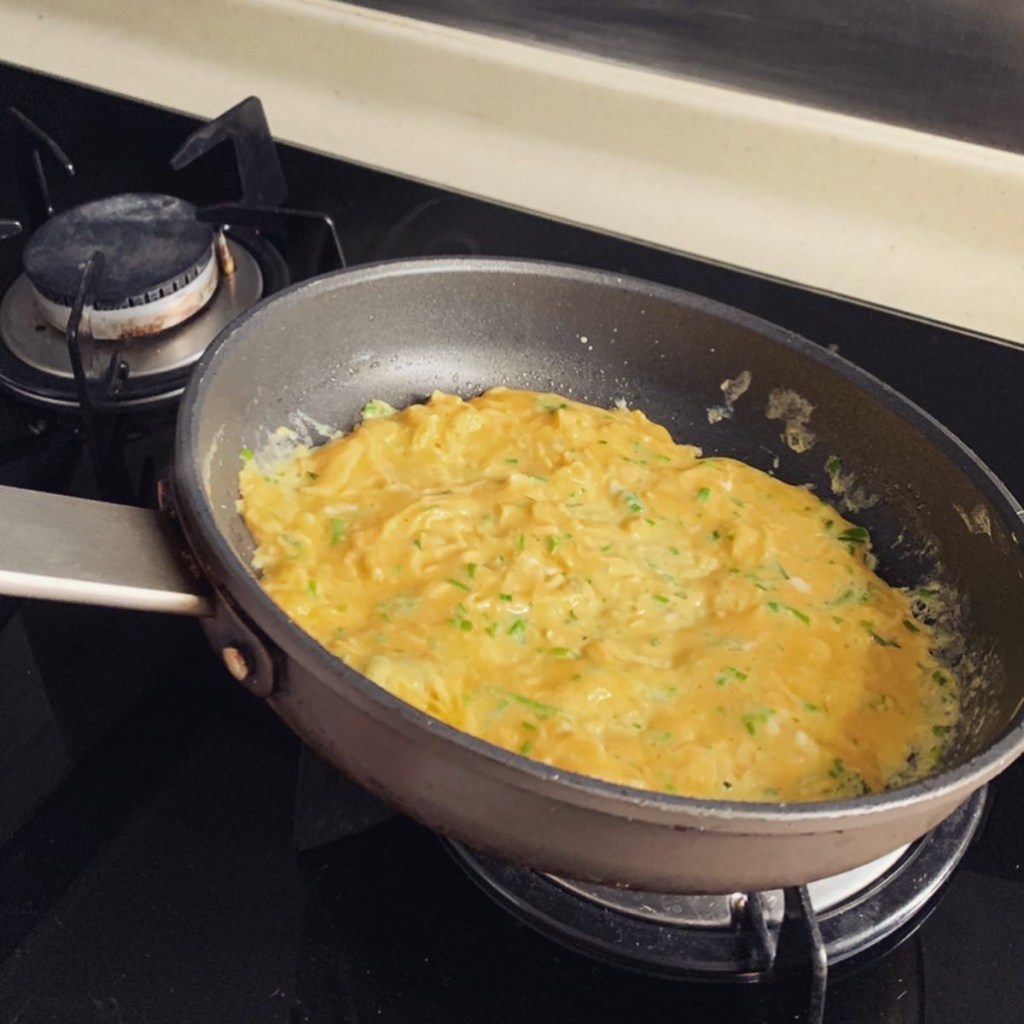
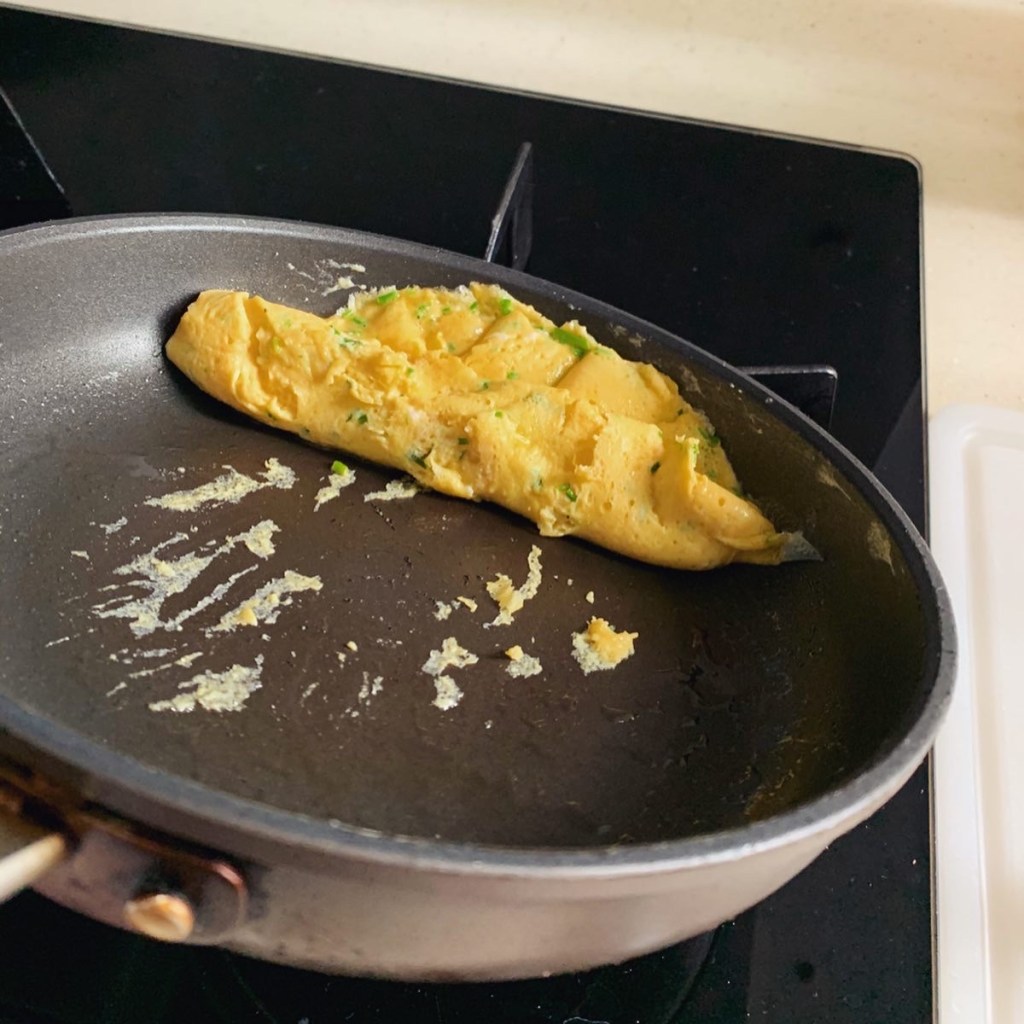
1. Beat two eggs thoroughly 2. Heat a non-stick pan at medium-low heat 3. Melt butter in pan 4. Pour egg mixture into pan 5. With your main hand, take a metal spoon and make constant “figure of eights” in the egg, so as to prevent curds from forming 6. With your other hand, shake the pan back and forth actively, to complement your main hand 7. If you feel like the eggs are cooking too fast, remove from heat to keep stirring 8. Once egg begins to set, but still very runny, stop the shaking and slant the pan away from you, so that the side farther from you becomes thicker 9. Wait until egg sets bits on the bottom, around 15 seconds 10. With your spoon, release the edges from the pan to make the rolling easier 10. Make the first roll from the thin side, towards the thick side 11. Continue rolling until you nearly reach the opposite edge of the pan 12. Curl the thick side back towards you, so that a “lip” is formed 13. Grab the pan handle in an “underhand” position, then flip omelette gently onto dish 14. Garnish with chives if using
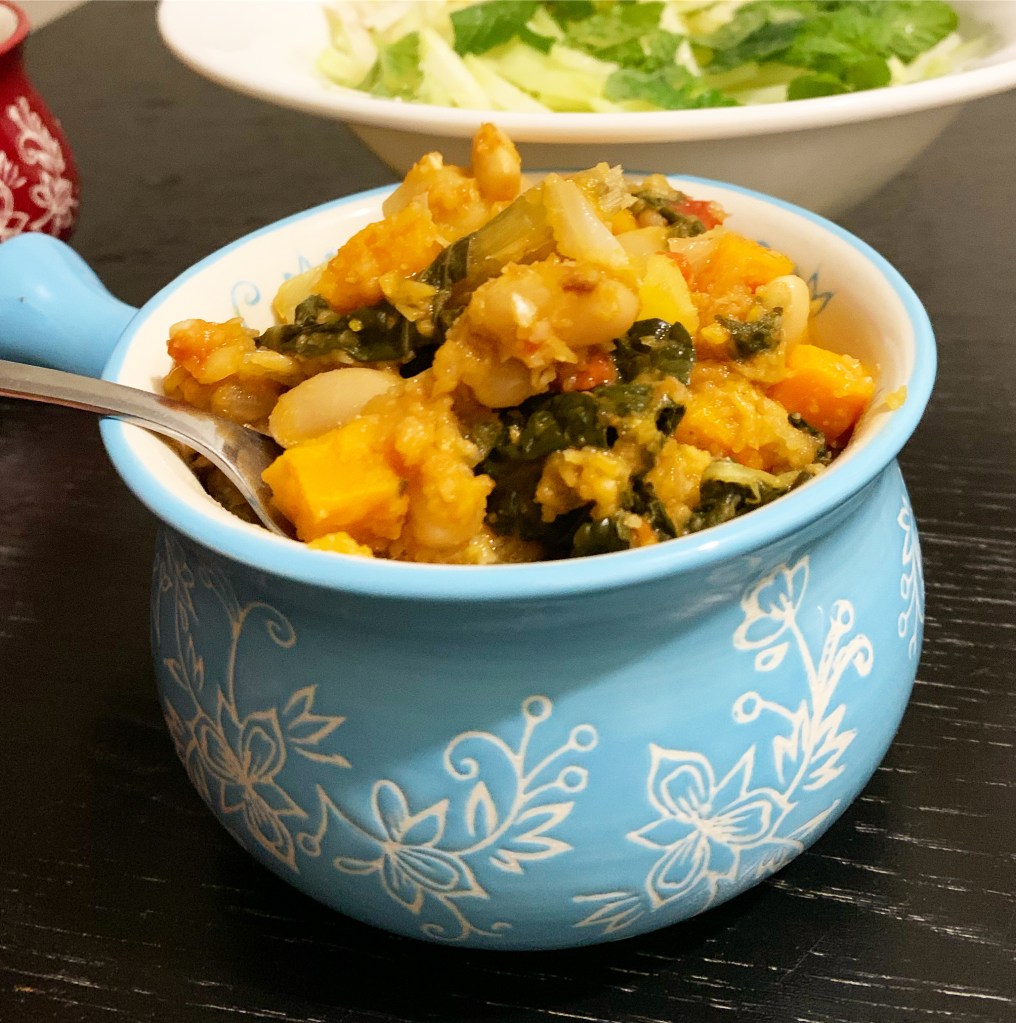
Comfort food heaven… Doesn’t look great but wait till you try it.
This dish requires prior preparation. Best make on a weekend, and eat on a his is a multi-day preparation. Best make in the weekend and reheat and serve (ribollita = reboiled) during the week. This is one of the most satisfying “soul foods” around, and it’s super healthy, and used up stale bread. The star is a vegetable called cavalo nero, which may be hard to find in Hong Kong. Substitutes include beetroot leaves, chard, savoy cabbage, and kale. There’s an official, protected recipe. The method below works well too.
Serves 2
Time: 🕰🕰🕰 Effort: 💪💪💪
Ingredients:
200g cannellini beans 2 mugs water 1 garlic clove 1 sprig rosemary 1/2 carrot 2 stalks of celery 1/2 onion Any dark leafy green you can find from local farmers, such as chard or beet tops 1/2 can (200g) of peeled tomatoes Stale Italian or french bread Olive oil, salt, pepper 1/2 carrot 1/2 stalk celery 1/4 onion
Method:
1. Soak cannellini beans overnight in 2 mugs of water 2. On the next day, drain the beans and reserve the water 3. Add olive oil into a small pot 4. Add soaked beans and a clove of garlic to the pot 5. Sautée until fragrant 6. Add the soaking water and rosemary sprig into the pot 7. Simmer on medium-low heat for around 45 minutes 8. Meanwhile, chop onion, carrots, and celery into small cubes 9. In a larger soup pot (the “main soup pot”), add olive oil and sautée the onion, carrot, celery on medium heat, until fragrant 10. If using chard, then cut the stalk into small chunks and add this to the pan first 11. Hand-tear your selection of leafy greens and add this to the pot 12. Add the canned tomatoes 13. Cover main soup pot with a lid, and start simmering on low heat 14. Adjust the seasoning as needed 15. By this time, the beans in the smaller soup pot should have fully cooked. Remove half the beans and add this to the main soup pot 16. Remove rosemary spring 17. Blitz the rest of the beans with together with its water using a handheld blender, until a thick soup is formed 18. Add this thick bean soup into the main soup pot, which already contains the rest of the ingredients 19. Mix well and simmer on low heat for 2-3 hours to form the ‘zuppa’ 20. Adjust seasoning as needed 21. Assemble the dish in the following order: stale bread -> olive oil -> half the zuppa, then repeat one more time 22. Cover and let cool in room temperature 23. Aftee cooled down, put in fridge, well covered, until the day of serving 24. On the day of serving, the bread should have amalgamated with the zuppa 25. Reheat on stove top until warmed through 26. Divide into bowls and drizzle with olive oil to serve
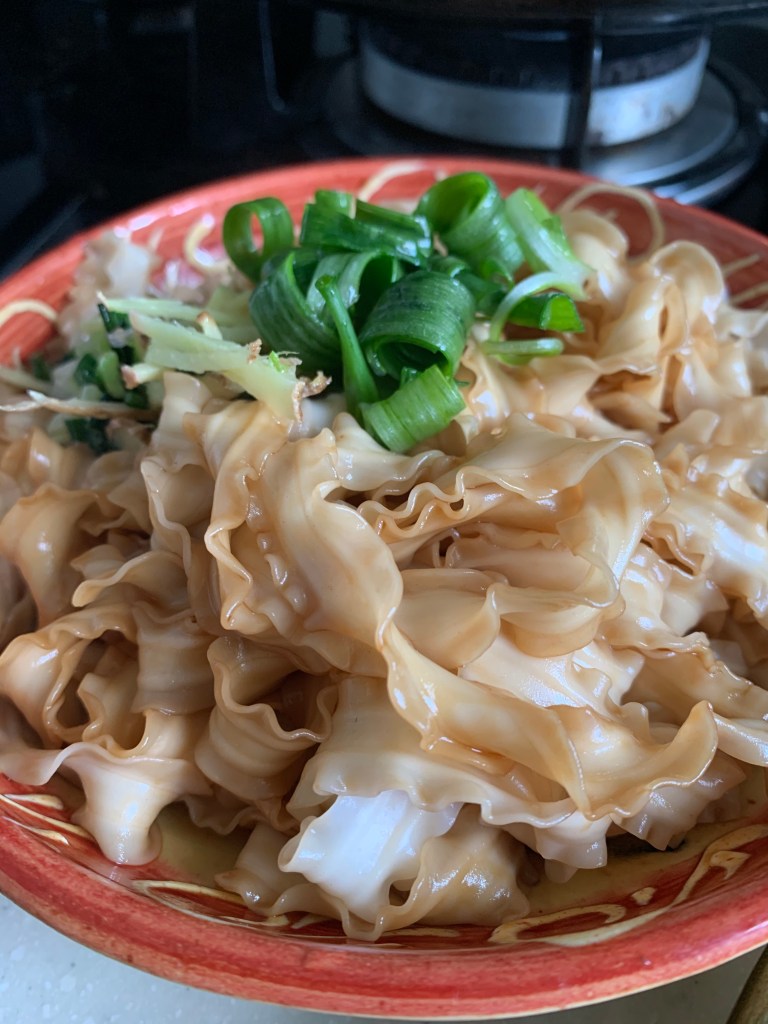
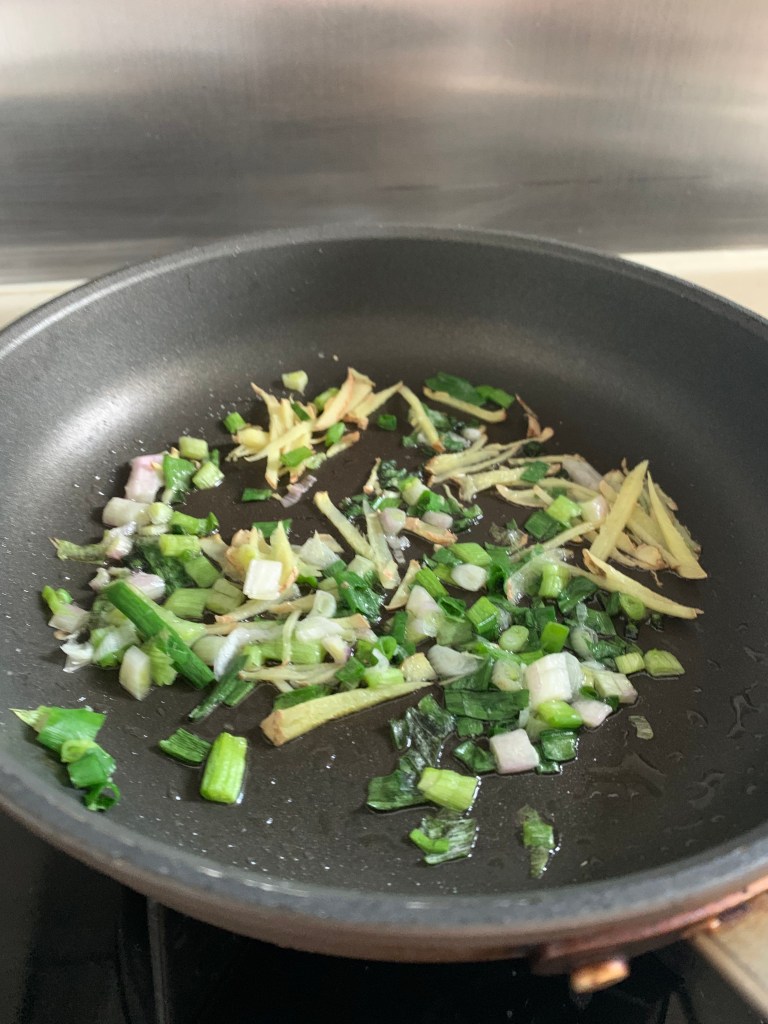
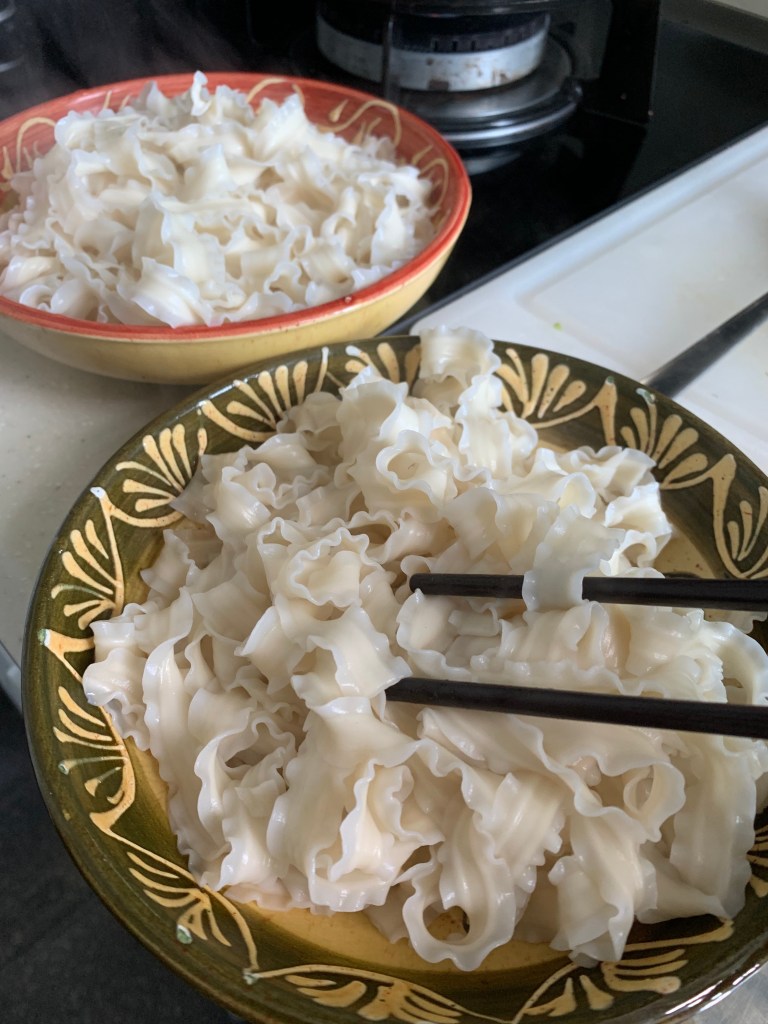
1/2 carrot 1/2 stalk celery 1/4 onion 5-6 nests of dried, knife-cut noodles 刀削麵 2 spring onions 1 small head of ginger White pepper 1/2 tablespoon sesame oil 2 tablespoon light soy sauce 1 tablespoon dark soy sauce 1 tablespoon sugar 2 tablespoon normal cooking oil
Method:
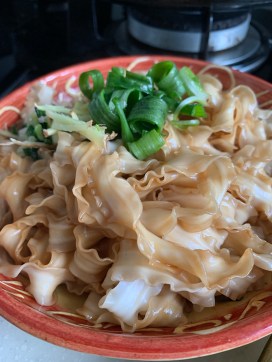
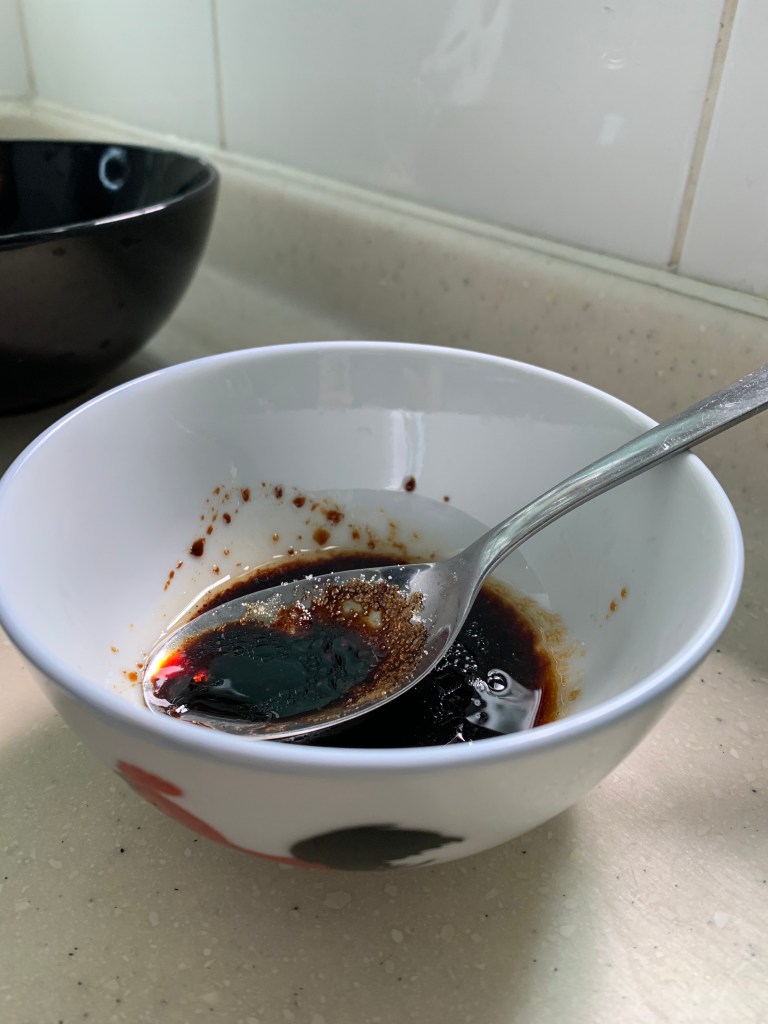
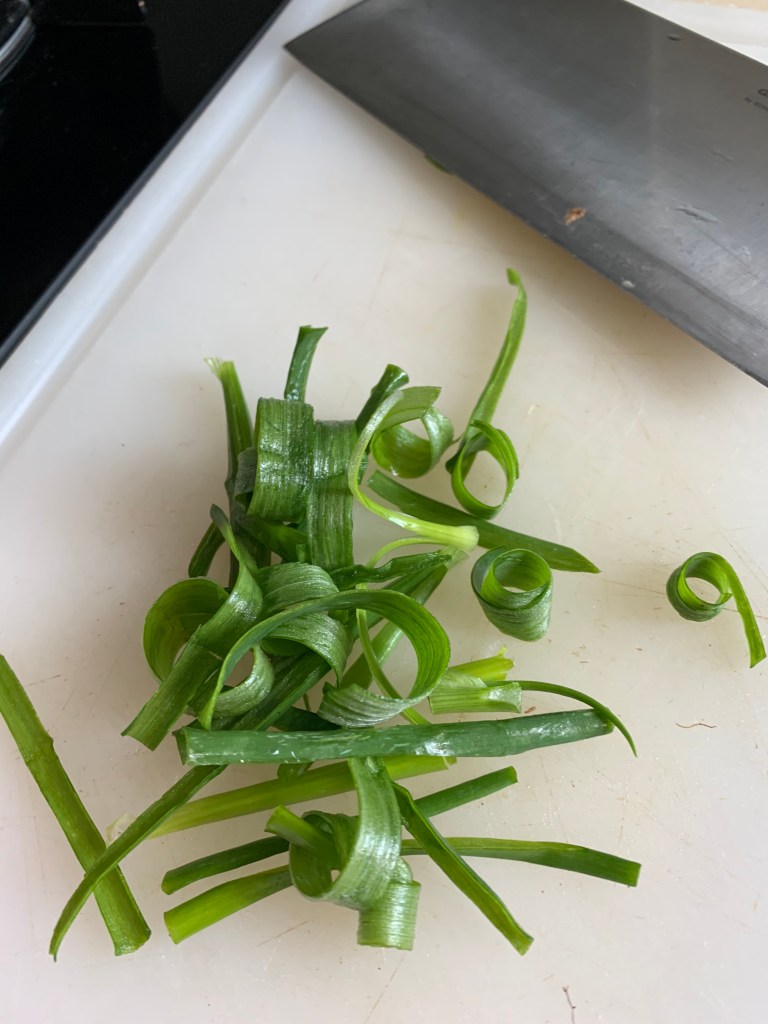
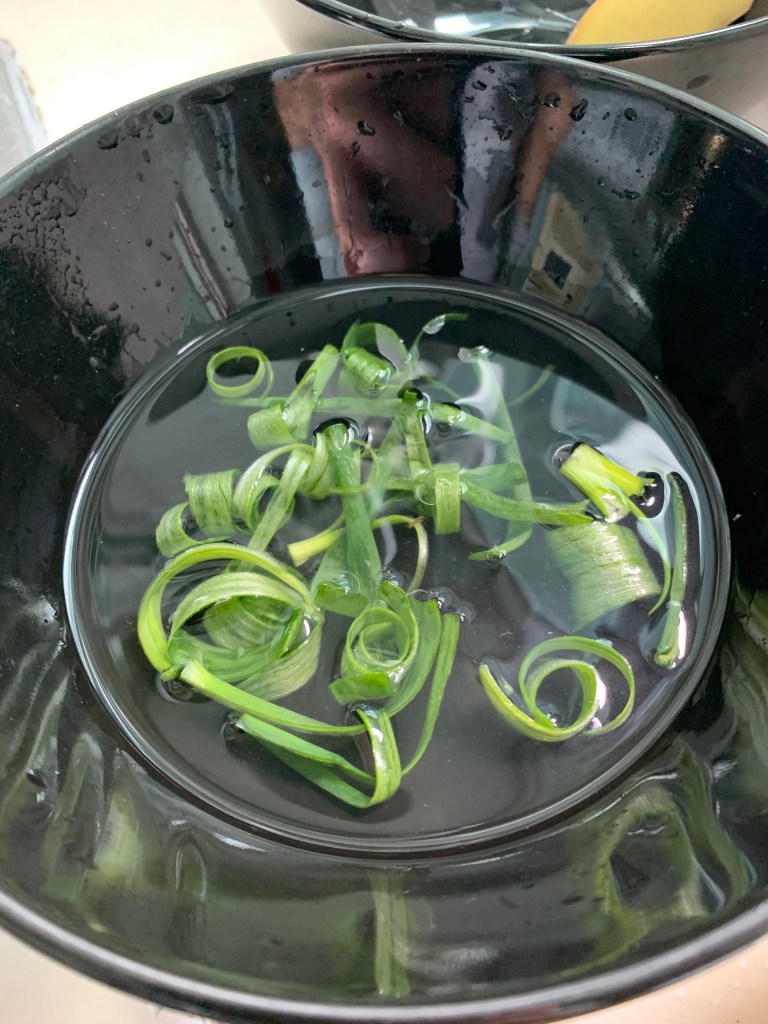
1. Finely chop the ginger and set aside 2. Cut spring onion into 4 equal sections 3. Take the bottom two sections and the top section, finely chop and combine with the ginger; set aside 4. Take the third section and further cut into one-inch long sections 5. Slice down the centre of each of these sections lengthwise 6. Using your fingers, flatten each of these section on the cutting board and they should magically curl up 7. In case they don’t curl up enough, soak these sections in cold water so that the inner-facing, moist layer expands even more, causing it to bend outward; set aside 8. Prepare the mixing sauce by combining sesame oil, light and dark soy sauce, and sugar 9. Prepare a pot of boiling water and maintain on medium heat 10. Put noodles into the boiling water to cook, checking from time to time that the bubbles don’t cause the contents to spill 11. In parallel, in a separate pan, quickly fry the finely spring onion and ginger from step 3 in normal cooking oil, along with a dash of white pepper 12. Strain the noodles once al dente 13. Divide noodles into serving bowls 14. Add the mixing sauce 15. Add the spring onion and ginger from step 11 16. Mix well 17. Place the curled up spring onion sections on top
For 6 bánh xèos Serves 2 very hungry adults or several dinner guests as a side
Time: 🕰🕰 Effort: 💪💪
Ingredients:
100ml coconut cream 15 tablespoon rice flour 500ml water 2 spring onions 1/2 tablespoon turmeric powder 100g pork belly 100g frozen shrimp Half catty bean sprouts 1/2 medium carrot, shredded 2 heads of long salad lettuce, such as Indian lettuce Mint
For nuoc cham (dipping sauce):
Fish sauce Garlic Chili Water Lime juice Sugar
Method:
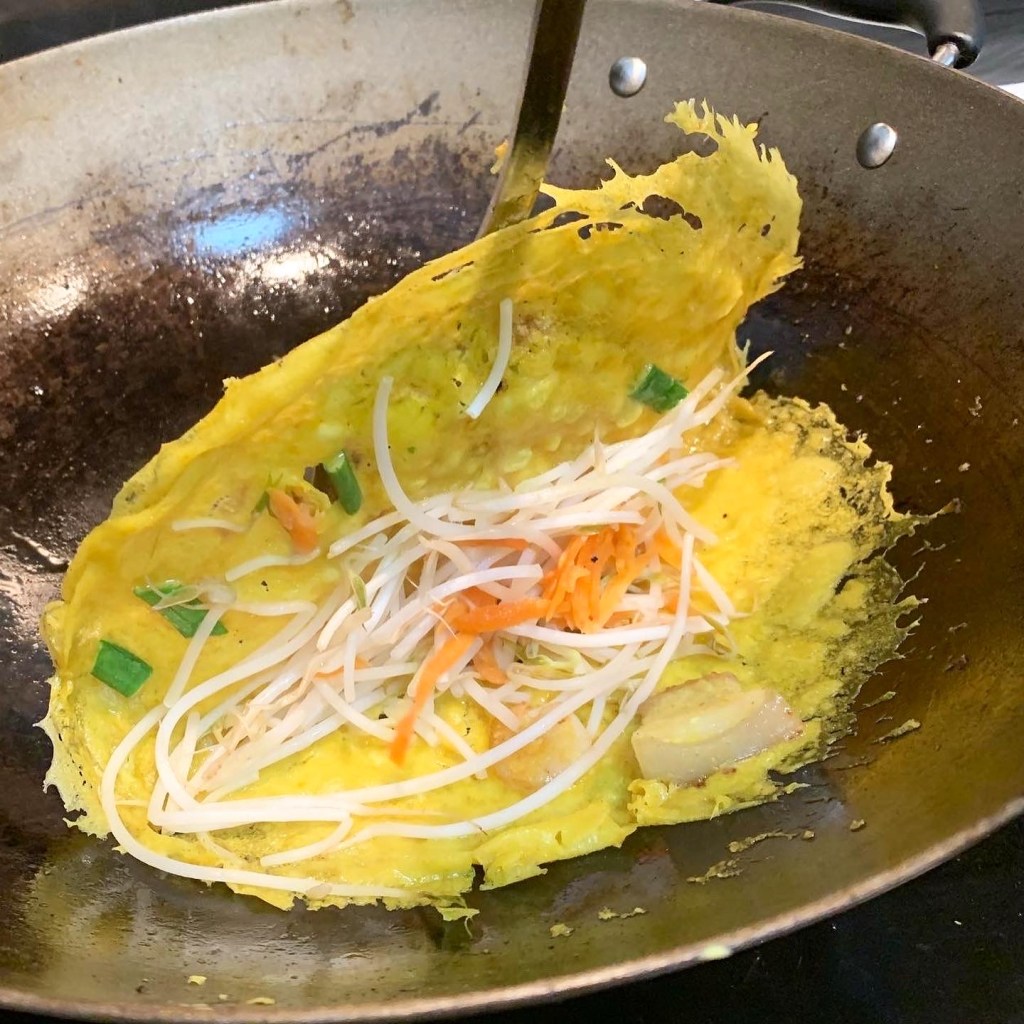
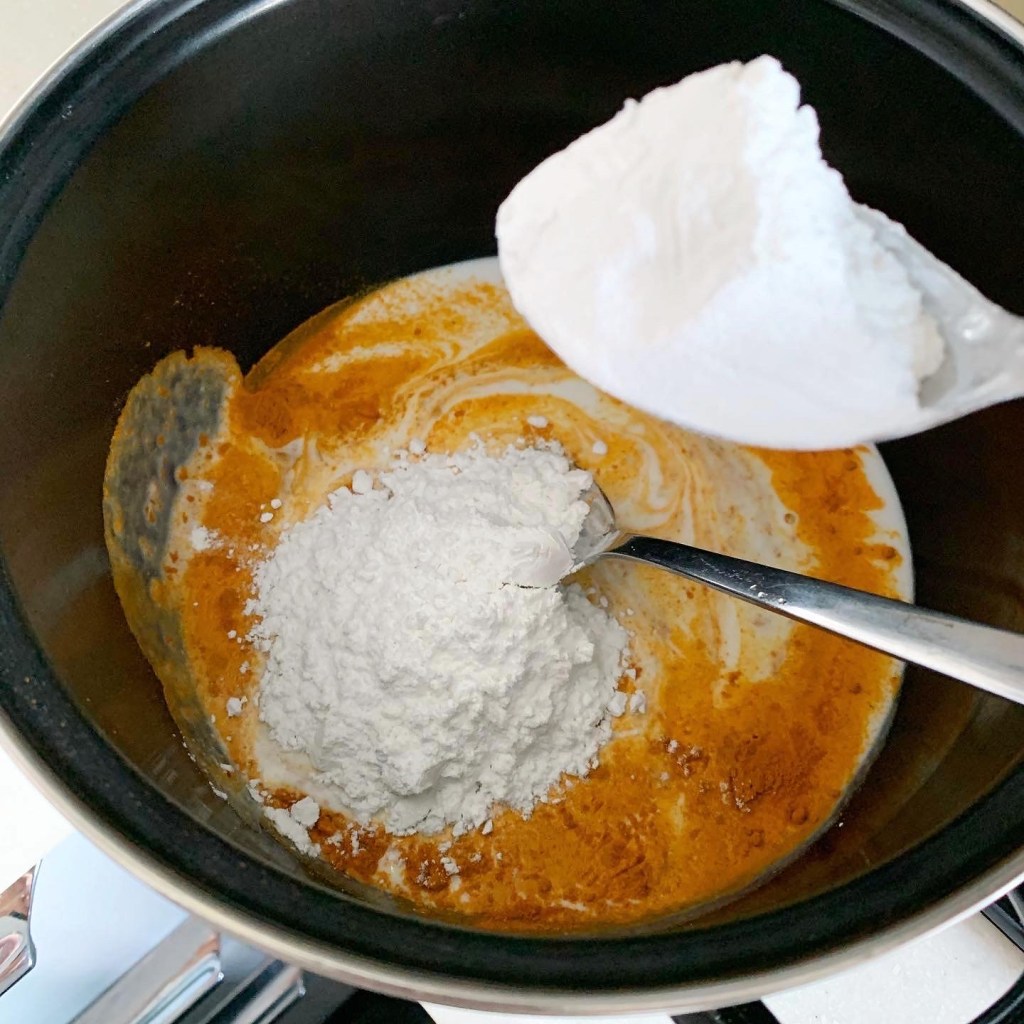
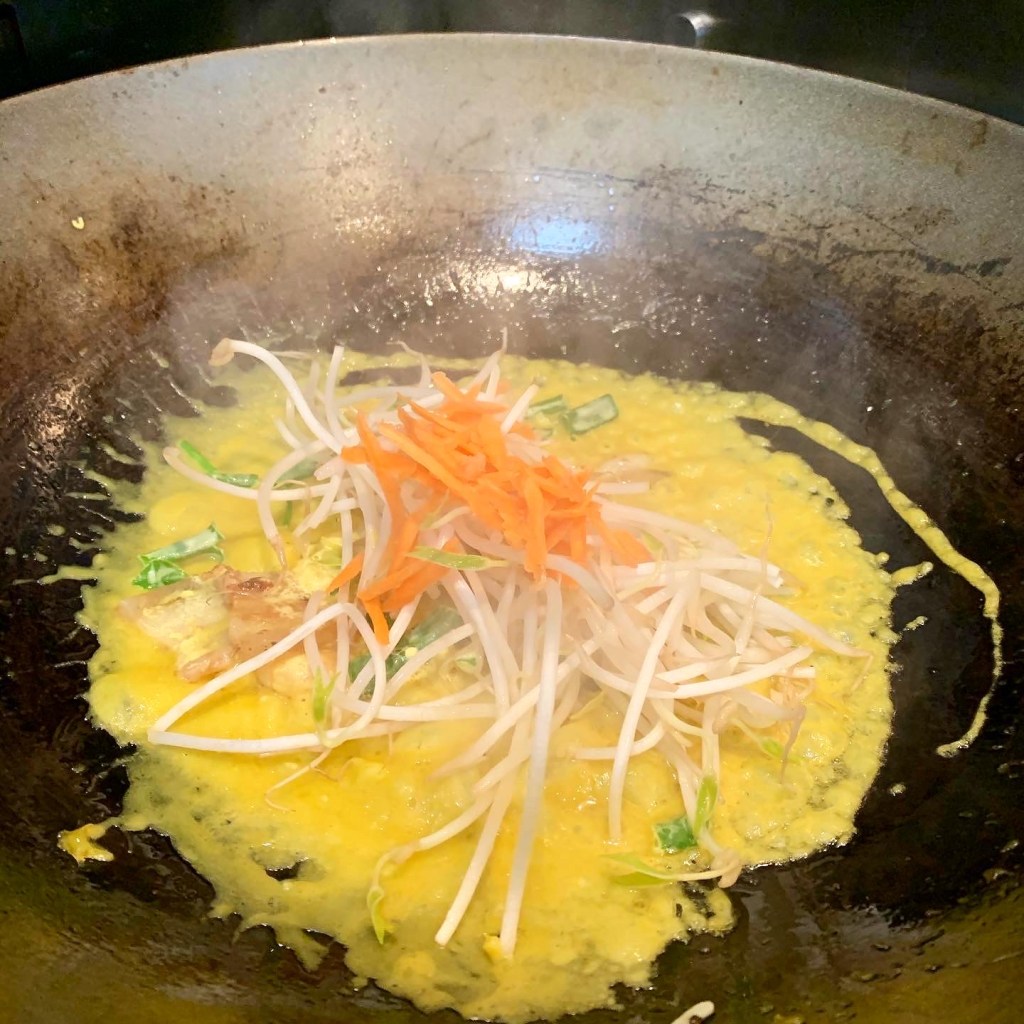
1. Preheat oven to medium-high (~200C) 2. Search cupboard for ceramic ramekin or any ovenproof vessel 3. Chop carrot, celery, onion into equal sized chunks 4. Sautée in olive oil until slightly softened but not brown 5. Tip contents into bottom of baking vessel 1. To make the nuoc cham, mix together fish sauce, water, sugar, chopped garlic, chopped until it reaches your desired taste (Alternative: save a packet of the sauce next time you order Vietnamese takeaway!) 2. Slice pork belly into 1 cm slices 3. Combine pork belly with shrimp 4. Add salt to taste and microwave the two together until cooked through 5. To make the batter, mix coconut cream, turmeric powder, chopped spring onion, then pour in water while stirring, until a thin batter is formed 6. Heat wok until red hot 7. Maintain wok at medium high heat 8. Add 2 tablespoons of oil to wok and swirl around so that most of the inner surface is shiny 9. Add a few pieces of the pork and shrimp to the wok 10. Using a soup ladle, pour in a ladle of the batter and immediately swirl 11. Swirl the batter around to form as thin a layer as possible 12. Once shell has taken shape – around 10 seconds – add a large handful of bean sprouts to the top ⠀ 13. Add a small handful of shredded carrot, if using 14. Cover wok with wok lid and wait for around 3 minutes 15. Scrape around the edges to check if the bottom of the crepe has crisped up; if not, wait a few more seconds 16. Fold half of the crepe over to form a shell 17. Remove and set aside 18. Repeat until around 6 bánh xèos are made 19. To serve, each guest takes a leaf of lettuce in their hand, add some mint leaves, and a slice of the bánh xèo 20. Roll lettuce up and dip into nuoc cham 21. Enjoy!
The amount of flavour you can generate with this is incredible.
Serves 4
Time: 🕰🕰🕰 Effort: 💪💪
Ingredients:
2 medium carrots 1 celery stalk 2 sprigs thyme 1 Bay leaf Beef cheeks (one pack; around 500g) Half bottle Cabernet Sauvignon Flour Half jar Tomato passata, around 250ml 1 mug of beef stock (optional) Olive oil, salt, pepper
Method:
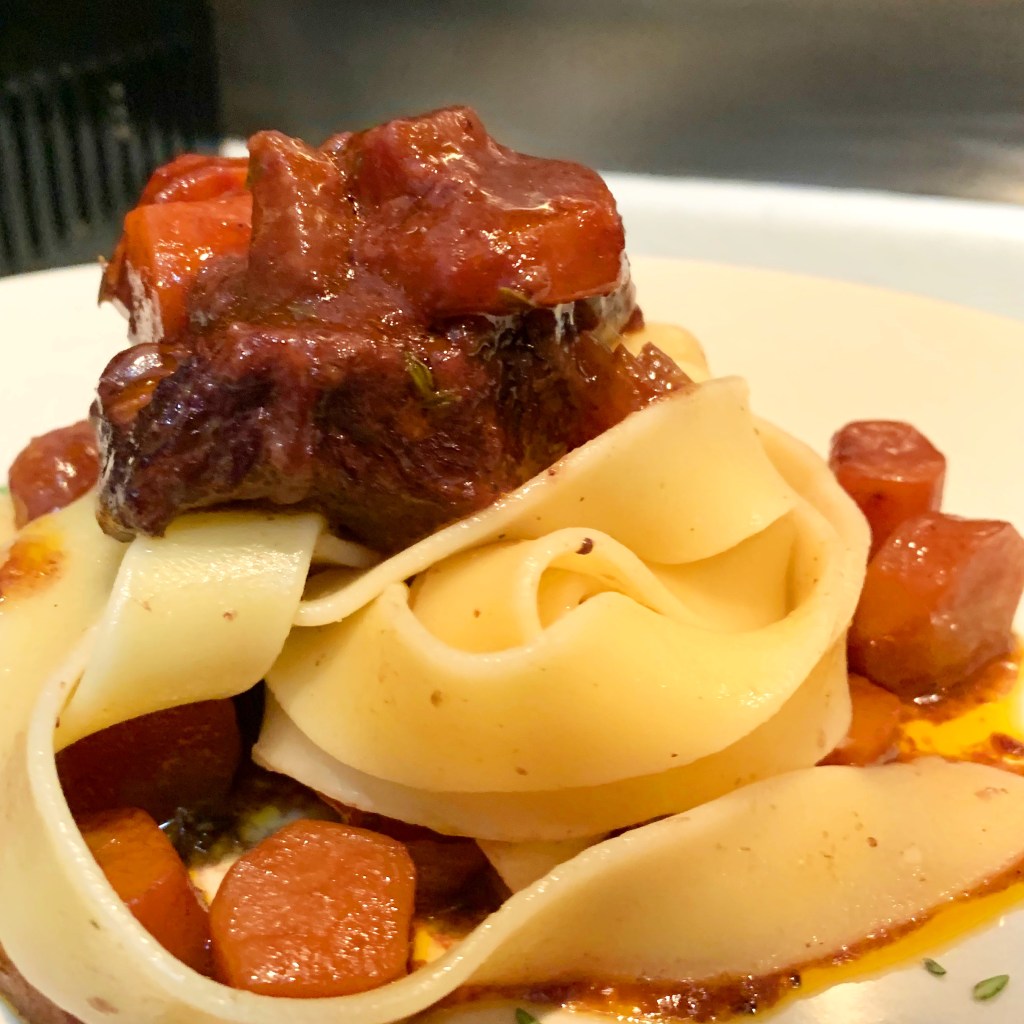
1. Defrost pack of beef cheeks in a sink filled with room temperature water 2. Chop carrots into small medallions, about 4 coins thick 3. Chop celery into similar-sized chunks as the carrots 4. Cut beef cheeks into large chuck; aim for 2 to 3 chunks per person 5. In a large bowl or pot, place beef cheeks, carrots and celery, thyme, and bay leaf 6. Pour over red wine, making sure beef is submerged (it doesn’t matter if veg is submerged or not) 7. Soak for at least 6 hours 8. Preheat oven to 190’C 9. Take out the beef chunks, pat dry, and season with salt and pepper on all sides 10. Dust each beef chunk in flour and then fry in a pan of olive oil until golden brown and crispy on the outside (about 5 minutes) 11. Remove beef chunks from pan and set aside 12. Fish out the carrots and celery from the red wine and sautée in the same oil and same pan until softened 13. Pour the red wine juice into the pan and heat until liquid is reduced by half 14. Add tomato passata and beef stock (if using) to the pan and mix well 15. Check saltiness and add salt and pepper to taste, keeping in mind the sauce will reduce a bit in the oven 16. Transfer contents of the pan into an overproof baking vessel 17. Place beef chunks into the baking vessel so that they are evenly spaced out 18. As a guide, the liquid should almost cover the top of the beef chunks; if not, add a little water or stock (if using) 19. Cover contents with a layer of parchment paper, touching the contents, to keep moist and absorb oil while cooking 20. Seal the whole vessel in kitchen foil so that it’s more or less air tight 21. Bake in oven for 1 1/2 hrs 22. Divide contents into serving dishes 23. Garnish with thyme, parsley, or anything nice and green 24. Serve contents with pappardelle, polenta, rice, mashed potatoes, or on its own as a main course




 Nat & E Homecooking