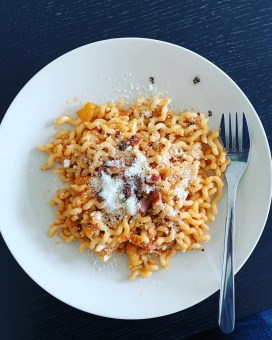
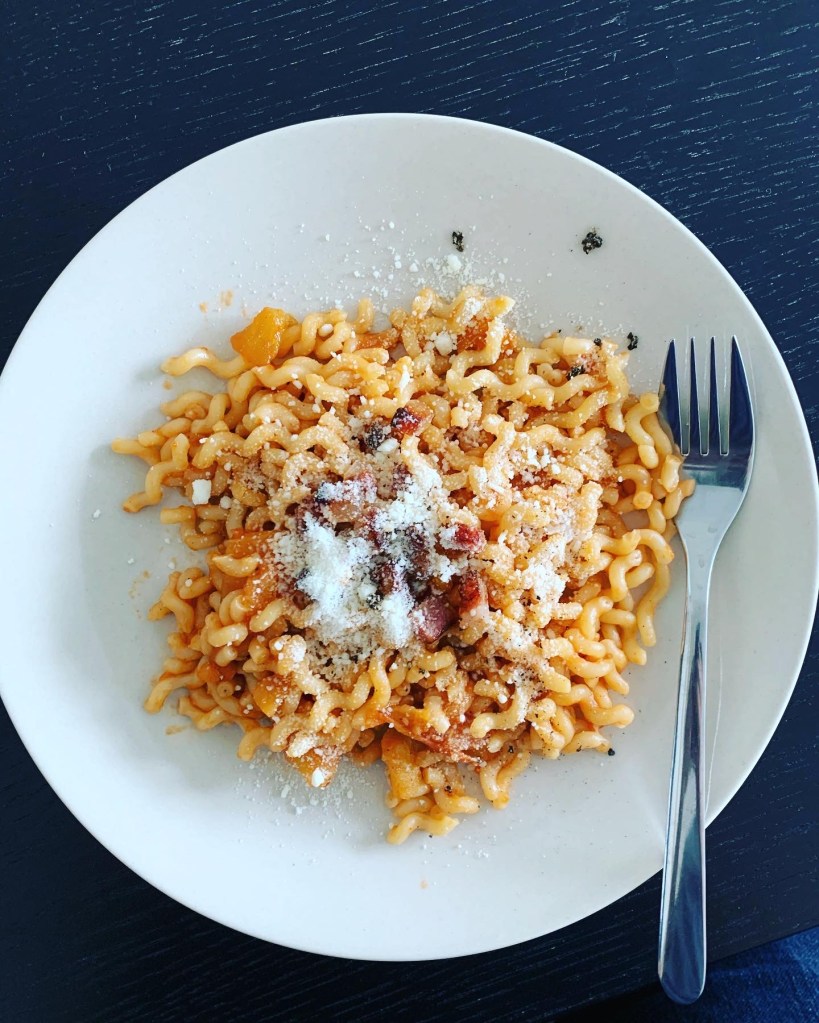
Amatriciana

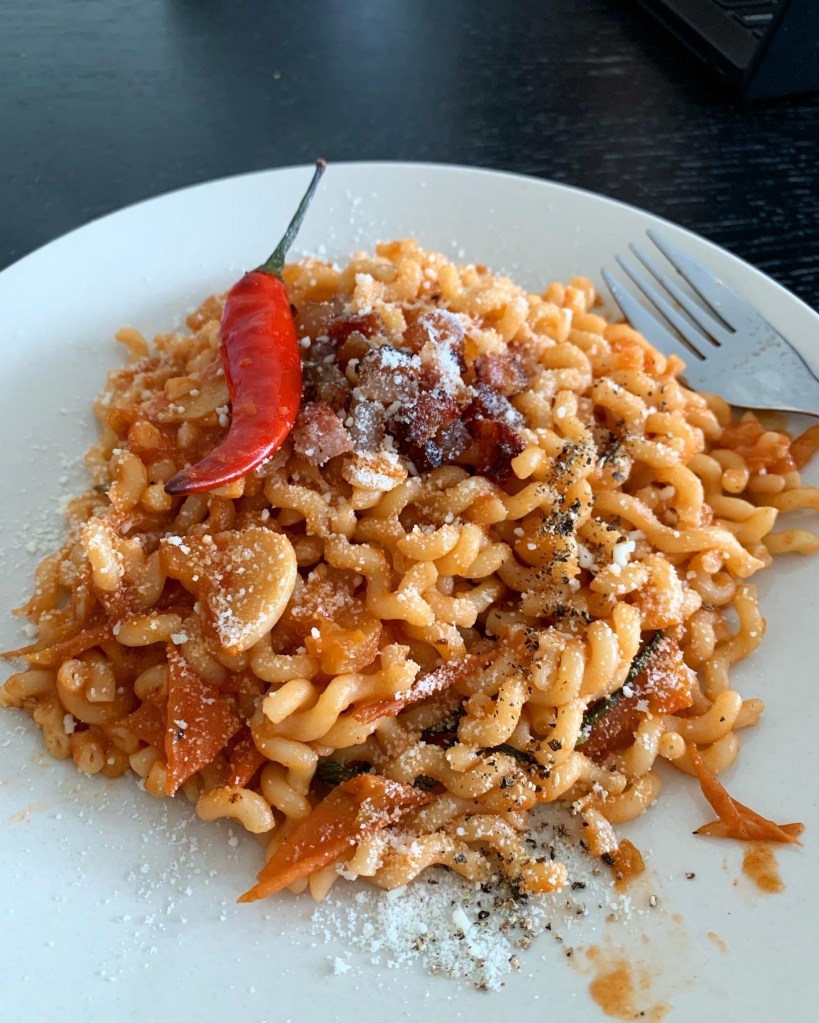
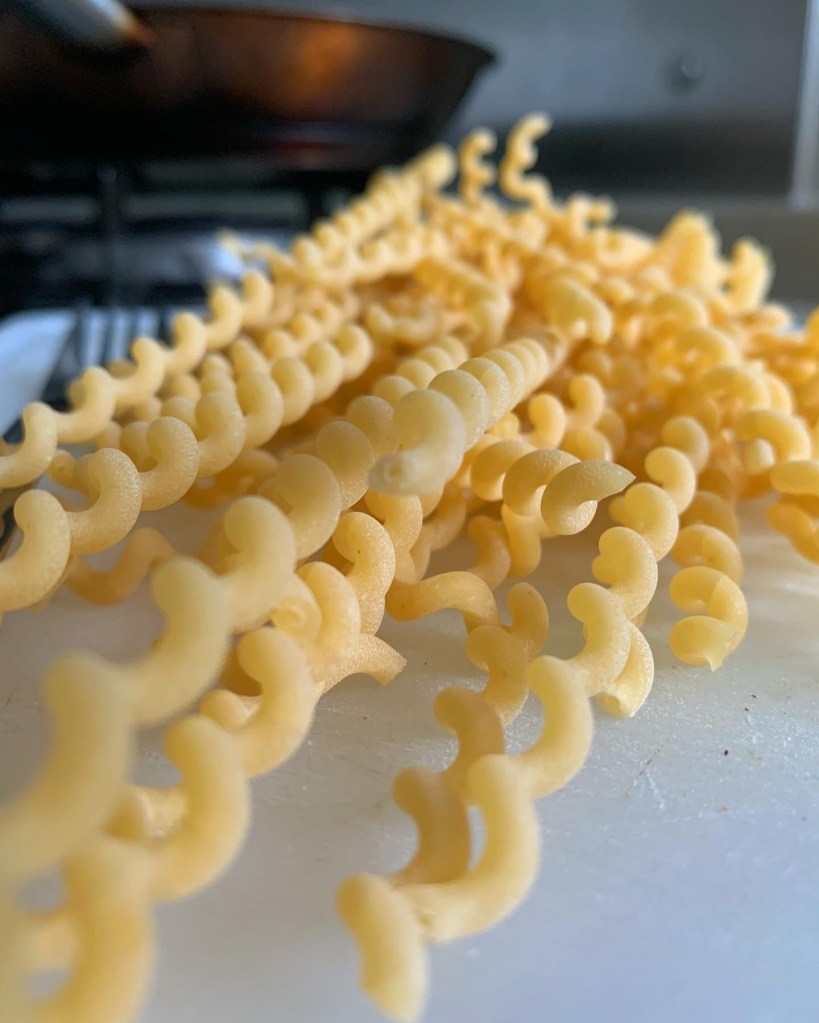
Each time we buy guanciale, we go through three dishes in a week – it’s mandatory! First, carbonara. Then, amatriciana. Then, alla gricia (but with an exaggerated amount of cheese that it becomes more like Spätzle! Here we use a wonderful type of pasta from Tesco’s Finest (USelect in Hong Kong) called fusili col buco, which literally means fusili pasta with holes. Perfect for mopping up the sauce of this delightful dish.

Serves 2

Time: 🕰🕰
Effort: 💪

Ingredients:

250g pasta (here: fusilli col buco)
1 chili
2 garlic cloves
1/2 slice of guanciale
1 fresh tomato
Small handful of fresh herbs, such as basil or tarragon
1 tablespoon tomato concentrate
Salt and pepper
Handful of pecorino romano

Method:

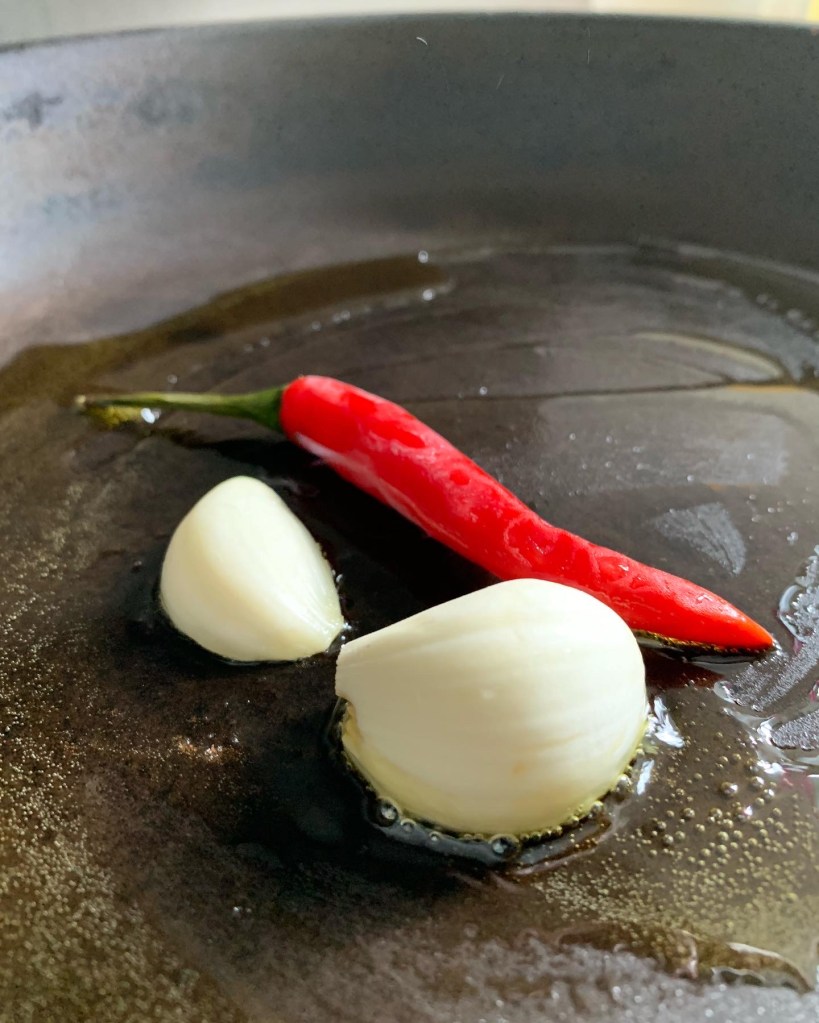
1. In a large frying pan, add 3 tablespoons olive oil, garlic, and chili
2. Turn flame to medium low to infuse the flavours into the oil
3. Meanwhile, prepare a large pot of water and bring to the boil
4. Add salt to the water until it has the saltiness of a light soup
5. Put pasta in water
6. On a cutting board, cut guanciale into small cubes
7. Transfer guanciale into a small frying pan and turn heat to medium to start cooking
8. In the large frying pan, check that the garlic has turned golden but not brown
9. Remove garlic from pan
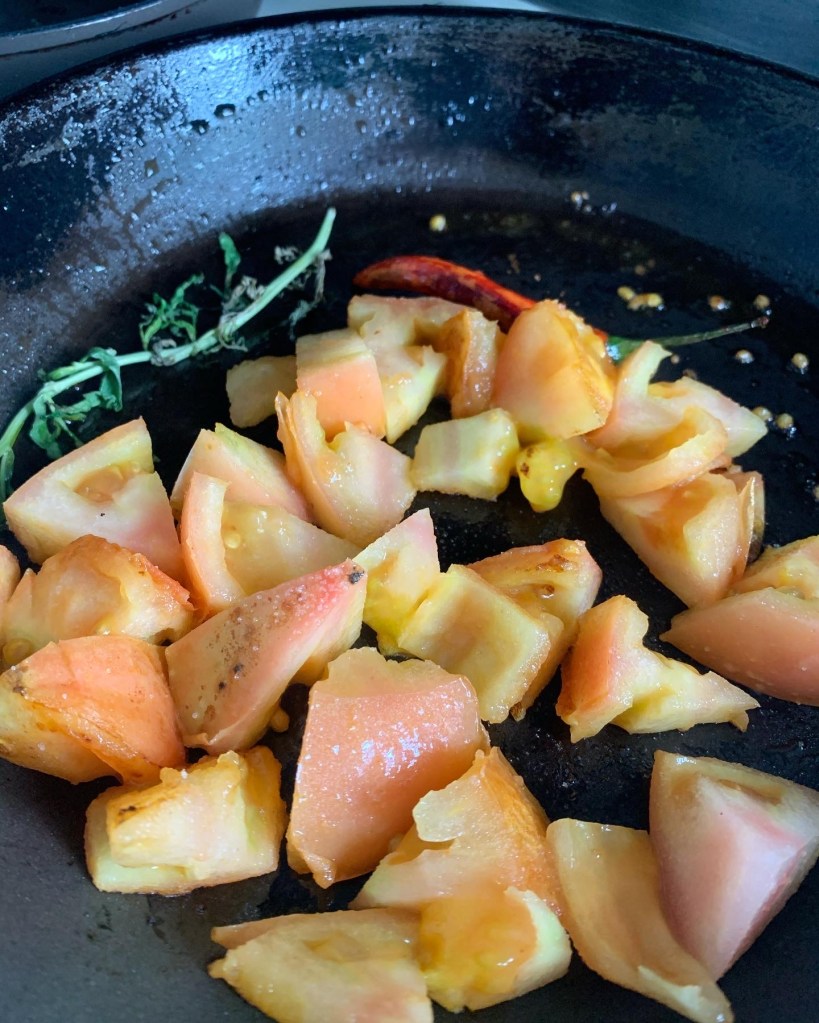
10. Wash and chop tomato into small chunks; add to large frying pan, along with fresh herbs
11. Turn heat to high to start disintegrating the tomato
12. Remove guanciale from the small frying pan; set aside
13. Tip the remaining guanciale oil into the large frying pan with the tomatoes
14. Add 3 ladles of pasta cooking water and tomato concentrate
15. Cut one of the garlic cloves into thin slices and add to the large frying pan
16. Stir actively until a creamy sauce is formed
17. Strain pasta and add to the pan
18. Add more pasta cooking water and a tiny bit of olive oil as needed, to further thicken the sauce
19. Once sauce has combined well with pasta, remove from flame
20. Divide pasta into plates
21. Add the guanciale on top
22. Sprinkle with pecorino and coarse-ground black pepper
23. Garnish with the chilli from the pan, which should now be slightly burned and fragrant
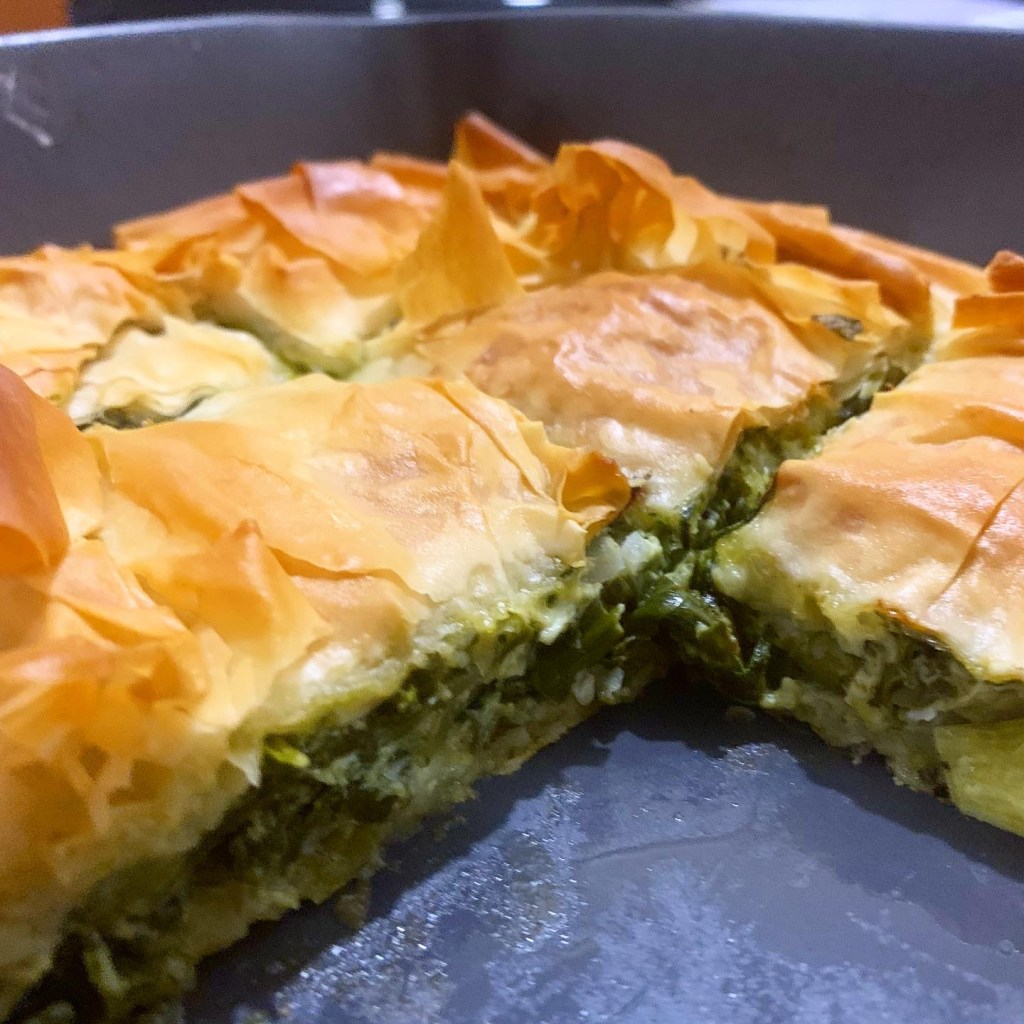
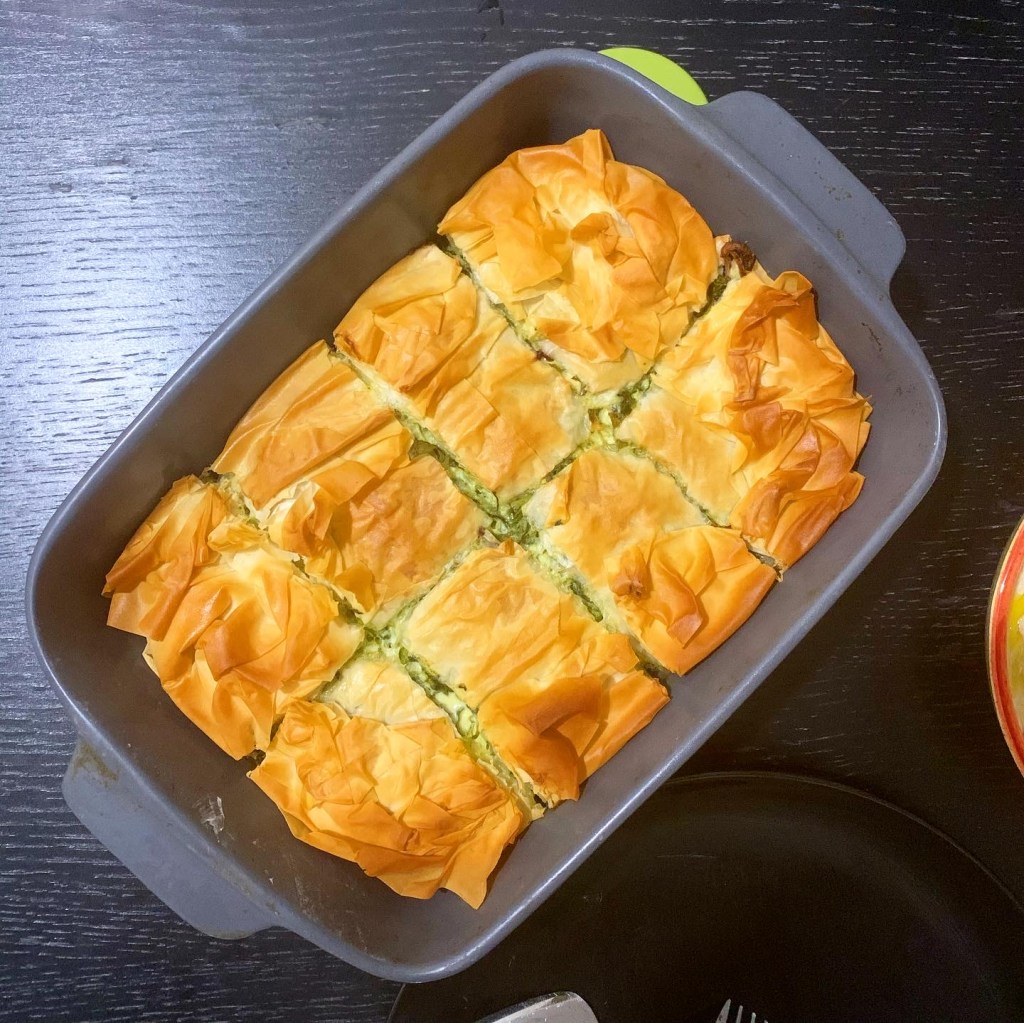
Our Spanakopita with leftover greens

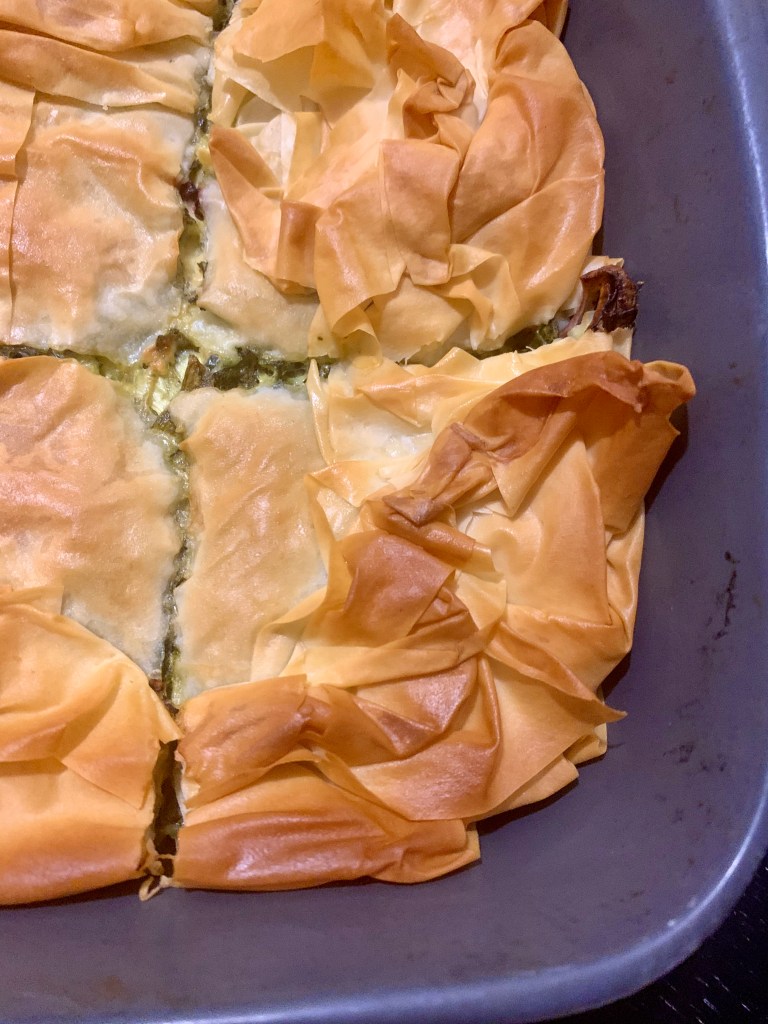
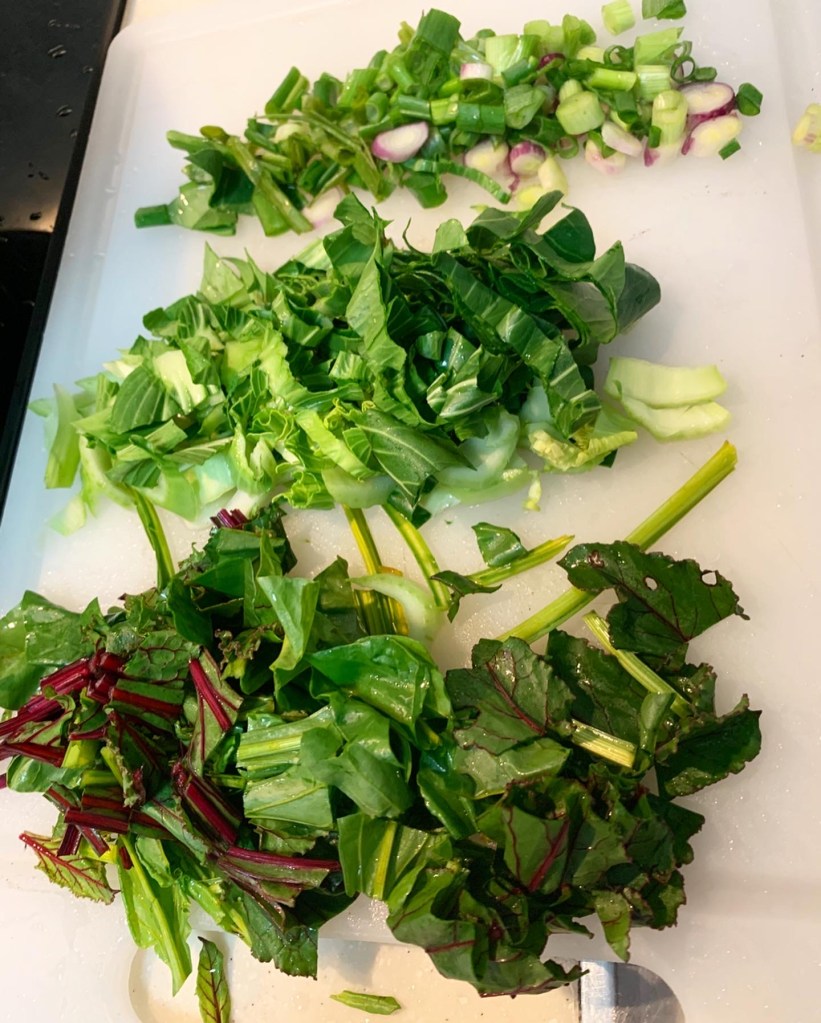
Note: traditionally, as the name implies, spanakopita is made with spinach. However, the spirit of the dish lives on through other greens as well. In the spirit of Nat & E Homecooking, we use what’s readily available in our fridge and our neighbourhood. This time: baby spinach, spring onions, beet leaves, chard, Shanghai pak choi (小棠菜), coriander, and onion⠀

Serves 4

Time: 🕰🕰🕰
Effort: 💪💪

Ingredients:

Half a pack of filo pastry
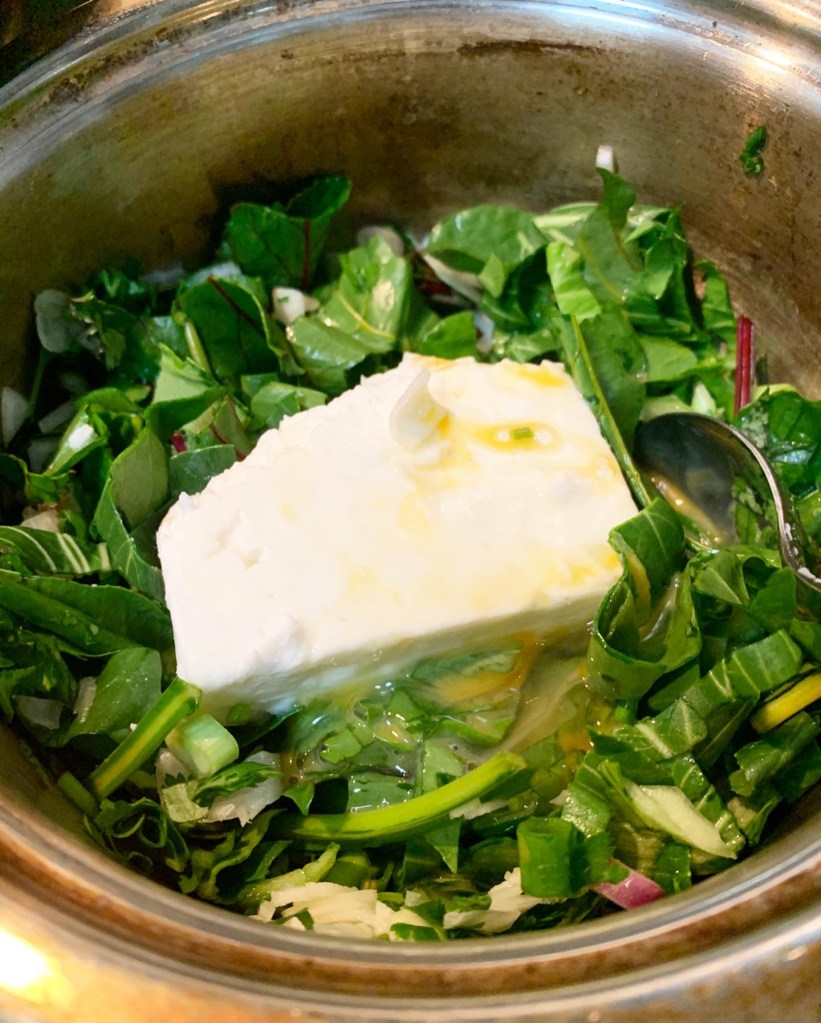
100g feta cheese
1 egg
Roughly 500-750g of green vegetables
1 garlic clove
Dill
1 squeeze of lemon juice
A dash of ground nutmeg (optional)
Olive oil

Method:

1. Half a day before, take filo pastry out of the freezer to thaw
2. Rummage fridge for leftover greens; wash
3. If using, first wilt the spinach in the pan with a sprinkle of salt, in order to release the water within
4. Once wilted, run spinach through cold water to pause its cooking
5. Squeeze out as much liquid as possible with your hands by pressing through a sieve or muslin cloth
6. Chop rest of the vegetables into even-sized chunks
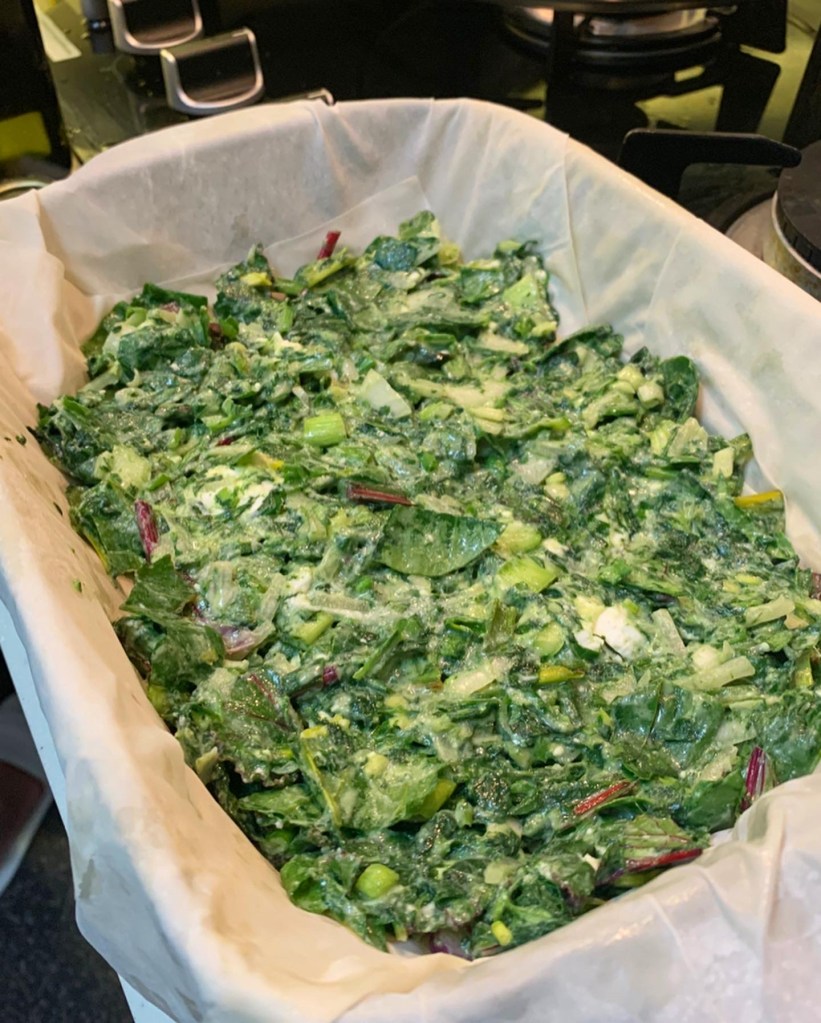
7. Transfer all vegetables, including the spinach, into a mixing bowl
7. Add feta cheese, egg, dill, and nutmeg
8. Mix well with your hands
9. Taste and adjust seasoning with salt and lemon juice as needed
10. Finish with a turn of black pepper
11. Preheat oven to 200’c
11. Rub the bottom and sides of a roasting tray with olive oil
12. To assemble the pie, lay one layer of filo onto the baking tray (with lots of overhang), then brush with a little olive oil (or just use your fingers)
14. Repeat until two-thirds of the layers are used up – around 8 layers
15. Spoon in the fillings
16. Repeat with around 6 more layers, until you can just about still see the greens underneath
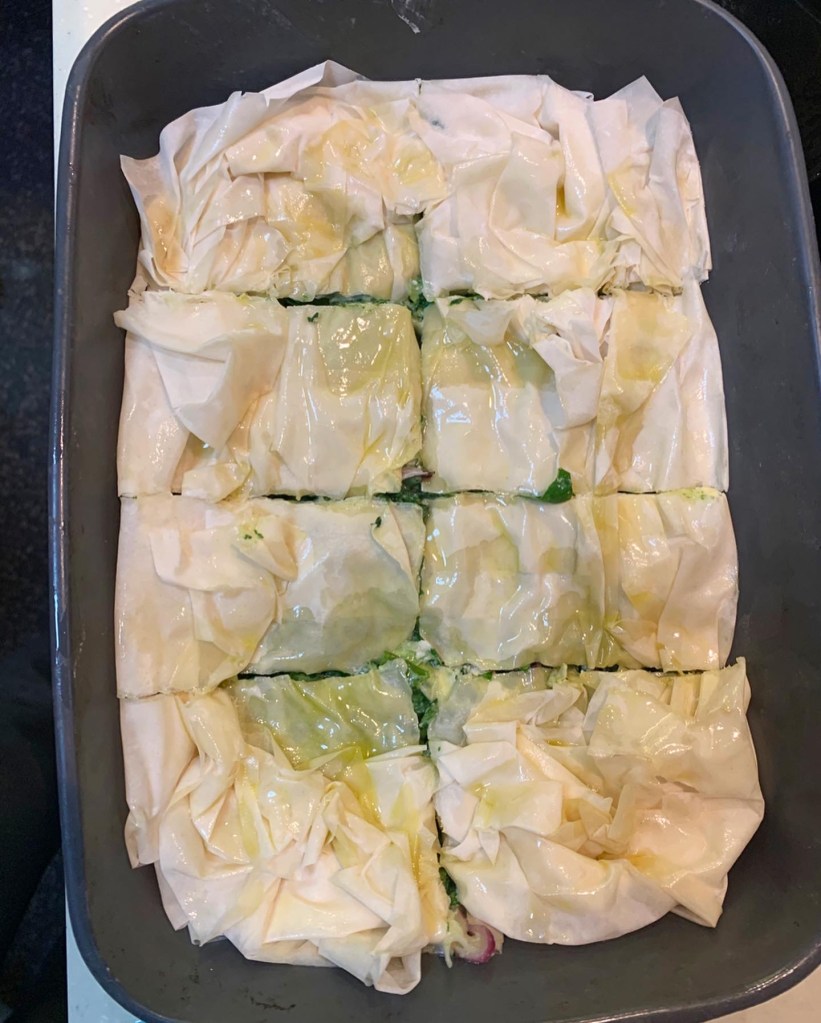
17. Fold the overhang inwards to form the signature crumple
18. Sprinkle with one last layer of olive oil
19. Cut into desired slices
20. Bake for 30–40 minutes, until golden brown
21. Serve hot, or as a cold picnic snack the next day

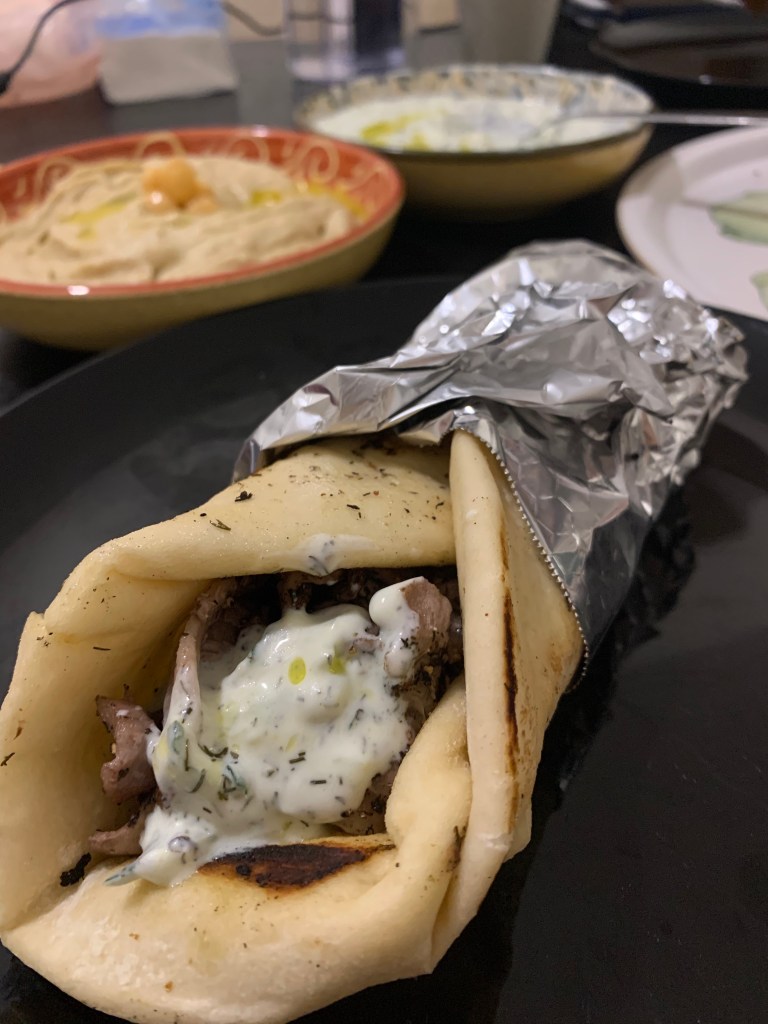
Apollo and Artemis inspired pita with hotpot lamb

Toasted pita in lamb drippings. Homemade tzatziki. Hotpot lamb.

We had a similar dish at a restaurant in Wanchai, Hong Kong (on Moon Street), called Apollo and Artemis, known to be the best Greek-style taverna in Hong Kong. We’re best to live in a hotpot culture, where thin cuts of meat are readily available. Here, a pack of hotpot lamb shoulder (around 400g) sells for HKD40 only, or around HK100 per kg.

Serves 2

Time: 🕰🕰
Effort: 💪💪

Ingredients:

2 pita bread
150g hotpot lamb
100g Greek yoghurt
1 cucumber
3 garlic cloves
Juice of half a lemon
Salt and pepper
Dill (fresh, if possible)
Olive oil

Method:

1. Grate the cucumber using the largest hole on the grater
2. Season with a teaspoon of salt and let it sit for 15 minutes
3. Remove as much water from the cucumber as possible either by straining through muslin cloth or by pressing against a fine sieve
4. Finely chop 2 garlic cloves
5. Mix together the yoghurt, the garlic, the cucumber, the lemon juice and the dill
6. Add salt and pepper to taste; this is your tzatziki
7. Add a glug of olive oil to a frying pan and bring up the heat
8. Add the remaining garlic clove to the pan
9. Add lamb to the pan and fry on high heat until fragrant
10. Remove garlic from pan
10. Add a generous bunch of dill to the lamb
11. Season with salt and pepper
12. Transfer lamb to a heat-proof dish
13. Char the lamb further with handheld torch; set aside
14. Use the pita to mop up the remaining oil and lamb fat in the pan
15. Return pita to the same pan and toast one by one until brown on both sides and warmed through
16. To serve, add a generous amount of tzatziki onto each pita
17. Add the lamb
18. Roll in tin foil and serve as a warm wrap

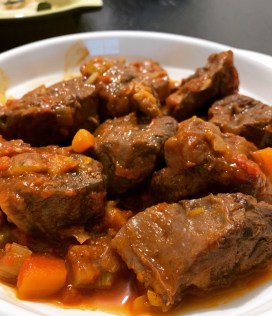
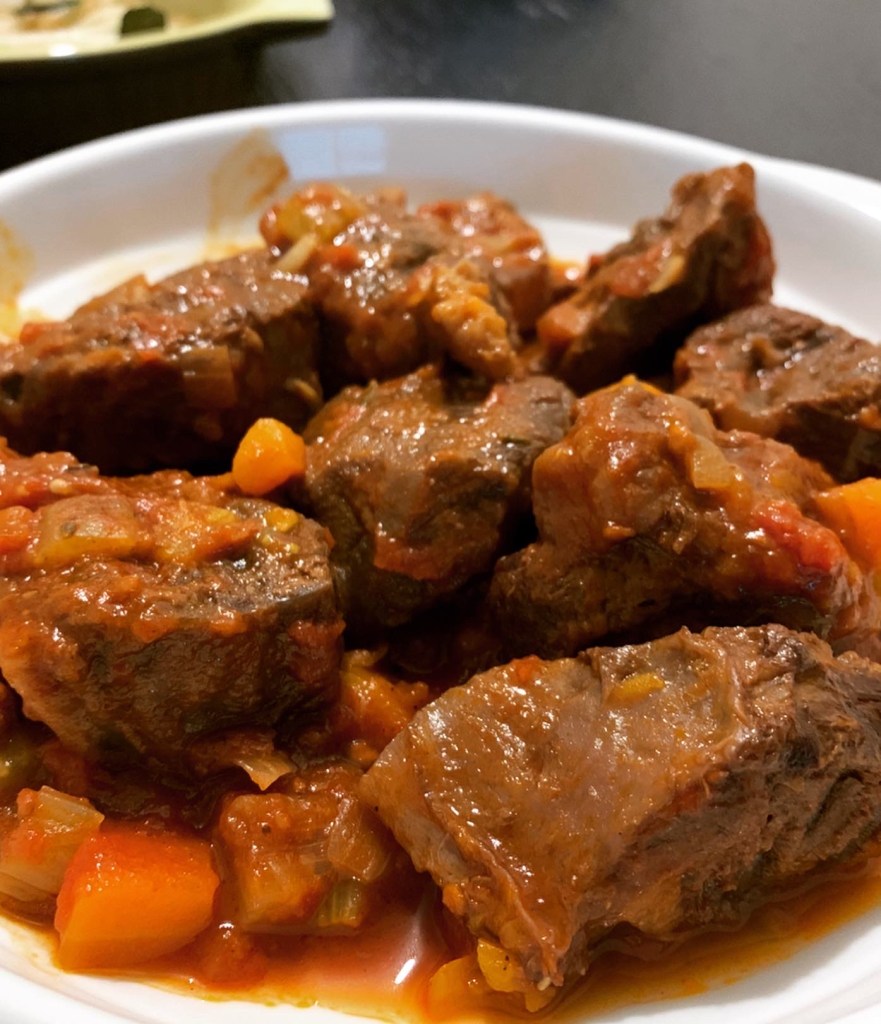
Ragù with beef shin and cinnamon

Serves 4

Time: 🕰🕰🕰
Effort: 💪💪

Ingredients:

1 pack frozen beef shin (800g)
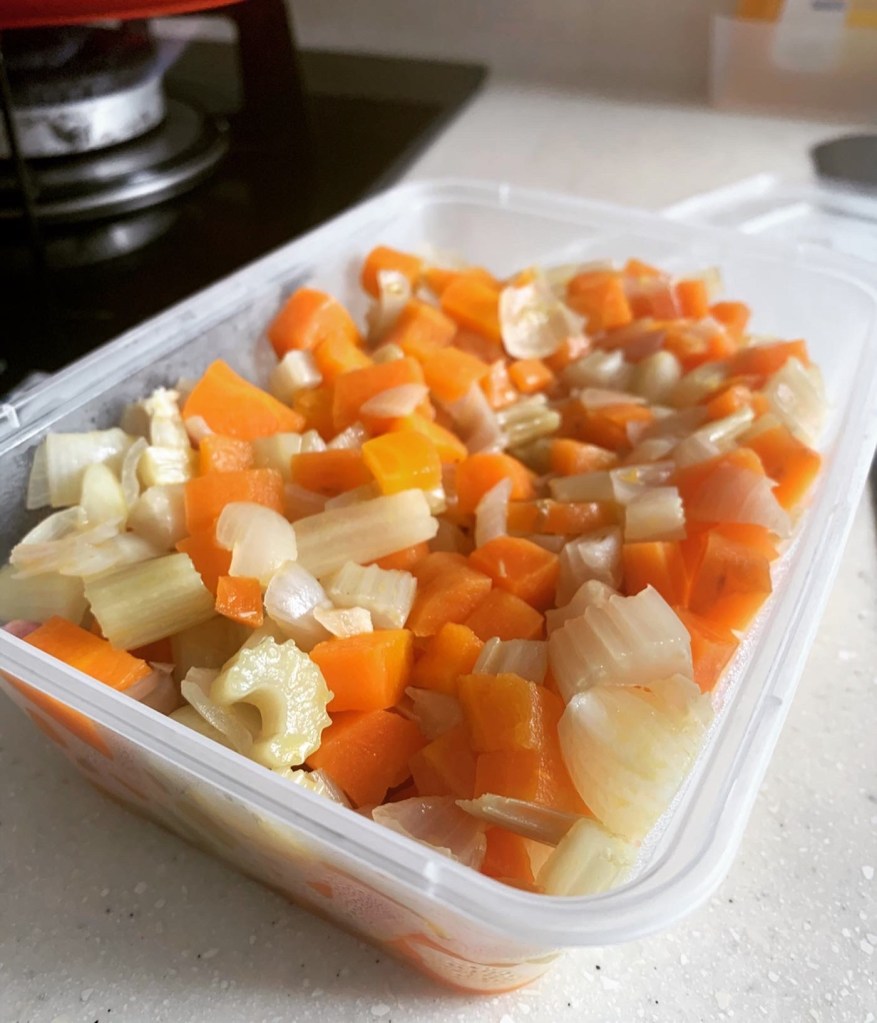
3 small carrots
2 stalks celery
1 onion
1 1/2 can peeled tomatoes
Red wine
A few sprigs of thyme
Small handful of cinnamon bark
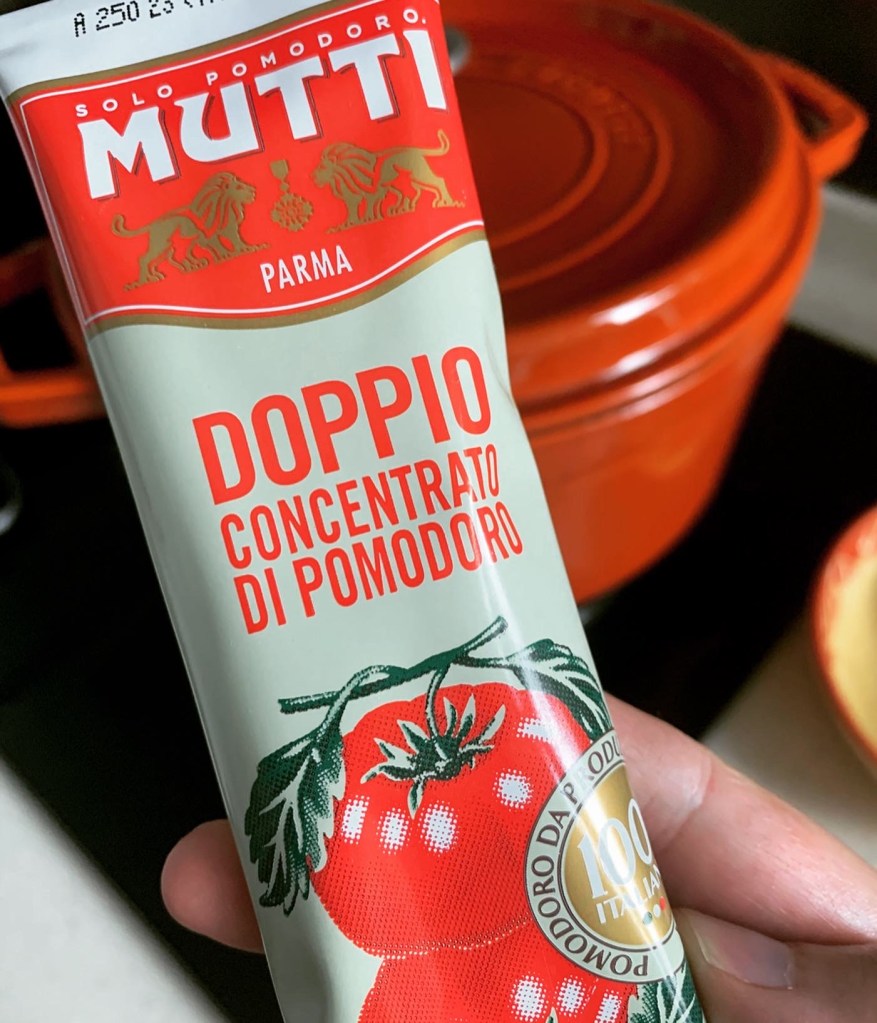
1 tablespoon tomato concentrate
4 cherry tomatoes
2 cloves
Olive oil

Method:

1. Defrost beef shin (NOTE: any cut of cheap, tough meat would be good. The one here is 金錢展, easily available in frozen food shops)
2. Dice carrots, celery, onion into similar-sized cubes
3. In a frying pan, sweat the vegetables in olive oil for 20 minutes, medium-low fire, lid covered
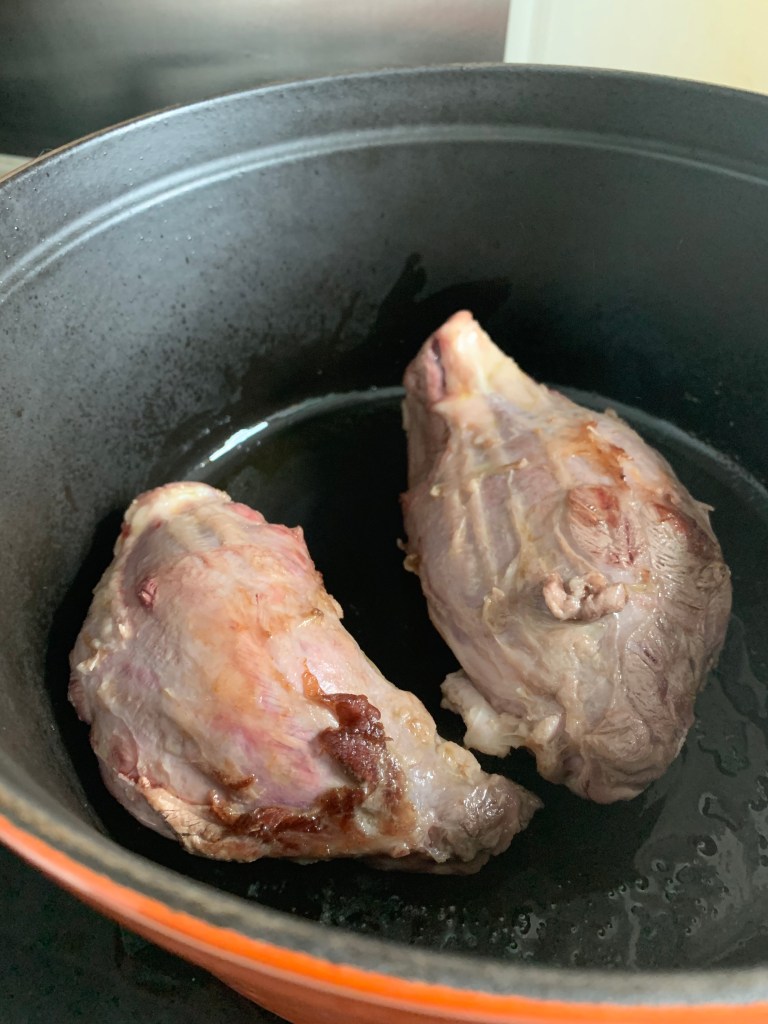
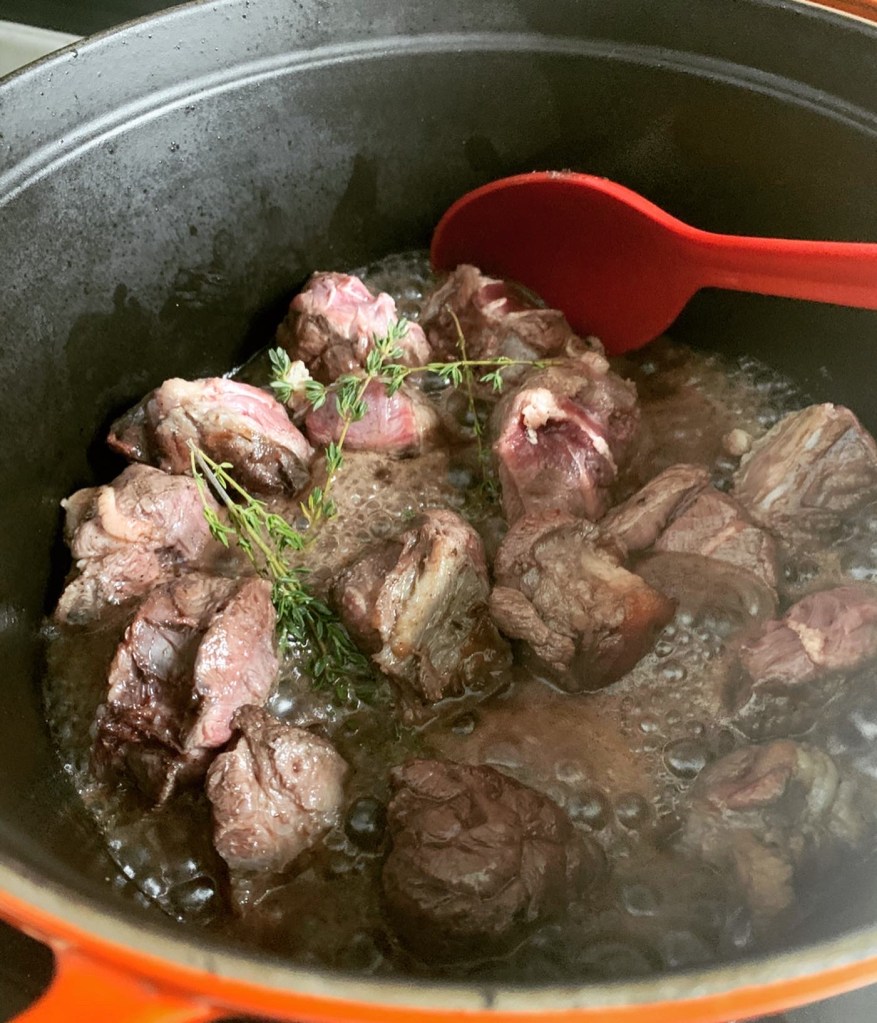
4. In a casserole, add a layer of oil and the thyme, then brown the beef shins on all sides, around 5 minutes
5. Generously season the beef
6. Once browned, remove beef from casserole and cut into fairly large chunks – around 3 per person
7. Add a generous splash of red wine to deglaze the bottom of the casserole
8. Once wine has evaporated by half, add in the beef and the vegetables, which should be ready by now
9. Give a good mix
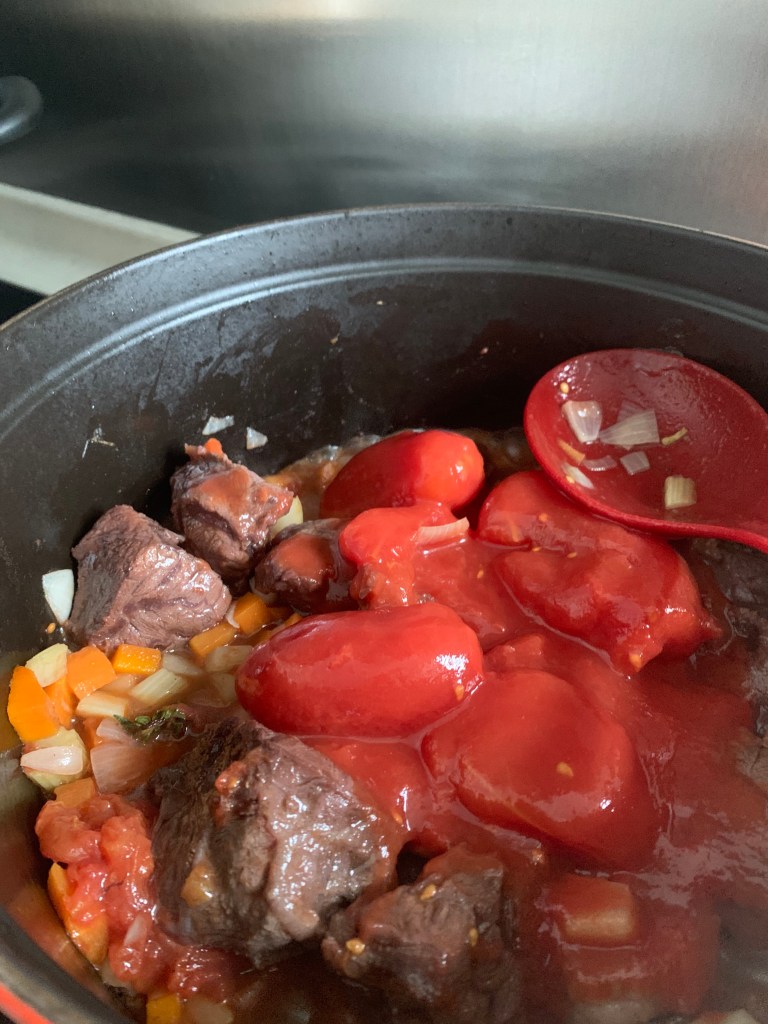
10. Open the cans of tomatoes, slightly break apart the tomatoes in the can with a fork, and then pour into the casserole
11. Add hot water as needed, until beef is almost submerged but not completely
12. Bring contents to a slow boil
13. Cover and cook for 2 hours on your lowest heat
14. Add cinnamon, cloves, and tomato concentrate
15. Cook for another 1.5 hours, half covered, so that water can evaporate and flavours are intensified
16. Check taste and adjust seasoning as needed
17. Add cherry tomatoes so as to sweeten the stew
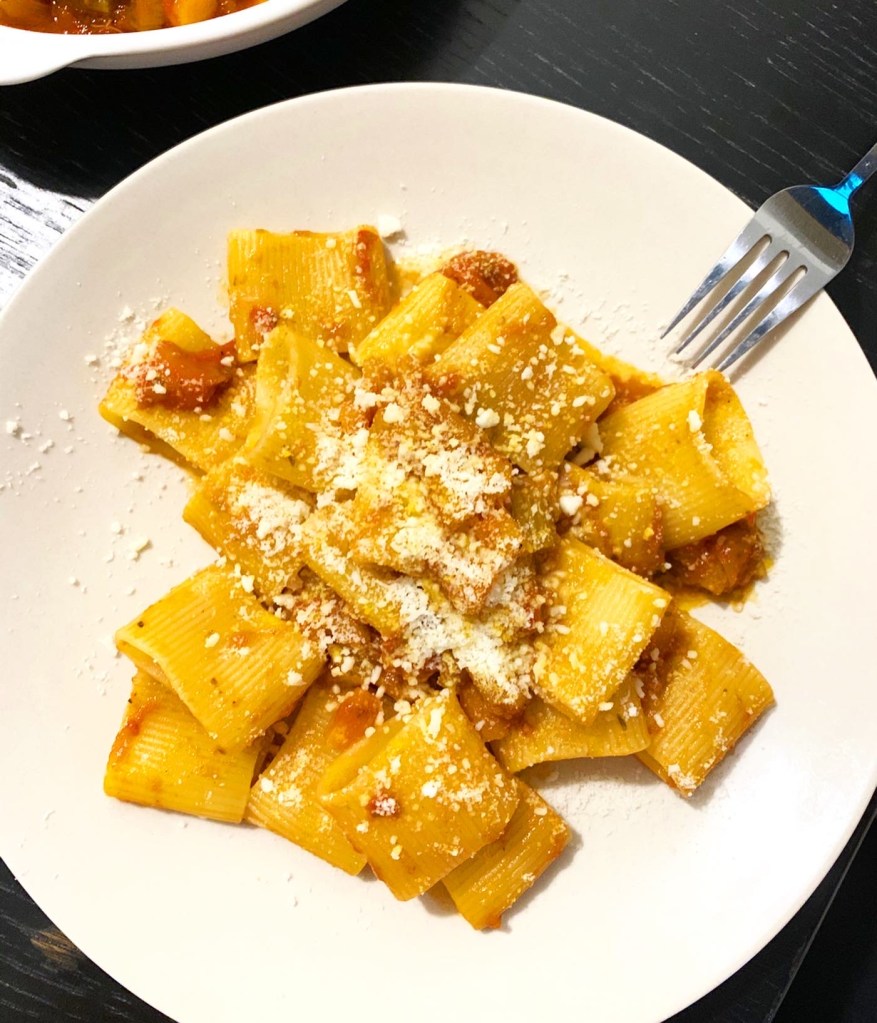
18. Combine the sauce portion (without meat) with al dente pasta and pecorino to form a first dish (primo), as pictured
19. Serve the stew as a second dish (secondo)
20. Wash down with lots of red wine

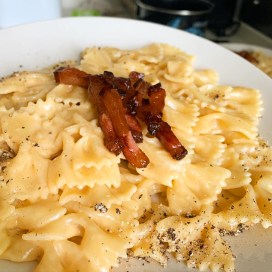
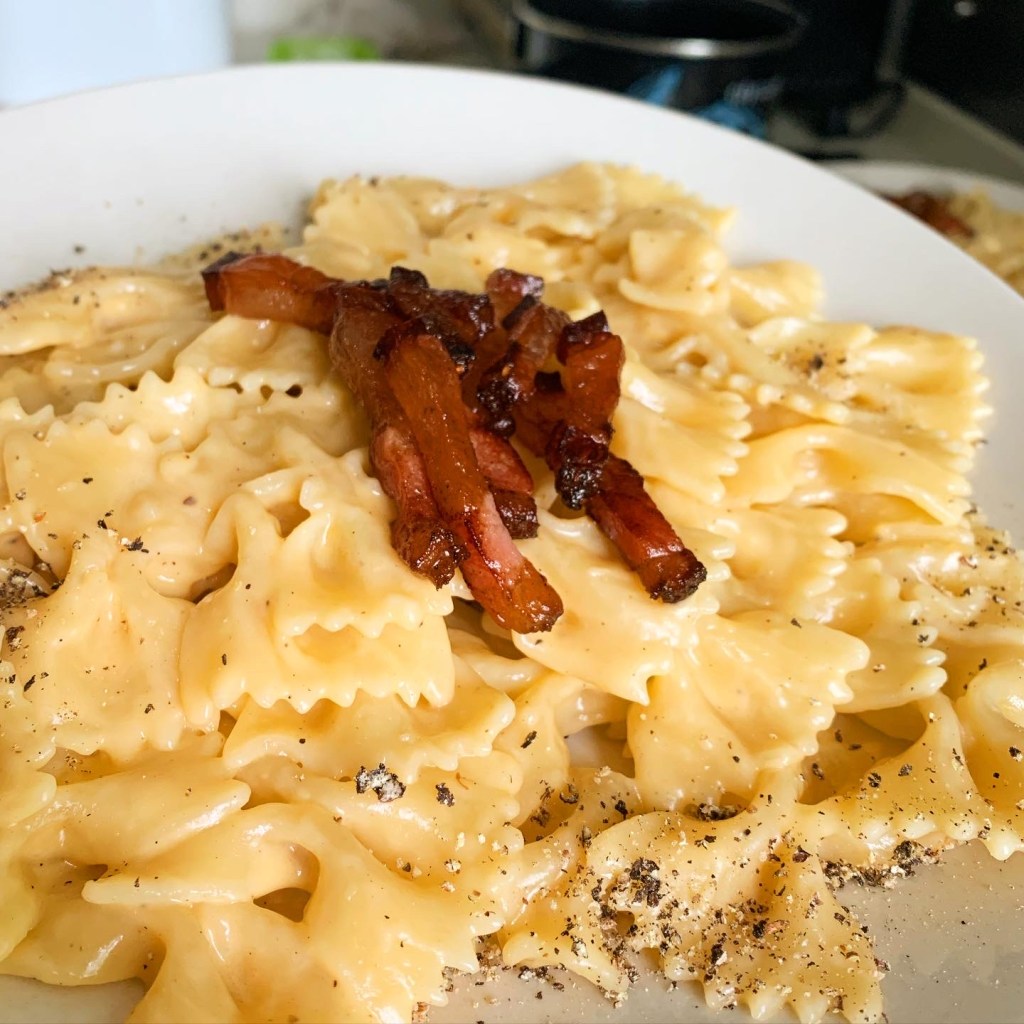
Farfalle alla Carbonara

Cheeky!

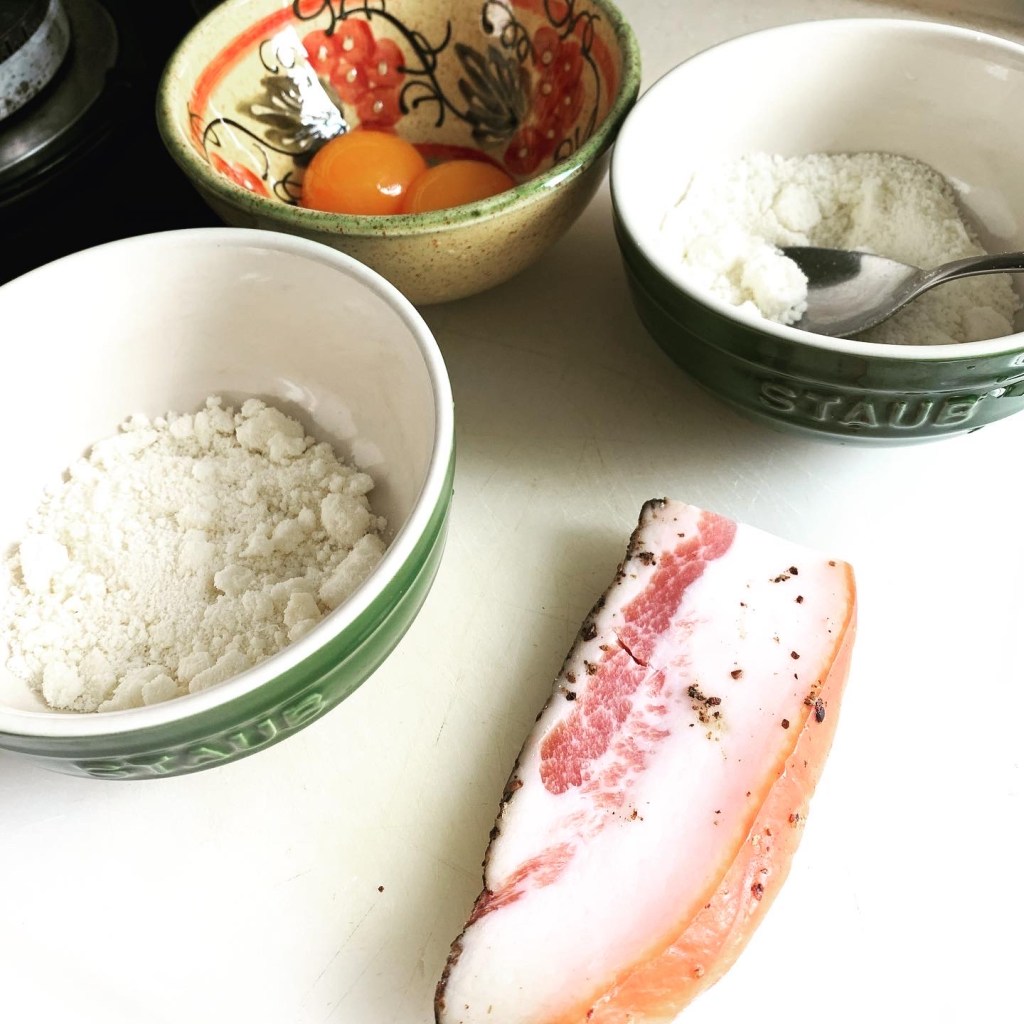
This dish is every homecook’s dream: simple ingredients, high repeatability, and oh-so-satisfying results! The key is good eggs, good guanciale, and good pasta. Guanciale (guancia = cheek in Italian) is an increasingly available ingredient in Hong Kong deli counters. The key here is to understand that the creaminess doesn’t just come from the eggs, but the thickening (“manticatura”) of water, starch, and oils from the guanciale. The yolks act almost as an emulsifier.

Serves 2

Time: 🕰
Effort: 💪💪

Ingredients:

1 slice of guanciale from an Italian deli counter
2 egg yolks
240g pasta (this is definitely the occasion to be generous!)
1 handful pecorino romano, grated
1 handful parmiggiano reggiano, grated
Black pepper 

Method:

1. Bring a pot of water to an active boil
2. Add enough salt to water so that it has the saltiness of a light soup
3. Put pasta (traditionally, spaghetti) into the boiling water
4. Slice guanciale into strips
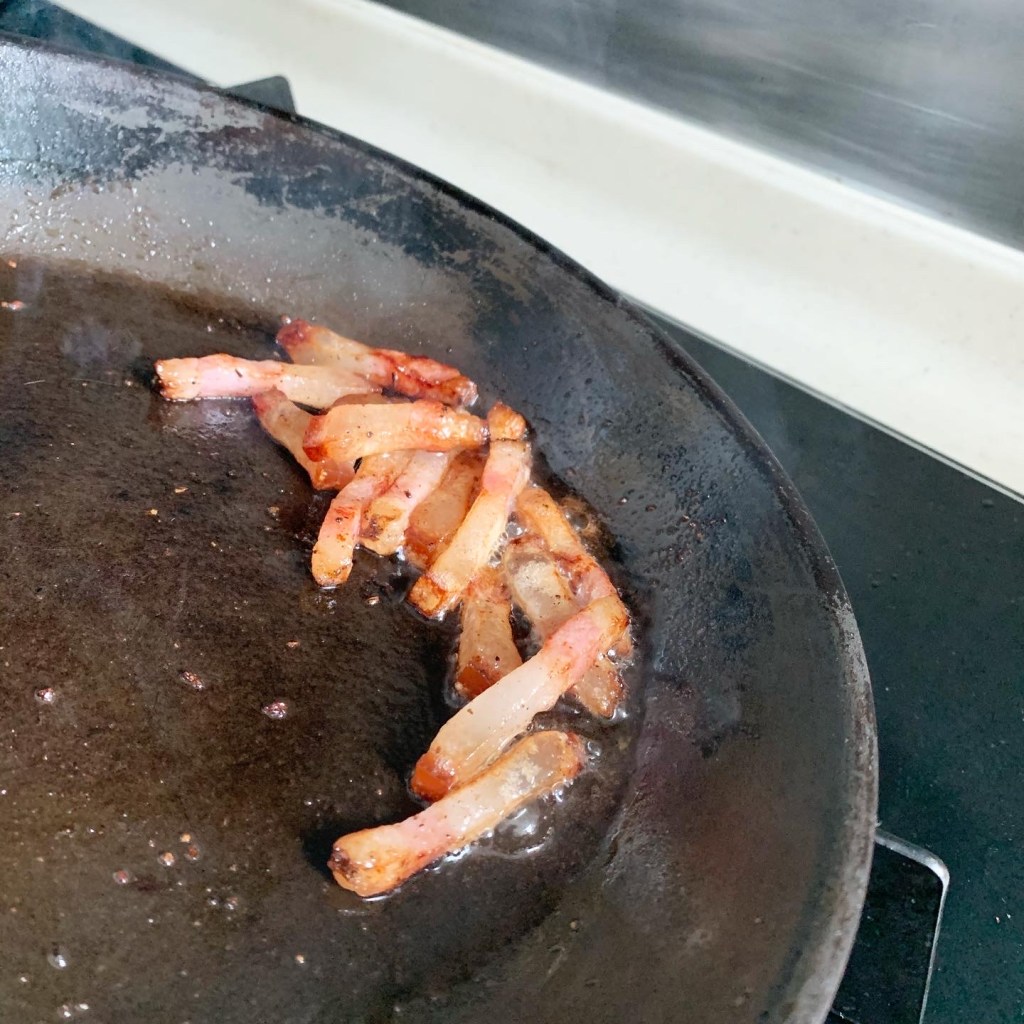
5. Add guanciale to a pan and bring to medium heat
6. Attention: no need add oil to the pan. The guanciale will sweat out enough fat for this dish
7. While the guanciale cooks, separate eggs to into whites and yolks; reserve whites for mask or another dish
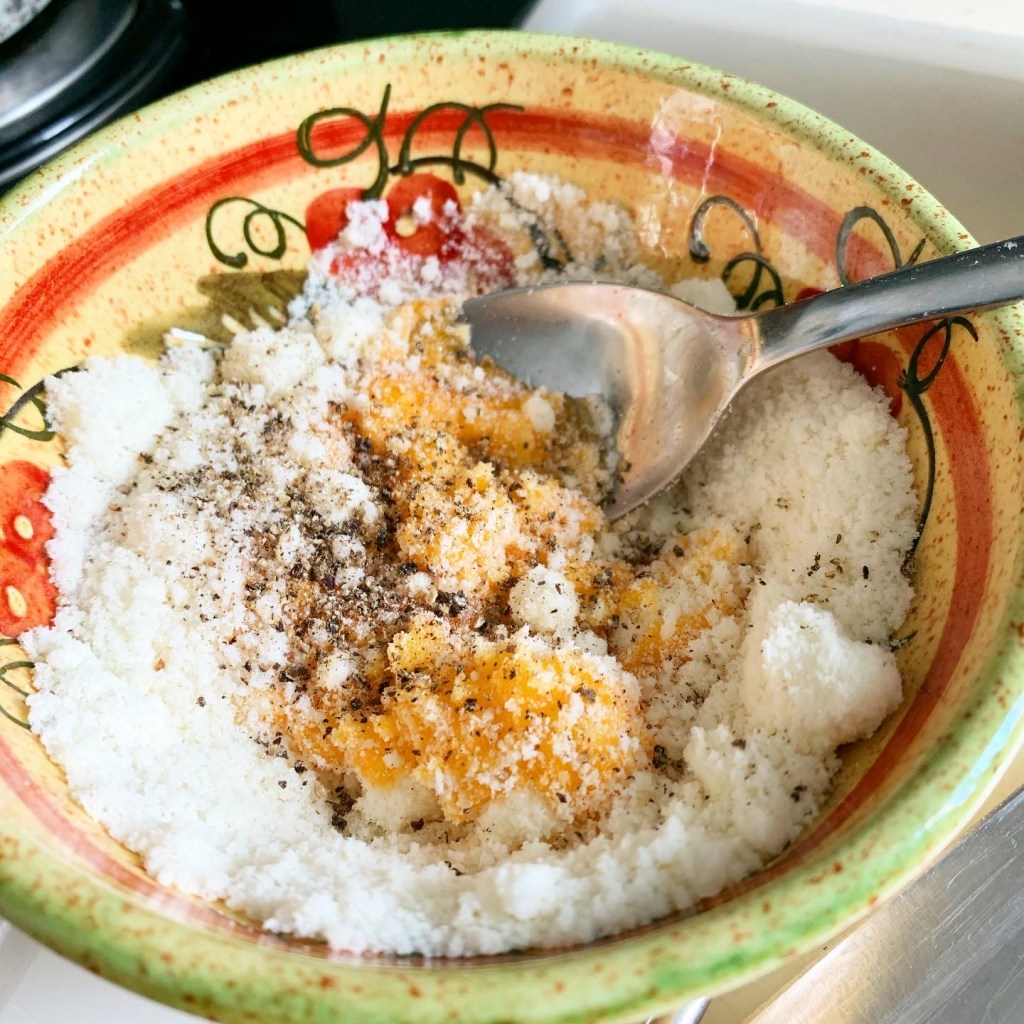
8. Add the two cheeses to the egg yolk
9. Add around 4 turns if black pepper
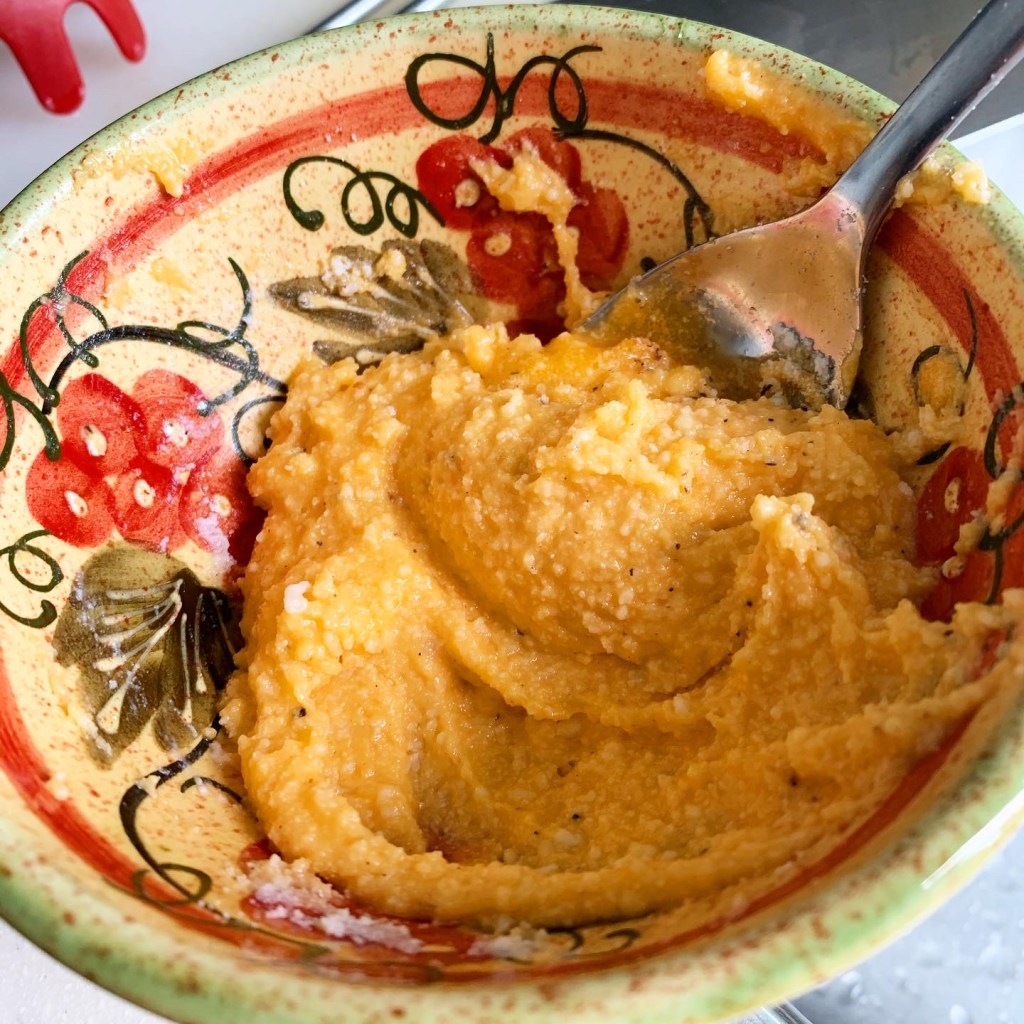
10. Mix with spoon until a smooth and soft paste is formed
11. The guanciale should now be warmed up; turn up heat to high to crisp up the outside, around 20 seconds
12. Carefully remove guanciale strips and set aside, leaving behind the valuable fat
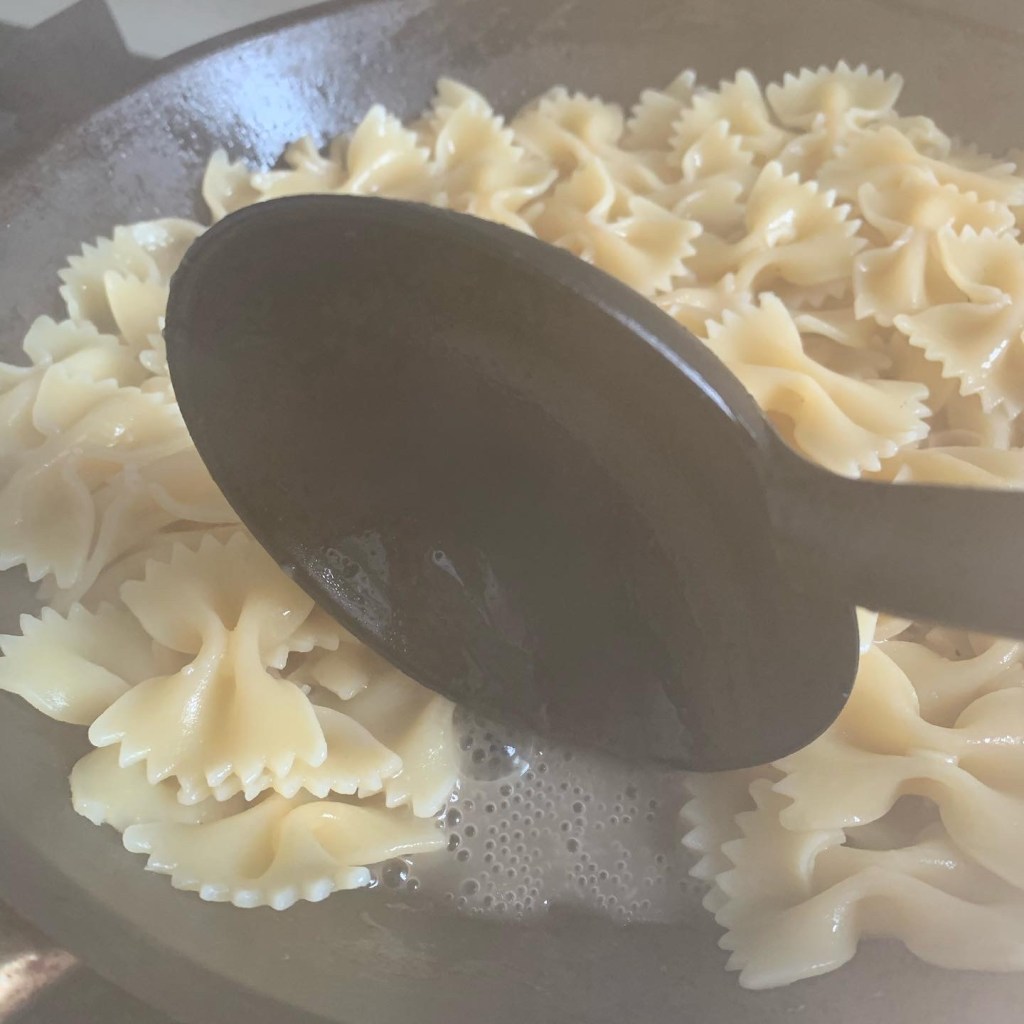
13. Add 2 ladles of pasta water to the guanciale fat and cook on medium-high heat, until enough water evaporates to form a creamy pasta water sauce
14. Check doneness of pasta
15. If ok, drain and tip pasta into the pan containing the pasta water sauce
16. Stir pasta actively on medium heat until pasta is well coated with the pasta water sauce
17. Remove pan from heat
18. Add the egg and cheese paste into the pasta
19. Actively fold the paste into the pasta, until that fragrant, classic carbonara sauce is formed
20. After plating, the pasta is likely to absorb some sauce, hence it would be good to add one additional tablespoon of pasta water at this point and mix, if you feel the pasta risks drying out at the table
21. Add a small handful of parmiggiano and give one last mix
22. Divide into warm plates
23. Garnish with guanciale strips on top
24. (Alternatively, dice up the strips and mix into the pasta)
25. Finish the dish with one final turn of black pepper

Cream of mushroom

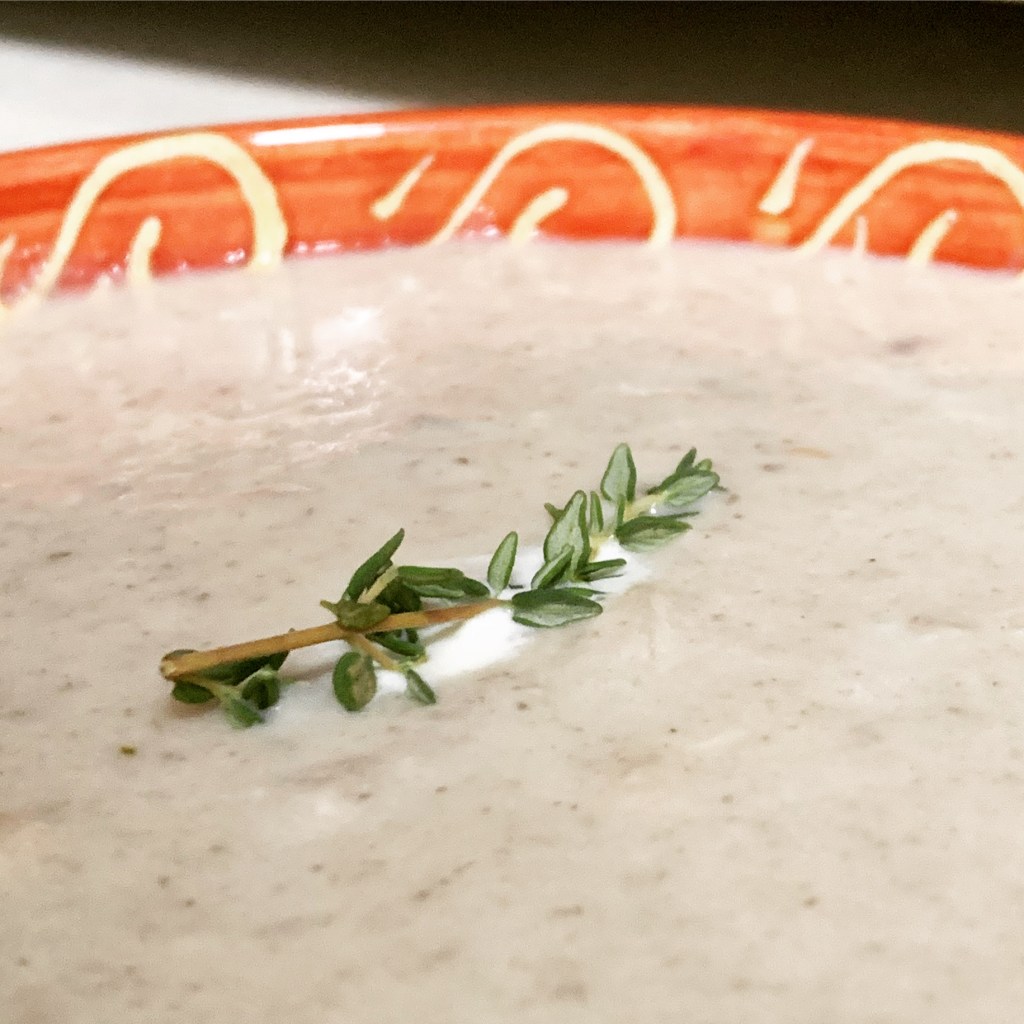
What separates this mushroom soup from others? For us, it’s the shallots caramelised in butter in the beginning of the process. We deliberated long whether to not garlic or not, but after tasting this, it was a clear no. This soup stands on its own, without the ‘cosmetic’ effect of garlic. What’s more, this takes next to no effort to make. Just chop, blend, check seasoning.

To garnish use a sprig of thyme or tarragon. They’re now easier to come by in Hong Kong, with the introduction of the herb counter in CitySuper, which is a beautiful example of demand and supply in work.

Serves 2

Time: 🕰🕰
Effort: 💪

Ingredients:

100g white button mushrooms
3 small shallots
200ml vegetable stock
20g Butter
Salt
White pepper
5 tablespoon full cream

Method:

1. Wash and quarter your mushrooms
2. Finely chop shallots
3. Warm up vegetable stock
4. Add butter to a pot
5. Add in shallots and mushrooms
6. Sweat ingredients on medium heat until the shallots soften
7. Add vegetable stock, stir to combine
8. Set apart a few mushrooms
9. Using handheld immersion blender, blend the soup until smooth and without lumps
10. Add the mushrooms, previously set apart, and blend for a few more seconds until there are coarse lumps
11. Stir in 4 tablespoons cream and heat until cream is warmed up
12. Add salt and white pepper to taste
13. Divide soup into bowls
14. Add the remaining tablespoon of cream into the bowls, give a stir, garnish, serve